
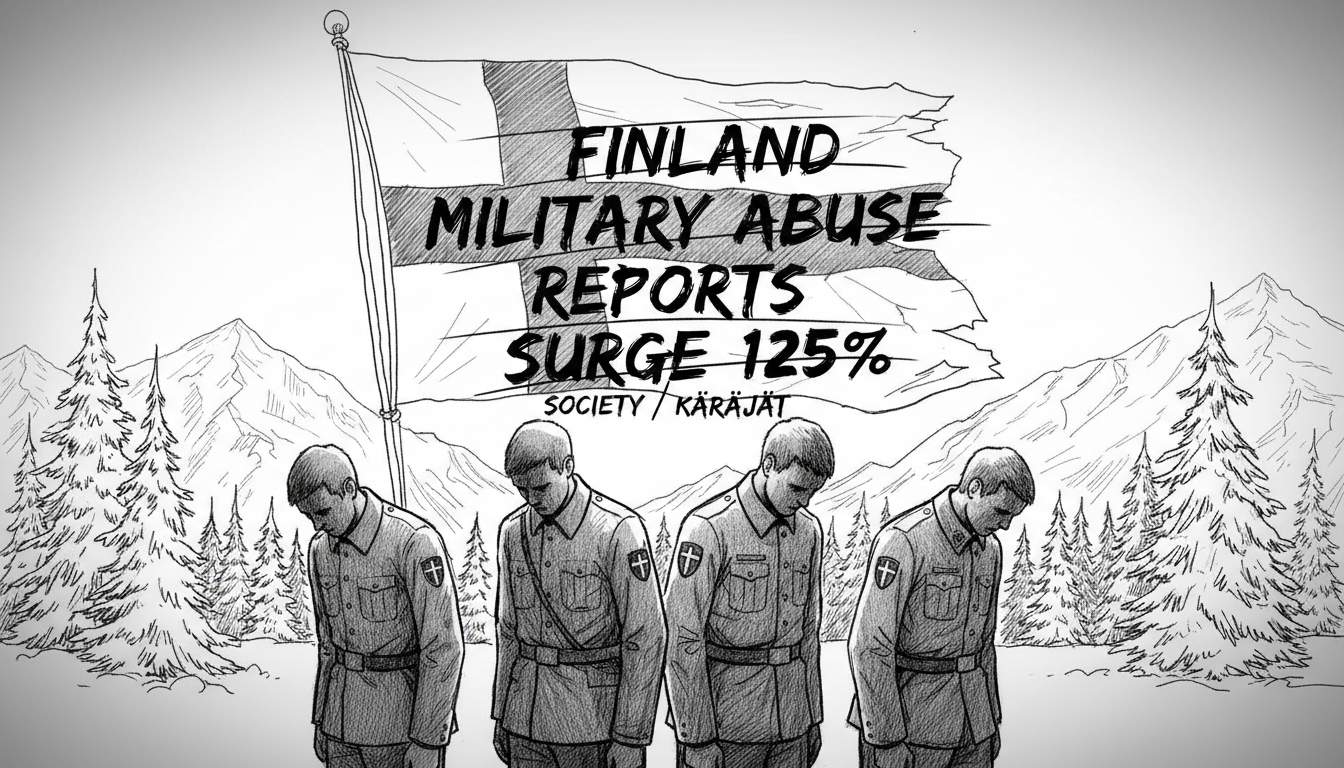
Finnish military superiors are now suspected in 125% more crimes against conscripts. Suspected superior-on-conscript criminal cases within the Finnish Defence Forces more than doubled last year, jumping from 32 incidents in 2022 to 72 in 2023. The latest figure marks the highest number recorded in at least two decades. This sharp increase occurs against a contradictory backdrop: overall suspected crimes within the entire defence organisation have declined significantly over the past 20 years. The data, obtained directly from the Finnish Defence Forces, points to a profound shift in the culture of conscript service and its reporting mechanisms.
A Stark Statistical Shift
The 72 suspected cases in 2023 represent a clear statistical outlier. While year-to-year fluctuations occur, a jump of this magnitude demands scrutiny. The crimes in question are classified as 'esimiesrikoksia,' or crimes committed by superiors, which can range from verbal abuse, intimidation, and hazing to physical assault and more severe violations of the military penal code. For context, the annual intake of conscripts is approximately 20,000 young men and, since 1995, volunteer women. The increase suggests a dramatic change in either the frequency of misconduct or, more likely, the willingness and ability of conscripts to report it. Chief Military Lawyer at the Defence Command, Pieti Kannala, acknowledged the spike, noting that 'individual cases can have a significant impact on the figures,' but conceded the overall rise is substantial.
The Bigger Picture: Overall Crime Declines
The surge in superior-related reports creates a paradox. Simultaneously, the total number of all suspected criminal cases within the Finnish Defence Forces has seen a marked decrease over the last twenty years. This broader trend indicates improved general discipline, better training for all personnel, and effective enforcement of regulations for non-superior related infractions. The divergence in the data sets is critical. It suggests the issue is not a general breakdown of law and order within the conscript ranks but a specific and growing focus on the abuse of authority within the chain of command. The military is succeeding in reducing overall crime but facing a new challenge in addressing power dynamics between trainers and trainees.
From 'Punkka' Explosions to Zero Tolerance
The changing culture is perhaps best symbolized by the fading era of the 'punkka' prank. For decades, a crude but tolerated initiation ritual involved placing a small explosive charge under a conscript's bunk bed to startle them. Today, such an act would be swiftly investigated as assault and endangerment. This evolution reflects a wider societal and legislative shift in Finland. Attitudes toward authority, mental health, and acceptable workplace behaviour have transformed. The definition of what constitutes a crime, particularly psychological abuse or harassment, has broadened considerably. What was once dismissed as 'tough training' or 'building character' is now increasingly viewed through a legal and ethical lens. Conscripts today are more aware of their rights and the formal channels available to report violations without fear of automatic retribution.
Reporting Mechanisms and Societal Change
Experts analysing the data point to improved reporting structures as a primary driver of the increase. The Defence Forces have actively worked to establish more confidential and accessible pathways for conscripts to file complaints. This includes independent ombudsman services and clear directives that protect reporters from retaliation. The rise in numbers, therefore, likely represents a success in uncovering existing problems rather than a sudden explosion of new ones. Societal change outside the garrison walls is equally influential. Finland's modern workforce emphasises anti-harassment policies and employee well-being. Young conscripts arriving for service carry these expectations with them. They are less inclined to accept historical norms of military harshness that conflict with contemporary standards of respect and dignity.
The Defence Forces' Response and EU Context
The Finnish Defence Forces now face the complex task of addressing this reported increase. The response will be closely watched, not only domestically but within the European Union's framework for fundamental rights. While national defence remains a core sovereign competence, the treatment of citizens in uniform intersects with EU values and human rights charters. Military officials must balance the imperative of maintaining rigorous, effective combat training with an absolute prohibition on criminal abuse. This likely involves enhanced leadership training for non-commissioned officers and junior commanders, who have the most direct daily contact with conscripts. The focus will be on teaching effective, modern command techniques that build unit cohesion and resilience without crossing legal boundaries.
A Look Ahead: Data and Reform
The key question for policymakers in Helsinki is whether the 2023 data is a one-year anomaly or the beginning of a new, higher baseline for reporting. Figures for the current year will be highly indicative. A sustained high level of reports would confirm a permanent cultural shift towards zero tolerance. This would necessitate ongoing reforms in training and supervision. Conversely, a drop might suggest the 2023 surge reflected a clearing of a historical backlog of unreported incidents. Regardless, the data has already ignited a necessary debate within the Eduskunta, Finland's parliament, about the duty of care the state owes to its conscripts. The era of looking the other way is conclusively over. The challenge now is to build a stronger, more professional, and legally compliant conscript service that can meet Finland's formidable defence needs without sacrificing the rights of the young citizens who serve. The path forward requires transforming this wave of reports from a sign of crisis into a catalyst for lasting positive change.