
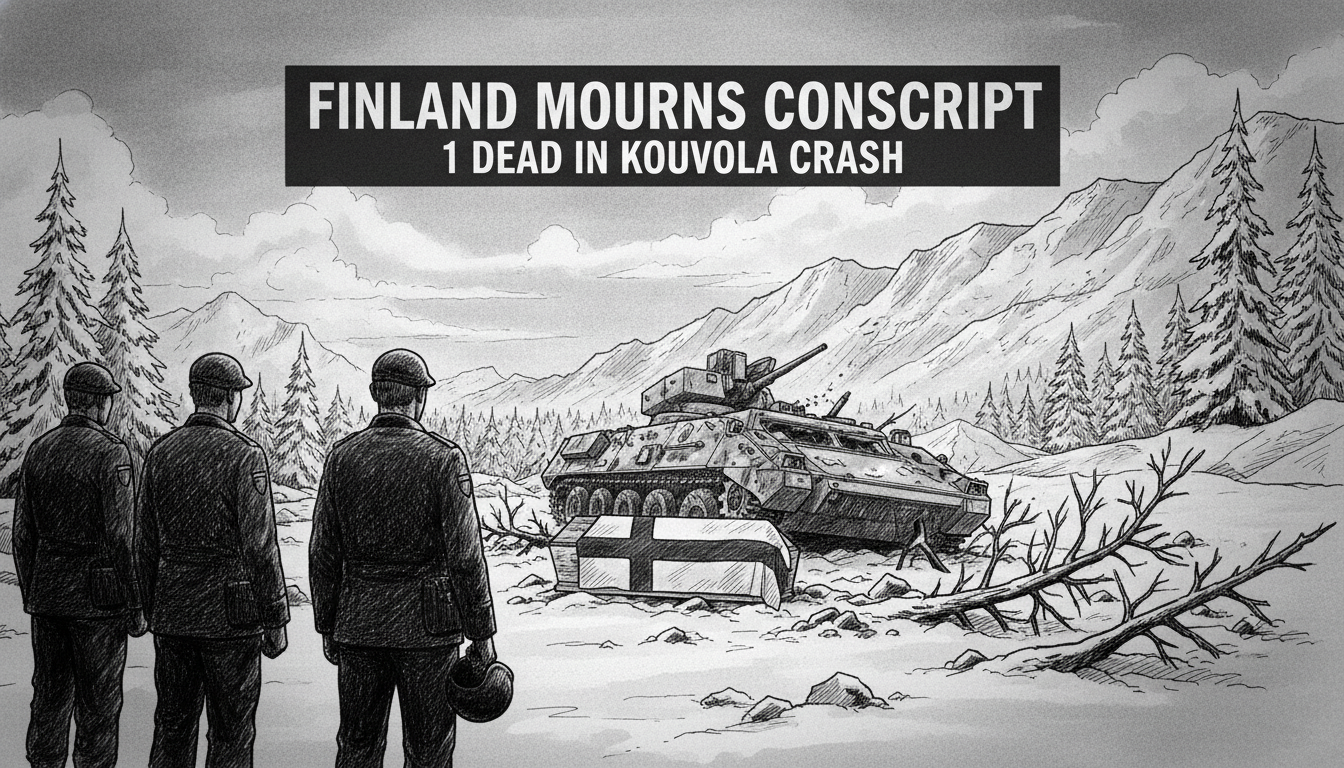
Finland's mandatory conscription system is mourning the loss of a young soldier just hours after his service ended. A conscript who had just been discharged from the Karjala Brigade died in a traffic collision in Kouvola on Thursday afternoon. The fatal crash occurred at the intersection of Highway 6 and Karjalankatu around 4 PM, involving a truck and a van. The Finnish Defence Forces confirmed the deceased was a recently discharged conscript traveling home from the Vekaranjärvi garrison.
A Tragic End to Service
The Karjala Brigade, based in Vekaranjärvi, is one of the Finnish Army's key units, training conscripts for infantry and readiness duties. The young man's military service had formally concluded, marking what should have been a transition to civilian life. Instead, his journey home ended in tragedy at a busy Kouvola intersection. The city of Kouvola, located in the Kymenlaakso region northeast of Helsinki, is a major transport hub where Highway 6 connects southeastern Finland to the capital region. This central location makes its intersections frequent sites of heavy traffic mixing local and through travel.
The Finnish Defence Forces issued a statement on Friday confirming the family had been notified. Military spokesperson Major Mikko Härkönen emphasized the unit's response. "The Karjala Brigade is providing crisis support related to the incident and will honor the memory of the deceased with the lowering of flags to half-mast on Friday," Härkönen said. This protocol reflects the armed forces' treatment of conscripts as full service members, with formal honors extended even after discharge when tragedy strikes so close to their service period.
Intersection Safety Under Scrutiny
The specific crash site—where a major national highway meets a local city street—presents known safety challenges. Road safety experts point to the inherent risks when high-speed through traffic interacts with vehicles entering from urban roads. Professor of Traffic Safety, Laura Aalto, from the University of Helsinki, explained the dynamics. "Intersections between highways like Kuutostie and municipal streets are conflict points. Speed differentials, driver expectations, and sight lines can create perfect storm conditions, especially with heavy vehicles like trucks involved," Aalto said. She noted that Finland has worked to improve such junctions, but older configurations remain.
Preliminary investigation by the local police is focused on determining the exact sequence of events. No details regarding potential causes, such as right-of-way violations, speed, or weather conditions, have been released. The involvement of a truck, a common sight on Highway 6 which serves as a freight corridor, will likely factor heavily into the technical analysis. Finnish crash investigations typically examine vehicle condition, driver actions, and road infrastructure.
The Conscript's Journey and System of Support
The incident highlights the very ordinary, yet vulnerable, transition period for conscripts. After completing their mandatory service—typically lasting 5.5, 9, or 12 months—conscripts receive their discharge papers and travel home, often using public transport or private vehicles. There is no formal military escort or organized transport for this final leg. The system operates on the assumption that the individual has returned to civilian status immediately upon discharge.
However, the psychological and institutional bonds remain strong. The Finnish Defence Forces maintain a responsibility for the wellbeing of their personnel, which extends to providing crisis support in events like this. Military psychologist Dr. Erik Niemi commented on the impact. "For the unit, this is not the loss of a former conscript, but the loss of one of their own. The timing, at the moment of return to family, creates a profound sense of injustice and shock that resonates through the entire brigade," Niemi stated. The crisis support offered includes counseling for fellow conscripts, training staff, and officers who served with the deceased.
A National Institution Grieves
Finland's conscription system is a cornerstone of national defense and identity. Approximately 20,000 young men begin service each year. The death of a service member, even after the technical end of duty, is felt across the institution. The flag-lowering ceremony at the Karjala Brigade is a public symbol of this collective mourning. It also serves as a rare public acknowledgment of the risks that extend beyond training exercises and field maneuvers to include the simple act of traveling home.
The incident sparks a quiet reflection on duty, risk, and the unforeseen dangers that follow structured military life. While training accidents are publicly documented, fatalities during travel immediately after service are less common, making this event particularly poignant. It underscores that the commitment and sacrifice associated with national service can have a final, tragic cost that arrives outside the confines of the garrison.
Community and Next Steps
In Kouvola, the crash is a local traffic tragedy with a deeper national dimension. The city's residents are familiar with the presence of the Karjala Brigade and the movement of conscripts through the region. The police investigation will continue for weeks, with findings on the cause likely to be published later. This could prompt reviews of safety measures at that specific intersection, which handles significant traffic flow between Helsinki and the eastern border region.
For the Finnish Defence Forces, the focus remains on support and honor. The process includes not only the immediate crisis response but also potential longer-term support for the family, who are now connected to the military community through loss. The system of conscription creates an extended family of service, and that family has now gathered to mourn one of its newest veterans.
The tragedy near Kouvola is a stark reminder that safety is a concern that transcends the end of a service paper. It connects the disciplined environment of military service to the unpredictable nature of civilian roads. As Finland reflects on this loss, the conversation may gently turn to how the nation cares for its conscripts at every stage of their journey, ensuring that their service and sacrifice are honored and protected until they are truly safely home.