
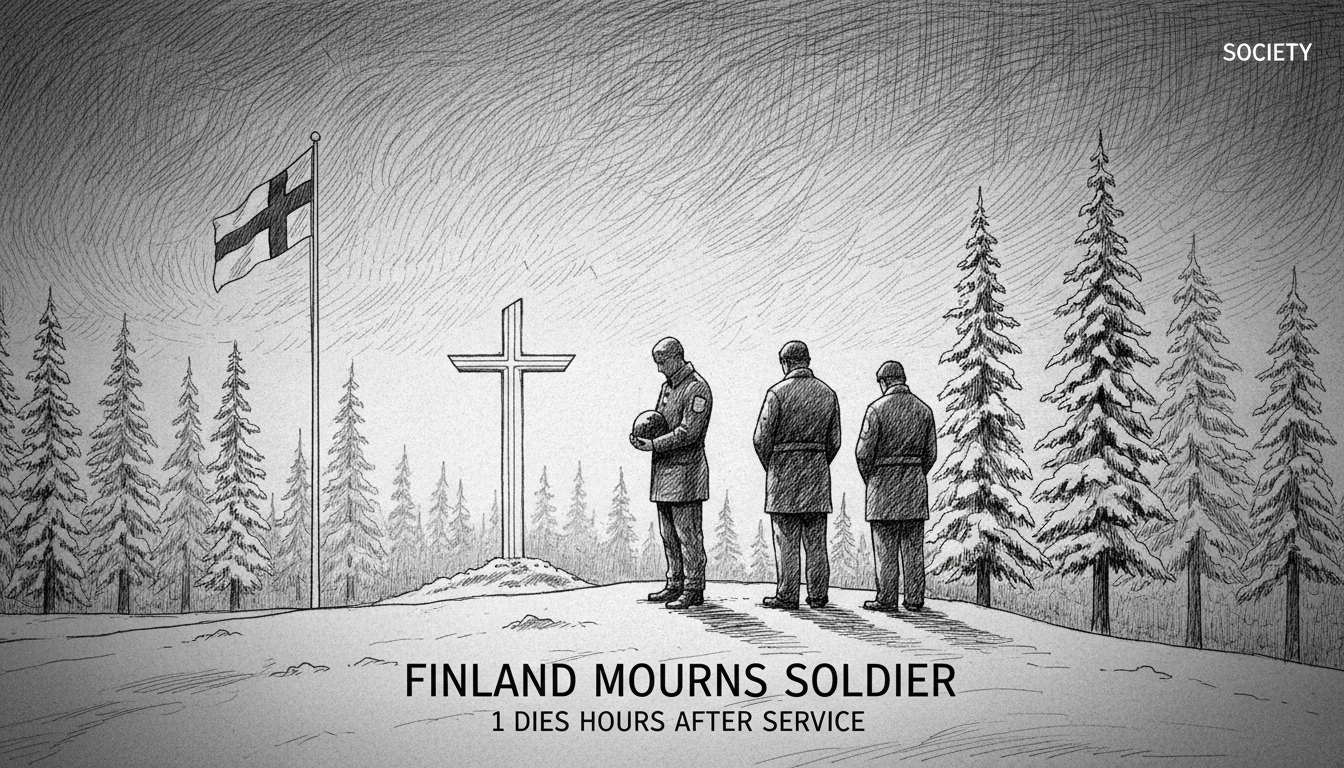
Finland's Defence Forces have confirmed the death of a conscript just hours after he completed his mandatory military service. The young man died in a traffic accident in Kouvola on Thursday while traveling home, casting a shadow over what should have been a day of celebration. The Karjalan Prikaati (Karelia Brigade), his home unit, announced the tragedy and has contacted his family. The brigade is organizing crisis support for affected personnel and will hold a formal day of mourning with flags at half-mast on Friday, December 19th.
A Celebration Turned to Tragedy
The accident occurred on Kuutostie, a major road in the Kouvola region, and involved a delivery van and a truck. Emergency services responded to the scene, but the recently discharged soldier succumbed to his injuries. His identity has not been publicly released, respecting the family's privacy during their immediate grief. The timing is particularly devastating; the transition from soldier to civilian, marked by a formal dismissal ceremony, is a significant rite of passage in Finland. Instead of returning to family and friends, this conscript's journey ended in tragedy on the road home. The Defence Forces' statement was somber and direct, highlighting the profound impact on his unit and the wider military community.
This incident immediately raises difficult questions about the support structures surrounding conscripts at the moment of discharge. While the Finnish Defence Forces provide extensive training and care during service, the immediate transition to civilian life is a vulnerable period. Military psychologists note that the shift from a highly structured, communal environment to individual freedom can be jarring. Fatigue, elation, disorientation, and the sudden release of pressure are common emotional states in the first 24-48 hours after service ends. These factors can inadvertently contribute to risk, whether on the road or in other aspects of life.
The Weight of Universal Service
Finland's model of compulsory military service for men is a cornerstone of national defense and identity. Approximately 70% of each male age cohort completes service, which typically lasts between 165 and 347 days. The system is designed to build a capable reserve force, essential for a nation that shares a long border with Russia. Service is seen as a unifying civic duty, but it also represents a substantial interruption in a young person's life—pausing education, careers, and personal relationships. The end of service is therefore emotionally charged, a complex mix of relief, pride, nostalgia, and uncertainty about the future.
The Karelia Brigade, headquartered in Vekaranjärvi near Kouvola, is one of the Finnish Army's key units. It trains thousands of conscripts annually in infantry, artillery, and logistics roles. The announcement of a regiment-wide day of mourning underscores how deeply such a loss is felt within the tight-knit military structure. The bonds formed during intense training and shared hardship mean the death of a comrade affects not just immediate squad members but the entire brigade. The promised crisis support will involve military chaplains and psychologists working with soldiers who served alongside the deceased.
Examining the Transition from Barracks to Home
While this was first and foremost a traffic accident, its specific context forces a necessary examination of the discharge process. Experts in military sociology suggest that more structured transition protocols could be beneficial. "The moment of discharge is a psychological cliff edge," says Dr. Elina Saarelma, a researcher specializing in veteran affairs. "For months, every minute of their day is regulated—what they wear, eat, and do. Then, suddenly, they are handed their civilian clothes and a travel ticket. That abrupt shift carries inherent risks, especially when combined with the fatigue from final exercises and the emotional intensity of farewells."
Some Nordic counterparts have implemented more gradual transition programs. While not directly applicable to all situations, concepts like mandatory rest periods before long travel, more robust post-service debriefings, or enhanced coordination with families on discharge day are part of ongoing professional discussions. The Finnish Defence Forces continuously evaluate their practices, and a tragic event like this often prompts internal review. The focus is not on assigning blame for an accident but on ensuring systemic support leaves no soldier unnecessarily vulnerable at a moment of change.
A Nation's Silent Contract
The death touches a raw nerve in Finnish society because it involves the universal institution of conscription. Nearly every family has a father, brother, or son who has gone through the same process. The silent contract of national defense is clear: citizens serve, and the state has a duty of care that extends beyond tactical training. This duty includes ensuring well-being during the critical handover back to civilian life. Public reaction will likely reflect a deep-seated respect for those who serve and a collective empathy for a family whose proud day turned to unimaginable loss.
Parliamentary oversight committees, including the Defence Committee, may quietly seek briefings on the circumstances and the support response. While not a political scandal, it is a matter of public concern regarding the stewardship of young citizens in state service. Ministers from the defence portfolio are expected to offer formal condolences, recognizing the sacrifice inherent in the incident even though it did not occur in a combat setting. The tragedy blurs the line between service and civilian life, reminding the public that the risks of military duty can extend beyond the training field.
Grief and the Road Ahead
As the Karelia Brigade mourns, the practical investigation into the traffic accident continues under the jurisdiction of local police. The Defence Forces will conduct their own parallel internal review, standard procedure following a service-related death. The focus for the chain of command is now on caring for the grieving unit and supporting the family with funeral arrangements and military honors. The soldier will likely be posthumously promoted to the rank of alikersantti (lance corporal), a customary honor for conscripts who die during or in close proximity to their service period.
The story resonates because it is a heartbreaking story of proximity—to home, to family, to the start of a new chapter. It underscores a difficult truth: the period immediately following high-stress, structured service requires its own form of vigilance. As Finland reflects on this loss, the conversation will inevitably turn to how to better armor young people during this vulnerable transition. The ultimate goal is to ensure that the conclusion of one's duty to the nation is not the moment of greatest personal risk. The flags flying at half-mast on Friday will symbolize not just mourning for a lost soldier, but a national commitment to examining the full cycle of conscription—from the first day of training to the first steps back into civilian life.