
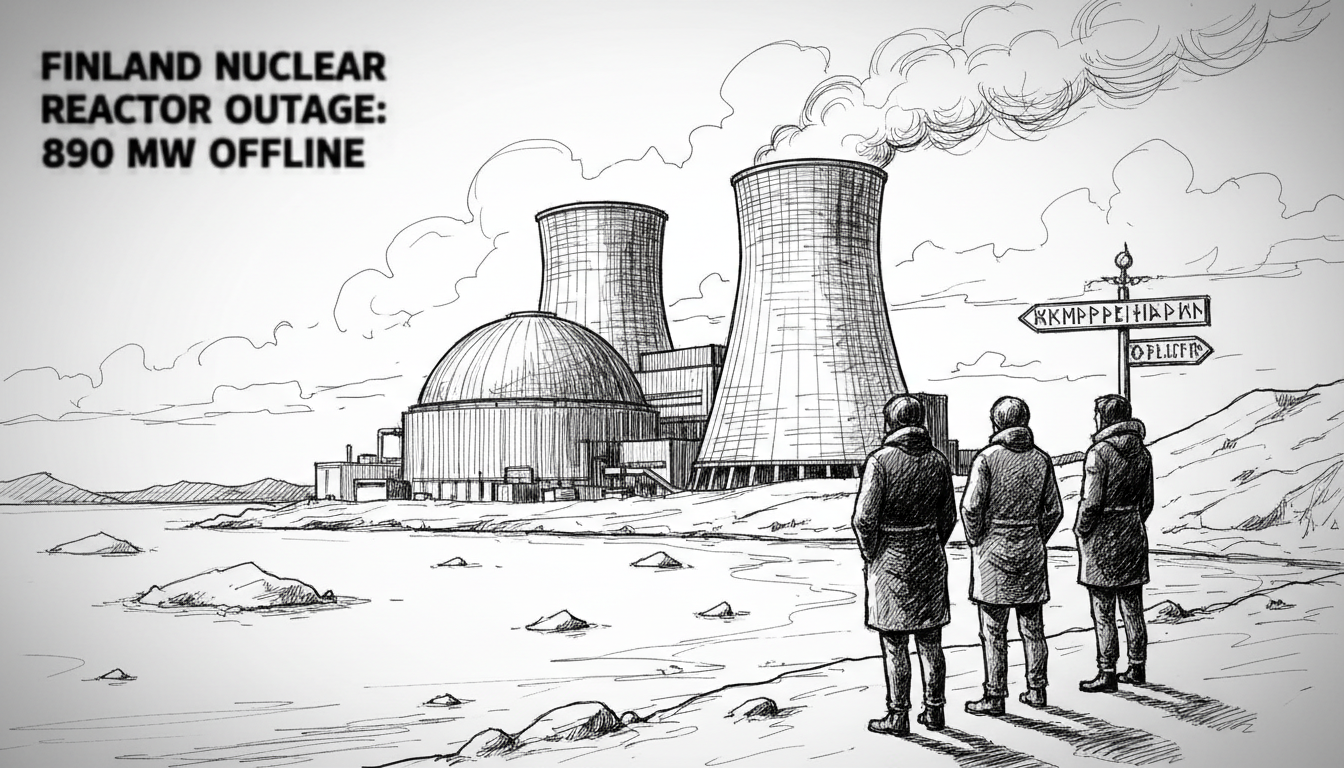
Finland's nuclear power, providing roughly 30% of national electricity, faces a sudden disruption. The Olkiluoto 2 reactor (OL2) was taken offline on Friday morning due to a technical fault during a software update. Operator Teollisuuden Voima Oyj (TVO) states a preliminary restart is scheduled for early Saturday at 3 a.m., but the unplanned outage immediately tests Finland's energy resilience.
The fault occurred in the reactor's power control system software. This essential system manages the reactor's output and ensures stable integration with the national grid. TVO confirmed the issue emerged during a planned update procedure, forcing an automatic shutdown. No safety incidents were reported, and all safety systems functioned as designed.
Technical Glitch Halts Production
Olkiluoto 2, with a capacity of 890 megawatts, represents a significant portion of Finland's baseload power. Its sudden loss removes enough electricity to power hundreds of thousands of homes. The incident highlights the complex digital systems underpinning modern nuclear facilities. A software error, rather than mechanical failure, triggered this shutdown, focusing attention on cybersecurity and update protocols in critical infrastructure.
TVO's announcement emphasized that the fault was identified and contained within the control system. The company's technicians are now working to correct the software issue and prepare the reactor for a safe return to service. The estimated 24-hour downtime is relatively short, but any delay could have market consequences.
Finland's Growing Nuclear Reliance
This outage occurs as Finland increasingly depends on nuclear energy. With the Olkiluoto 3 reactor (OL3) now in regular operation since March 2023, nuclear's share of electricity production is projected to rise above 40%. OL3 adds 1600 MW, making Finland a net electricity exporter in recent months. The temporary loss of OL2, therefore, reduces a key export commodity and increases reliance on imports or other domestic sources.
Finland's two nuclear plants, Olkiluoto and Loviisa, are central to its strategy for energy independence and carbon neutrality. The government has long viewed nuclear power as a stable, low-carbon backbone for the grid. This vision was reinforced after Russia's invasion of Ukraine, which disrupted European energy markets and made security of supply a top priority in Helsinki.
Energy Market Implications
Analysts are closely watching the outage's effect on Nordic electricity prices. Finland's spot power prices are sensitive to changes in nuclear output. Even a short disruption can cause price spikes, especially if wind power generation is low or demand is high. The incident serves as a reminder of the inherent volatility in energy markets, even with robust infrastructure.
"Any unplanned outage in a major baseload provider like Olkiluoto will be felt in the system," said a Helsinki-based energy analyst, speaking on background. "The duration is key. If it extends beyond Saturday, we could see a noticeable impact on prices and might need to increase imports from Sweden or Estonia."
The Finnish Energy Authority monitors such events for grid stability. With OL3 operational, the system has more cushion than in previous years. However, the simultaneous outage of another major plant could strain resources. This scenario underscores the importance of a diversified energy mix and interconnectors with neighboring countries.
Safety and Reliability Questions
Every reactor stoppage renews the public debate over nuclear power's reliability. Opposition parties and environmental groups often cite such events when advocating for accelerated renewable investment. The Greens in the Eduskunta, for instance, may call for hearings on plant maintenance schedules and backup systems.
Pro-nuclear voices, including members of the governing coalition, argue that swift, safe shutdowns demonstrate the system's safety culture. They contrast this with the unpredictability of fossil fuel price shocks. The Finnish Radiation and Nuclear Safety Authority (STUK) maintains strict oversight, and its preliminary reports on this incident will be scrutinized.
Historically, Olkiluoto has faced challenges. The OL3 reactor's construction was marred by massive delays and cost overruns, becoming a European cautionary tale. Its eventual successful launch, however, was celebrated as a major achievement for Finnish engineering and energy policy. This current OL2 fault is a routine operational issue but feeds into the larger narrative about complex energy assets.
Path to Restart and Future Outlook
TVO's restart timeline is ambitious but not guaranteed. Reactor restarts after a fault require meticulous checks and regulatory approvals. STUK must be satisfied that all systems are fully operational and safe before granting permission for power production to resume. If software patches are needed, they will undergo rigorous testing.
The long-term context is essential. Finland's Parliament has committed to a carbon-neutral future, and nuclear power is legislated as a core component. This outage is a temporary setback in a decades-long strategy. It may prompt TVO to review its software update procedures to prevent similar incidents during maintenance windows.
Energy Minister Ville Tikkanen's office is likely receiving regular briefings on the situation. While not a crisis, the event reinforces the government's focus on grid resilience. Upcoming energy policy discussions in the Eduskunta will undoubtedly reference this outage when debating investments in storage, smart grids, and wind power.
Finland's experience also resonates at the EU level. As the bloc pursues its Green Deal and aims for energy sovereignty, the balance between nuclear, renewables, and security of supply is a live debate. France and Sweden, with similar nuclear dependencies, watch Finnish operational events for lessons.
As Saturday's planned restart approaches, the key question is whether this fault was a minor glitch or a symptom of aging digital infrastructure. Olkiluoto 2 began operations in 1980, though it has undergone extensive upgrades. Its continued reliability is vital for Finland's energy and economic planning. The incident reminds everyone that in the energy transition, even the most established technologies require constant vigilance and investment.