
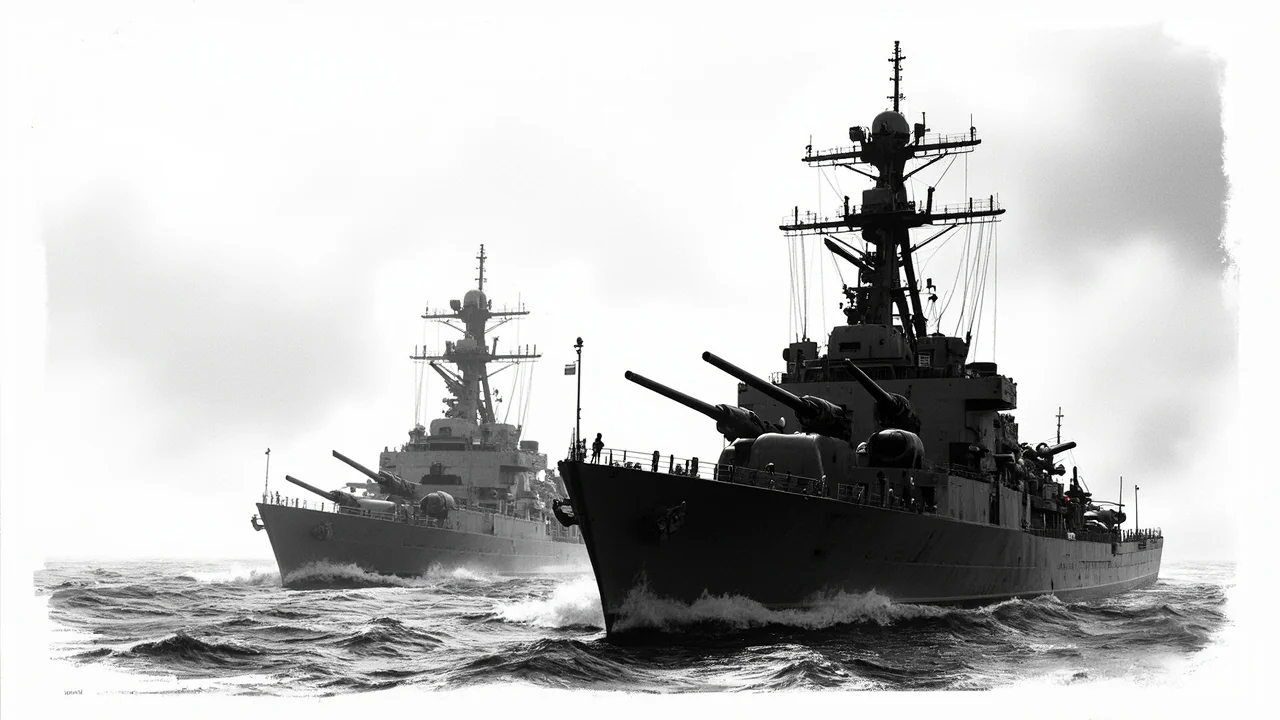
How is a Finnish border guard vessel preparing to fight a war that hasn't officially started? Finland's Border Guard has become the first customer for Saab's new drone-destroying gun turrets, ordering two systems for patrol vessels set to launch this year. This move signals a sharp tactical shift for Helsinki's maritime security forces. They are directly addressing the rising, asymmetric threat of unmanned aerial systems in the Baltic Sea region.
The remotely operated Trackfire ARES RWS turrets will be installed on two large new offshore patrol vessels currently under construction. One ship is scheduled for completion this year, with the second following in 2025. This procurement, confirmed by the Border Guard in a statement, represents a clear escalation in capability for a force traditionally equipped for surveillance and interception. The core weapon is a 30-millimeter Bushmaster automatic cannon, identical to the chain gun used on U.S. Apache attack helicopters.
From Border Watch to Front Line
The Finnish Border Guard's mission is fundamentally transforming. Its new vessels will no longer just monitor fishing zones or intercept unauthorized border crossings. They are being outfitted as frontline platforms in a new era of hybrid and drone warfare. The ARES system, whose name stands for Aerial Response, is specifically engineered for engaging small, fast, low-flying drones. A machine gun is mounted alongside the main cannon for flexible response options. This purchase follows a pattern of incremental militarization within the force, which has previously equipped ships with remote weapon stations carrying machine guns and grenade launchers.
Analysts point to the conflict in Ukraine as a stark demonstration of why such capabilities are now deemed essential. Drone swarms have devastated naval assets and critical infrastructure. The Baltic Sea, with its dense shipping lanes and proximity to Russia, is considered a potential flashpoint. "The Border Guard is not just buying equipment; it is adopting a new doctrine," said a Helsinki-based defense policy expert who requested anonymity due to the sensitivity of the topic. "This is about layered defense, where even constabulary forces must contribute to national resilience against advanced threats."
The Technical Edge of the Trackfire ARES
Saab's Trackfire Remote Weapon Station platform is not new to Finnish service. Both the Border Guard and the Finnish Defence Forces have purchased earlier variants. The Finnish Navy has installed them on combat vessels like the Jehu-class landing craft. What distinguishes the ARES variant is its primary armament. The 30mm cannon provides a much higher volume of fire and effective range than a machine gun, necessary for destroying durable drones or small, fast surface targets. The system is fully remotely operated, meaning the crew can aim and fire from inside the ship's protected citadel.
This enhances safety and allows for operation in adverse conditions. The Swedish manufacturer emphasizes the system's versatility. While optimized for anti-drone warfare, it can engage other sea and land-based targets. The turret's design allows for installation on various mobile platforms, including armored land vehicles. A promotional image from Saab shows the ARES turret mounted on a Finnish Sisu armored vehicle's roof, hinting at potential future applications for the Finnish Army.
A Strategic Shift with Political Implications
This procurement did not emerge from a vacuum. It follows a sustained increase in Finland's defense budget and a re-evaluation of border security needs since the 2022 Russian invasion of Ukraine. The decision likely involved coordination between the Border Guard, the Ministry of the Interior, and the Defence Ministry. While not a parliamentary vote in the Eduskunta, such significant arms purchases align with broader government security strategies endorsed by the ruling coalition.
Finland's accession to NATO in 2023 has further accelerated capability upgrades across all security sectors. The Border Guard's new assets will contribute to the alliance's collective defense posture in the Baltic. They can provide a persistent presence and immediate response capability in Finland's extensive archipelago and territorial waters. This blurs the traditional line between military and civilian border protection, a trend seen across Northern Europe.
From an EU perspective, the investment ties into the bloc's growing focus on border security and resilience against hybrid threats. The European Commission has advocated for greater interoperability and technological advancement among member states' border forces. Finland's early adoption of such a specialized system could serve as a test case for other European maritime agencies facing similar drone-related challenges.
The Road Ahead for Finnish Maritime Security
The arrival of these armed patrol ships will change operational realities in the Gulf of Finland and the Bothnian Bay. Border Guard commanders will need new training protocols and rules of engagement for deploying the lethal systems. This raises important questions about escalation thresholds and command authority in gray-zone conflict scenarios. The vessels will also be far more expensive to operate and maintain than their predecessors, impacting long-term budget planning for the interior ministry.
Critics might argue that arming a border police force moves Finland toward a more militarized society. Proponents counter that the nature of threats has irrevocably changed. The drones that could harass shipping, conduct espionage, or even launch attacks are commercially available and difficult to track. Deterring them requires a proportional show of force and technological superiority.
The two Saab turrets are just the beginning. The underlying Trackfire platform allows for weapon swaps and upgrades. As drone technology evolves, so too can the countermeasures. Future iterations could integrate directed-energy weapons or advanced electronic warfare suites. For now, the 30mm Bushmaster cannon sends a unambiguous message. Finland's Border Guard is preparing to defend the nation's frontiers against the most modern threats, not just the traditional ones.
The quiet waters of the Baltic may soon echo with the sound of a new kind of guardian. This procurement proves that in today's security environment, the first line of defense must also be capable of delivering a decisive last warning.