
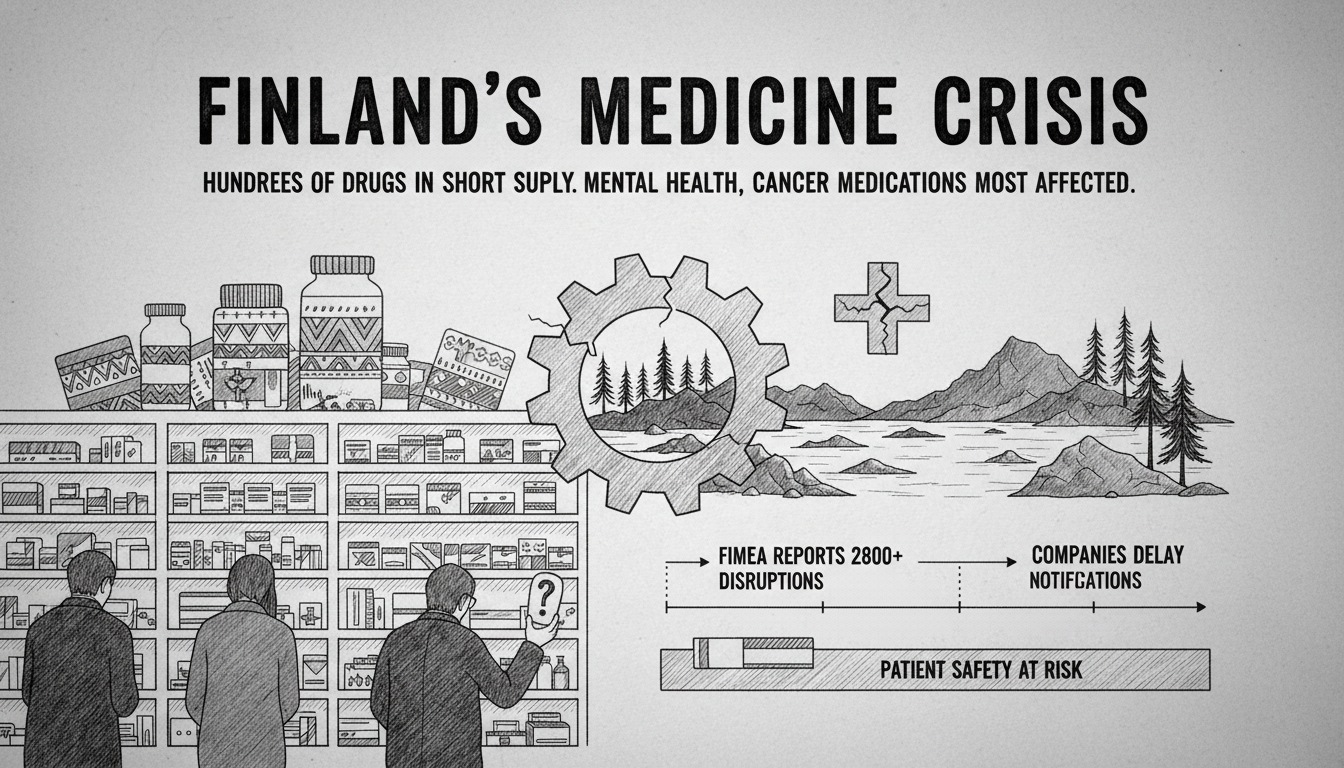
Finnish pharmacies are grappling with widespread availability issues for hundreds of essential medicines, a situation the Finnish Medicines Agency Fimea describes as a growing challenge for patient safety and healthcare continuity. The agency received nearly 2,800 notifications of supply disruptions from pharmaceutical companies last year, a figure consistent with the previous year's high volume. This persistent shortage crisis impacts treatments across critical therapeutic areas, from mental health to cancer care.
Supply disruptions were most frequently reported for medicines affecting the nervous system. These included antipsychotics, antidepressants, ADHD medications, and pain relievers. The second largest category of shortages involved cancer drugs and medications for cardiovascular diseases. Specific critical shortages expanded rapidly last year, affecting schizophrenia treatment olanzapine and mesalazine, used for ulcerative colitis and Crohn's disease.
Pharmaceutical companies cited production problems as the primary cause for most disruptions. These issues included capacity limitations and disturbances in manufacturing processes. Approximately one-fifth of the shortages stemmed from increased demand. Under Finnish law, marketing authorization holders bear responsibility for ensuring adequate medicine supply in the market and for reporting any anticipated disruptions in a timely manner.
Fimea officials note a critical failure in compliance with reporting deadlines. The Medicines Act requires companies to notify the agency at least two months before a supply disruption begins. Only about five percent of notifications met this legal requirement last year. A staggering 48 percent of reports arrived on the disruption start date or even later. This late reporting severely hampers efforts to mitigate the impact on patients and the healthcare system.
Some shortages resulted directly from corporate decisions to withdraw specific medicines from the Finnish market. This was the case for nitrofurantoin preparations used to treat urinary tract infections. The end of last year also saw notifications about the withdrawal of certain opioid substitution therapy products. Fimea holds the authority to grant exceptional and special permits to secure critical treatments when standard supply chains fail.
Finnish pharmacies operate under a legal obligation to maintain a two-week reserve stock of medicines in regular use within their service area. This buffer aims to soften the impact of short-term supply disruptions on patient care. The system provides some relief but cannot compensate for prolonged, systemic shortages across multiple drug classes.
The political dimension of this crisis is gaining attention in Helsinki. Members of the Eduskunta, Finland's parliament, have begun questioning the government's preparedness and the adequacy of current regulations. The issue intersects with broader EU-wide discussions on pharmaceutical supply chain resilience and strategic autonomy. Finland's heavy reliance on imported active pharmaceutical ingredients makes its market particularly vulnerable to global production hiccups and export restrictions.
For international residents and expatriates in Finland, these shortages present a tangible healthcare concern. Patients on long-term medication regimens may face unexpected switches to therapeutic alternatives, requiring new consultations and monitoring. The situation underscores the importance of proactive communication with healthcare providers and early prescription renewals.
Fimea maintains a publicly accessible medicine search tool that lists current supply disruptions. As of early January, the database showed 705 active shortage notifications. The agency emphasizes that not every pharmacy notification to a patient indicates a severe crisis. Often, a suitable alternative medicine is available. Yet for patients with specific treatment needs or sensitivities, alternatives may not exist, forcing difficult clinical decisions.
This is not a new problem but a deepening one. The consistency of high disruption numbers over consecutive years points to structural weaknesses rather than temporary glitches. The Finnish government faces pressure to strengthen national stockpiling strategies and to advocate for more robust EU-level mechanisms to prevent shortages. The core tension lies between market-driven pharmaceutical production and the fundamental public health requirement for reliable access to essential medicines. As one health policy advisor in Helsinki noted, 'When profit calculations dictate supply, public health becomes a secondary consideration.' The coming parliamentary term will likely see legislative proposals aimed at tightening reporting requirements and penalties for non-compliance.