
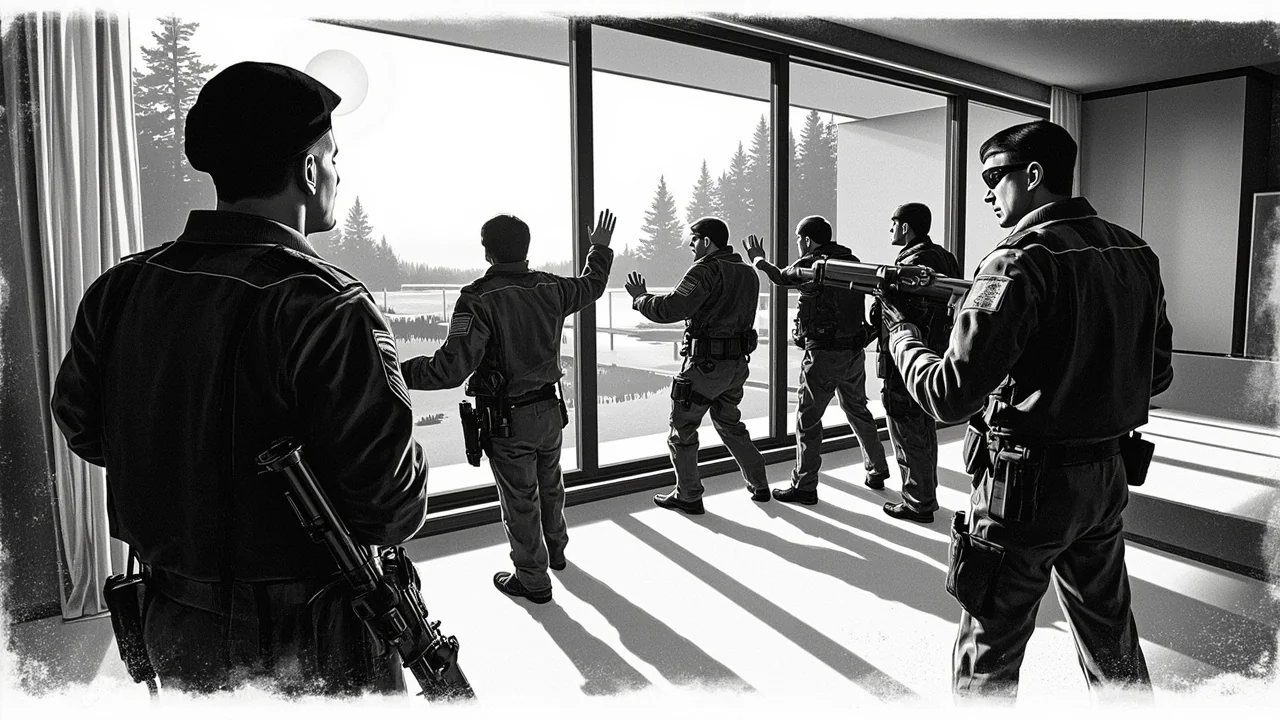
Finnish police have uncovered a drug trafficking operation run from short-term rental apartments in the city center of Jyväskylä. Five individuals, including men from Helsinki and Vantaa, were convicted of drug offenses after a police sting operation last summer. The case exposes a new challenge for law enforcement as criminals exploit the anonymity of the platform economy.
Police became aware of the operation after monitoring amphetamine sales advertisements on the encrypted messaging app Telegram. To identify the sellers, officers posed as buyers, arranging meetings to purchase drugs. This undercover work led them directly to the perpetrators and their temporary bases of operation.
"We identified a clear pattern where apartments were rented for very short periods, specifically for criminal activity," a Central Finland police spokesperson said in a statement. "The platform's ease of use and the transient nature of the rentals provided a cover."
The Sting Operation and Arrests
The investigation culminated in several controlled purchases. A 19-year-old local man from Jyväskylä arrived at one agreed meeting point to sell drugs to an undercover officer, leading to his arrest and charge for a drug offense.
More significantly, police moved on an apartment on Hannikaisenkatu street. There, they arrested a 21-year-old man from Helsinki, a 25-year-old man from Helsinki, and his 27-year-old girlfriend from Vantaa. The trio faced charges for an aggravated drug offense. A search of the apartment and the individuals yielded a total of 60.5 grams of amphetamine, a substantial quantity indicating commercial-scale dealing.
The cases were processed in the District Court of Central Finland, where all five individuals were convicted based on the evidence gathered during the sting. The convictions highlight a successful, proactive police tactic against digital drug markets.
The Airbnb Loophole and Criminal Adaptation
This case is not an isolated incident but part of a broader, concerning trend across Europe. The short-term rental market, popularized by platforms like Airbnb, offers criminals a flexible, anonymous, and easily accessible infrastructure. Apartments can be booked instantly with minimal identity verification, often using stolen or fake payment details. They provide a private, temporary space for storing drugs, packaging them for sale, and meeting customers, all without the long-term commitments or paper trail of a traditional lease.
"The platform economy creates blind spots," explains security analyst Mikko Hyppönen, a Finnish expert in digital crime. "Services designed for convenience and trust are being weaponized. The same features that let a tourist book a flat for a weekend—speed, digital payment, and privacy—are perfect for a criminal needing a stash house for 48 hours. There is no landlord visiting, no long-term neighbors to get suspicious. It's a perfect disposable crime scene."
Law enforcement agencies note that criminals frequently switch locations, booking multiple apartments in a city over a short period to evade detection. This "pop-up" model of drug distribution is notoriously difficult to track using conventional surveillance methods.
The Telegram Marketplace
The Jyväskylä operation's reliance on Telegram is equally significant. The app has become the dominant marketplace for illegal goods in the Nordic region, surpassing the dark web in ease of use for street-level deals. Its encrypted channels and groups allow sellers to advertise directly to local buyers with photos, prices, and menus of available substances.
Police monitoring of these open channels is a key tool. While messages are encrypted, public group names and advertisements are visible. Officers can infiltrate these groups, posing as buyers to gather intelligence and arrange stings, exactly as done in this case.
"Telegram provides the storefront, and the Airbnb provides the back office and warehouse," Hyppönen notes. "It's a streamlined, digital supply chain for illicit goods. Combating it requires police to operate in these same digital spaces."
Legal and Platform Responsibilities
The case raises pressing questions about the responsibilities of platform companies. Finnish law holds individuals accountable for crimes committed in rental properties, but the role of the intermediary platform is less clear. Police increasingly call for greater cooperation from tech companies.
A formal request for comment from Airbnb on its policies regarding criminal activity and cooperation with Finnish police was not immediately returned. Most platforms have terms of service prohibiting illegal activity and systems to report suspicious listings. However, the speed and volume of bookings present a constant challenge.
"Proactive screening is difficult," admits a source within the Finnish tech sector familiar with platform security. "You can flag a user who gets reported, but preventing the first illegal booking is hard. It becomes a game of whack-a-mole. The collaboration needs to be seamless and fast: police identify a property used for crime, and the platform must immediately deactivate the associated accounts to prevent repeat offenses."
Legislators in other countries have begun exploring laws requiring short-term rental platforms to share booking data with authorities in real-time, a move likely to be debated in Finland.
Impact on Finnish Cities and Policing Strategy
For cities like Jyväskylä, Helsinki, and Tampere, the trend presents a dual problem: it facilitates the drug trade and undermines residential security. Neighbors in apartment buildings are left dealing with the fallout of transient criminal activity next door.
The Finnish police response is evolving. The National Bureau of Investigation (NBI) has dedicated cybercrime units focusing on online marketplaces. Meanwhile, local police districts are training officers in digital undercover work and fostering closer ties with financial investigators to track the proceeds from these operations.
"The old model was reactive—responding to a report from a neighbor," the Central Finland police spokesperson said. "Now we are much more proactive, hunting for the activity where it starts: online. The Jyväskylä case is a textbook example of this modern approach."
The success in Jyväskylä will likely lead to more operations of its kind. However, it is an arms race. As platforms potentially tighten controls, criminals will adapt, seeking new vulnerabilities in the digital landscape.
A Persistent Challenge in the Digital Age
The convictions in the District Court of Central Finland close one chapter, but the book remains open. The intersection of encrypted communications and on-demand services creates a resilient model for urban drug distribution. While police tactics are proving effective in individual cases, the systemic issue requires a broader solution.
That solution hinges on a three-pronged approach: continued agile police work in digital environments, meaningful and legally-backed cooperation from global tech platforms, and public awareness. Citizens are often the first line of defense, and reporting suspicious activity regarding short-term rentals—constant brief visitors, unusual smells, or discarded packaging—remains crucial.
Finland's high trust in digital services and its robust platform economy are pillars of modern society. This case serves as a stark reminder that the very tools designed to build convenience and connection can, with malicious intent, be twisted into instruments of crime. The question for authorities, companies, and society is not if another such ring will emerge, but how quickly and effectively the entire ecosystem can respond to shut it down.