
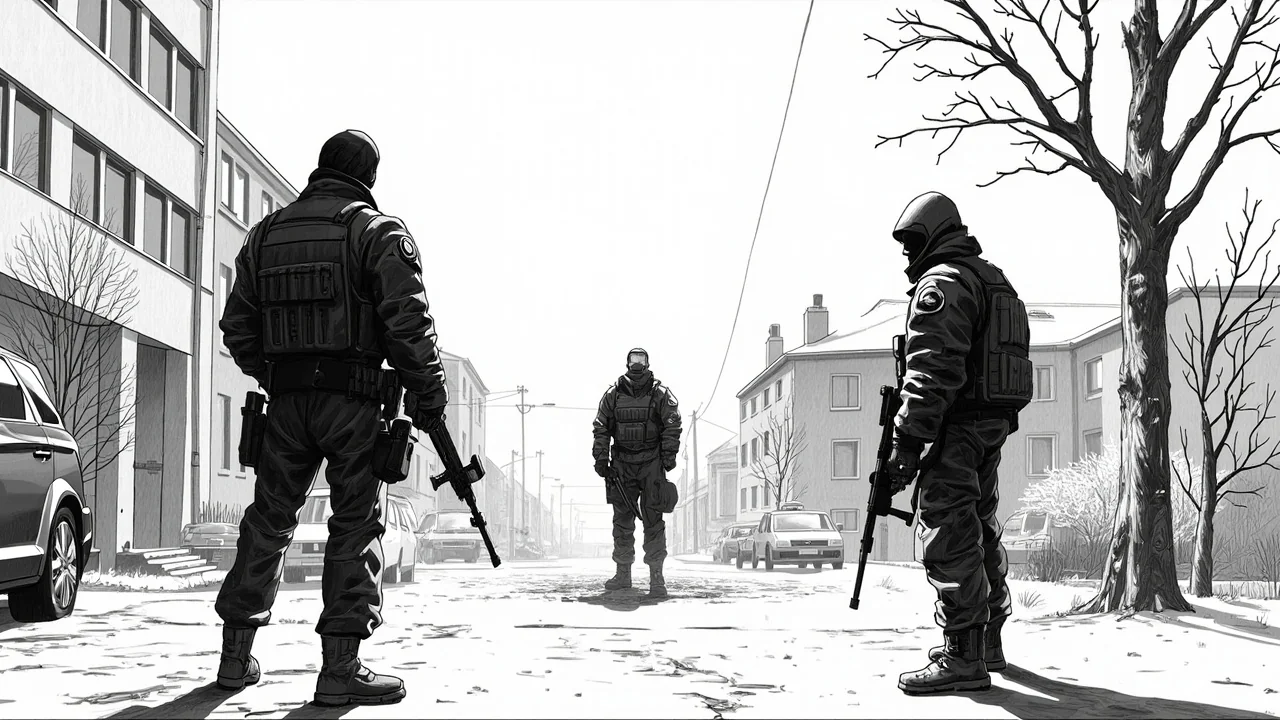
Finland police shot and wounded a 33-year-old man in Vantaa on Friday evening after he refused to drop a knife during a standoff in a residential building. The incident in the Länsimäki district, which involved a large police operation, has highlighted the complex challenges Finnish authorities face with individuals caught in cycles of mental distress and criminality. The man, known to police and local residents for years of disruptive behavior, was hospitalized with non-life-threatening injuries, and prosecutors have launched an investigation into the police use of force.
A Disturbance Years in the Making
Neighbors in the Vantaa apartment building were not surprised when police arrived in force on Friday. According to one resident who spoke about the situation, the man had been causing disturbances for years, often trying to reach his mother's apartment. "Often he has come into the stairwell by breaking the outer door window," the neighbor said. In the days leading up to the police operation, the man had reportedly been staying and even sleeping in the building's common stairwell. The neighbor described a sad and frustrating cycle between the mother and son. "It continues for so long that something bad happens to someone," they added, framing the shooting as a tragic culmination of a long-running local issue.
Police were called to the scene after receiving a report of a man moving in the stairwell with a firearm. Officers located the man inside his mother's apartment within the same building. Authorities stated that the man was armed with a bladed weapon and did not comply with orders to drop it, leading an officer to discharge their service weapon. Evidence markers for a Taser were visible in the stairwell the following day, indicating attempts at less-lethal force. The man is now suspected of violently resisting a public official.
A History of Violence and Previous Convictions
This was not the man's first serious confrontation with authorities. Finnish court records show his actions have been processed numerous times in district courts across the capital region. The most serious prior charge was attempted murder. In December 2020, he fired two shots during an arrest at a Helsinki metro station. The rounds did not hit a security guard but shattered a window, with flying glass fragments causing lacerations to the guard's hands. At trial, the man claimed the gun had discharged accidentally during a struggle. The Helsinki District Court considered his account possible and convicted him of gross negligence causing bodily injury, sentencing him to one year and eight months in prison.
This legal history is central to understanding the police response in Vantaa. Officers arriving at the scene were aware they were dealing with an individual with a prior incident involving a firearm during an arrest. This context inevitably shapes operational tactics and an officer's perception of threat. The shift from a firearm incident in 2020 to a bladed weapon in 2024 does not diminish the potential danger, as knives are lethal at close range, especially within the confined space of an apartment.
The Rigorous Process Following Police Use of Force
In Finland, any instance where police use a firearm in the line of duty triggers an automatic preliminary investigation. Crucially, this investigation is led not by the police themselves, but by a prosecutor. This standard procedure is designed to ensure independent oversight and maintain public trust in the justice system. The East Uusimaa Police Department declined to comment on the specifics of the operation or the events leading up to it over the weekend, citing the ongoing prosecutor-led investigation.
This independent scrutiny is a cornerstone of the Finnish rule of law. It moves the inquiry out of the hands of the involved agency and places it with a state-appointed legal official whose duty is to assess the legality of the actions. The prosecutor will examine whether the use of force was necessary and proportionate given the circumstances. They will review police reports, witness statements, forensic evidence, and the officer's own account. This process, while standard, is never routine, as it balances the difficult, split-second decisions officers must make with the fundamental rights of citizens.
Systemic Gaps in Mental Health and Social Services
Beyond the immediate police investigation, the Vantaa incident exposes deeper questions about Finland's social safety net. The neighbor's account paints a picture of a man trapped in a recurring pattern linked to his mother's home, suggesting underlying issues that may involve mental health challenges, addiction, or family dysfunction. His history of sleeping in a stairwell points to potential homelessness or an unstable living situation. The comment that the mother "again let him into her apartment" indicates a fraught family dynamic where boundaries are repeatedly crossed, with no effective intervention to break the cycle.
Finland prides itself on a comprehensive welfare state, but cases like this reveal where individuals can fall through the cracks. Repeated minor disturbances or non-compliance with social services often do not trigger a coordinated, forceful response until a crisis erupts. The police become the default responders to social and health crises, a role for which they are primarily equipped with law enforcement tools rather than therapeutic ones. While Finland has made strides in integrating mental health professionals into some police operations, particularly in larger cities, resources are stretched, and prevention remains a challenge.
Community Impact and the Path Forward
The shooting leaves a mark on the quiet Vantaa neighborhood. For residents, it is the violent endpoint of a long-simmering nuisance that they felt powerless to resolve. Their empathy for the mother and son's "sad" situation is mixed with frustration over the repeated disruptions and fear stemming from the escalation. Such incidents test community cohesion and trust in the system's ability to manage complex human problems before they turn violent.
The path forward hinges on the findings of the prosecutor's investigation. It will determine whether the officer's actions were legally justified. Regardless of the outcome, the case should prompt a broader discussion in Finnish society. How can municipal social services, healthcare providers, and police improve coordination to proactively engage with individuals showing patterns of high-risk behavior? Are there sufficient resources for assertive community treatment and supported housing to prevent situations where the only state intervention comes at the point of a crisis requiring armed police?
The man in Vantaa survived the shooting. His physical recovery in hospital is the immediate next step. But for him, his family, the involved police officer, and the community, the longer and more difficult process of addressing the root causes of this tragedy has only just begun. Finland must now examine if its famed social infrastructure is robust enough to catch people before they, and those sworn to protect them, are left with only impossible choices in a stairwell.