
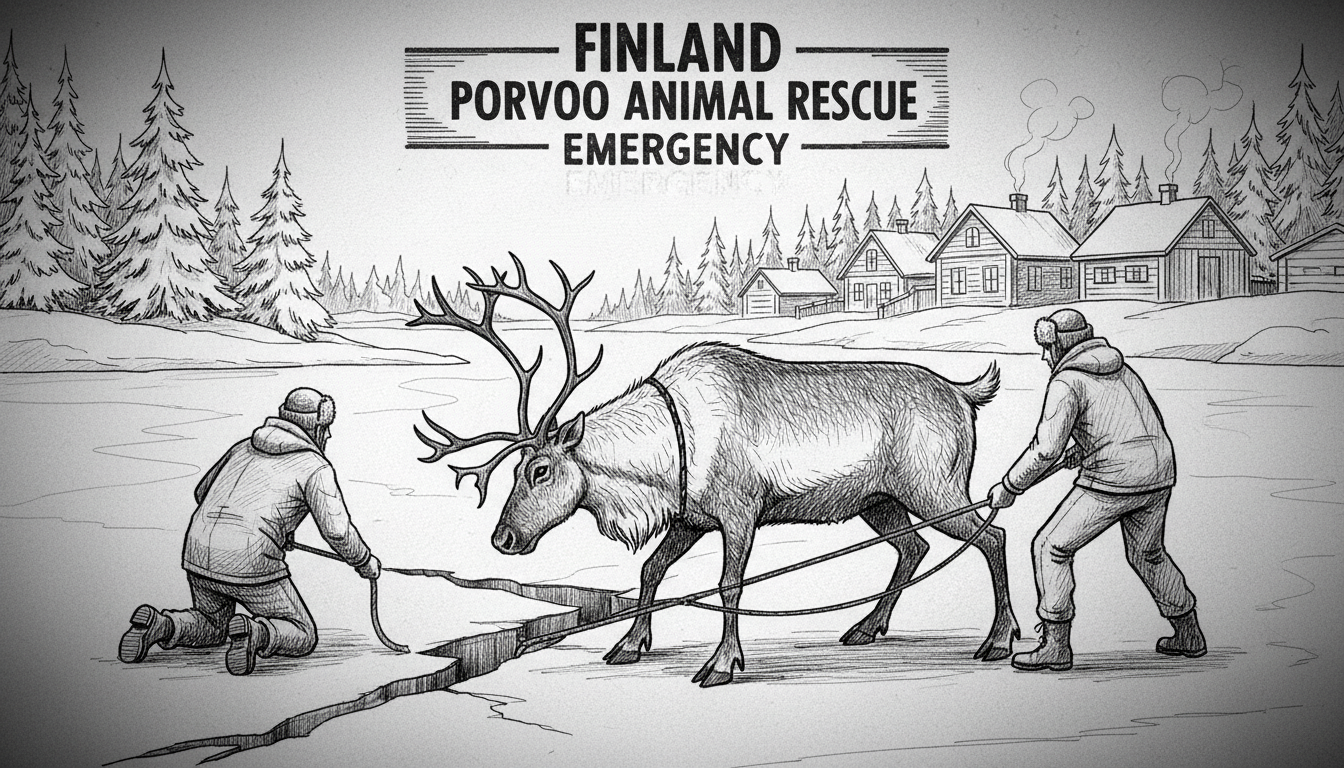
Finland’s Eastern Uusimaa rescue department answered at least one call for animal rescue this week, sparking public fascination. The operation unfolded on Wednesday morning in the historic heart of Porvoo, a picturesque medieval city just 50 kilometers from Helsinki. While the rescue service's official report was brief, such incidents reveal the hidden scope and sophisticated protocols of Finland’s emergency services, which treat animal welfare as a core component of public safety. This single call to the Itä-Uusimaa rescue department underscores a national reality: Finland’s fire and rescue services respond to thousands of non-human emergencies annually, integrating them into their broader mandate of societal protection.
A Routine Call with Unseen Complexity
The alert reached the Itä-Uusimaa rescue department at 11:30 AM local time. Details about the specific animal or precise nature of the predicament were not disclosed in the initial service report, a standard practice to maintain operational privacy. What is publicly known is that the incident required professional intervention in Porvoo's city center, an area characterized by cobblestone streets, old wooden houses, and the flowing Porvoonjoki river. A rescue mission in such a densely built, historically sensitive location presents unique challenges. Emergency vehicles must navigate narrow lanes, and crews must adapt standard procedures to protect both the animal and the surrounding urban fabric. ‘Every animal rescue is different, and the environment always dictates our tactical approach,’ a veteran Finnish rescue commander might explain. ‘In an old town center, our first concern is always access and the safety of the public, the animal, and our own crew.’
Finland’s Integrated Rescue Framework
This event in Porvoo is not an isolated act of kindness but a routine function within a highly organized system. Finland’s 22 regional rescue departments, including Itä-Uusimaa, operate under the Rescue Act. Their statutory duty extends beyond fighting fires to encompass ‘preventing and limiting accidents and damage.’ This broad legal foundation provides the authority to respond when animals are in peril, whether trapped, injured, or endangered. The operational philosophy is clear: an animal in distress can pose a risk to itself and to humans, and its suffering warrants a professional response. The Finnish model contrasts with systems in some other countries, where animal rescues may be delegated solely to volunteer charities or police forces with less specialized equipment. Here, the chain of command is direct. A citizen calls the universal emergency number 112, which routes the call to the regional emergency services dispatch center. If the situation is assessed as requiring specialized tools or skills—like hydraulic cutters, high-reach platforms, or water rescue gear—the local rescue department is deployed.
Training and Tools for Non-Human Lives
The efficiency of these interventions hinges on continuous training and adapted equipment. While Finnish rescue personnel are not veterinarians, they receive specific instruction in animal handling, behavior recognition, and safe rescue techniques. This training covers common domestic animals like cats and dogs, but also extends to livestock, wildlife, and even exotic pets. The equipment carried on fire engines often includes items repurposed for animal rescue: soft ropes, specialized harnesses, poles, and protective blankets. In coastal or riverine areas like Porvoo, water rescue units might be mobilized for an animal in difficulty. The goal is always a calm, controlled extraction to minimize trauma. ‘Our teams train for scenarios where the subject cannot understand our instructions or may react with fear or aggression,’ an instructor from the Emergency Services College would likely note. ‘Patience and the correct use of equipment are paramount to a successful outcome.’
Public Responsibility and Prevention
While the rescue services stand ready, Finnish animal welfare organizations consistently emphasize prevention as the first line of defense. The Porvoo incident serves as a timely reminder for pet owners and the general public. Simple actions significantly reduce risks: ensuring pets are microchipped and wearing collars with contact information, keeping cats indoors during hazardous weather, and properly securing dogs near traffic or open bodies of water. For farmers, maintaining secure fencing and stable structures is crucial. Public awareness campaigns often highlight the strain that preventable incidents place on emergency resources. A call to rescue a cat from a tree, for instance, could potentially divert a crew from a other emerging situations. Citizens are encouraged to assess non-critical situations and contact local animal welfare societies first when there is no immediate danger. However, the 112 line remains the unequivocal point of contact for any life-threatening emergency, human or animal.
The Broader Context of Welfare Policy
This operational readiness reflects Finland’s broader cultural and legislative stance on animal welfare. The country’s Animal Welfare Act is considered one of the most stringent in the world, mandating that animals be treated with respect and protected from unnecessary suffering. This legal principle filters down to municipal and operational levels, informing the policies of rescue departments. It creates a societal expectation that public services will intervene. Furthermore, Finland’s position in the European Union means its national standards interact with EU directives on animal health and welfare, promoting a consistent regional approach. The work of rescue services thus becomes a practical enforcement mechanism of these high ethical standards. It represents a tangible, day-to-day implementation of the law, moving it from statute books into action on the streets of historic towns like Porvoo.
A Symbol in the Old Town
The image of rescue personnel carefully working in Porvoo’s postcard-perfect center is symbolically potent. It juxtaposes ancient, tranquil beauty with modern, compassionate intervention. Porvoo, with its well-preserved history, is a living monument to Finnish resilience and identity. The scene of a rescue team focused on saving a single vulnerable creature within this setting subtly reinforces a national self-image: progressive, humane, and responsible, even amidst its historic foundations. The story, while brief, resonates because it touches on the universal theme of compassion for dependent creatures. It demonstrates that a society's character is often revealed not only in how it treats its people, but also in how it mobilizes complex systems to aid its smallest and most voiceless members. The next call for an animal in distress will come, and Finland’s rescue services will again respond, making this quiet mission in Porvoo not an anomaly, but a standard pledge upheld across the nation.