
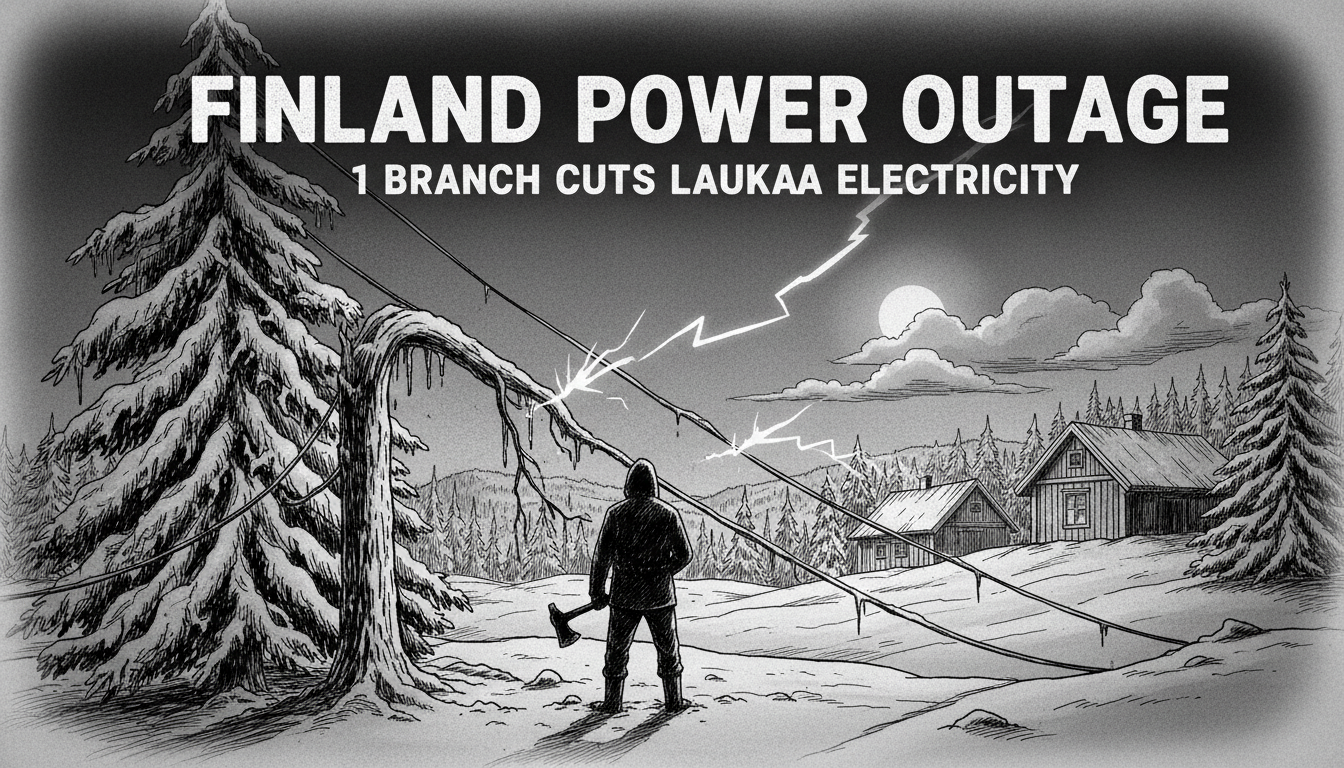
Finland power outages remain a persistent threat as a single falling branch knocked out electricity for residents in Laukaa during a weekend storm. The incident underscores the constant battle between the nation's vast forests and its overhead power grid.
Petri Ruotsalainen, a resident of Kuhankoski in Laukaa, was expecting disruptions after severe weather warnings. The surprise was not the flickering lights but the violent scene that followed. 'But then a banging sound started, and in the darkness outside, you could see sparks flying,' Ruotsalainen described the midnight event between Saturday and Sunday. The cause was a large branch crashing onto a primary power line, severing the electrical connection with a dramatic shower of sparks.
A Recurring Challenge for a Forested Nation
This type of disruption is a common headline across Finland, where forests cover approximately 75% of the land area. Storms frequently send trees and limbs onto overhead lines, especially in rural municipalities like Laukaa in the Central Finland region. While grid operators conduct continuous vegetation management, the scale of the task is immense. The country's energy infrastructure is built to withstand harsh Nordic conditions, yet nature often proves a formidable opponent.
In 2022, the average Finnish electricity customer experienced about 15 minutes of power disruption, excluding major exceptional events. This reliability is high by global standards, a testament to grid maintenance and rapid response crews. However, for the household suddenly plunged into darkness on a stormy night, the statistical average provides little comfort. The immediate focus is on restoration times and communication from the local energy company.
The Cost of Keeping the Lights On
Experts point to a clear but expensive solution: burying power lines. Underground cabling is significantly less vulnerable to storm damage, falling trees, and even icing events. 'The resilience of the grid is a top priority, but the economics are challenging,' explains one industry analyst familiar with the Finnish network. 'In dense urban areas, underground cabling is standard. In sparsely populated rural regions, the investment per customer can be prohibitively high.'
This creates a geographical disparity in outage risks. Urban centers enjoy the protection of underground networks, while rural towns and isolated homes remain dependent on overhead lines snaking through forested corridors. For grid operators, the calculus involves balancing preventive tree trimming, rapid-response capabilities, and selective investment in underground infrastructure where it delivers the most benefit.
A Conflict with Climate Goals?
The push for infrastructure resilience intersects with Finland's ambitious environmental targets. The nation aims to be carbon neutral by 2035, a goal driving a rapid increase in renewable energy and electrification of transport and industry. This makes a stable, reliable electricity grid more critical than ever. Every outage not only inconveniences residents but can also disrupt the precise balance of the power system.
Increased electrification means society's dependency on a continuous flow of electricity grows deeper. A short outage a decade ago might have meant a dark house and a silent radio. Today, it can mean a disconnected home office, a stalled electric vehicle charger, and a failed heat pump during winter. The stakes for grid reliability are being silently ratcheted upward by the very climate policies designed to secure a sustainable future.
The Human Response in the Dark
Incidents like the one in Laukaa highlight the human capacity to adapt. Residents in storm-prone areas often have contingency plans, from backup generators to well-stocked fireplaces. The social contract with utility companies demands transparent communication during outages. Customers now expect real-time updates via mobile apps and SMS, tracking the progress of repair crews on digital maps.
The psychological impact is also real. A sudden power cut, especially accompanied by the explosive sounds and flashes described by Ruotsalainen, can be a startling and stressful event. It serves as a brute-force reminder of our fundamental reliance on engineered systems. In moments like these, the complex, interconnected grid becomes a very local, personal experience.
Looking Ahead: A More Resilient Grid?
The path forward for Finland involves a multi-pronged strategy. Continued investment in smart grid technology can help isolate faults faster and reroute power automatically. Enhanced weather forecasting allows for pre-emptive positioning of repair teams. Strategic placement of new renewable generation and storage can also create micro-grids that can operate independently if the main grid fails.
However, the core challenge remains physical. As long as conductive lines are suspended on poles through forests, storms will bring them down. The debate is whether society is willing to pay the substantial premium to bury more of them. For now, the sound of chainsaws and the sight of utility trucks racing down country roads after a gale will remain a familiar part of the Finnish landscape. The branch that fell in Laukaa is a small event in a national context, but it tells a much larger story about infrastructure, environment, and modern life.
Will Finland's pursuit of carbon neutrality force a parallel, massive investment in fortifying its physical grid against the very weather extremes climate change may intensify? The next storm, and the next outage, will keep asking that question.