
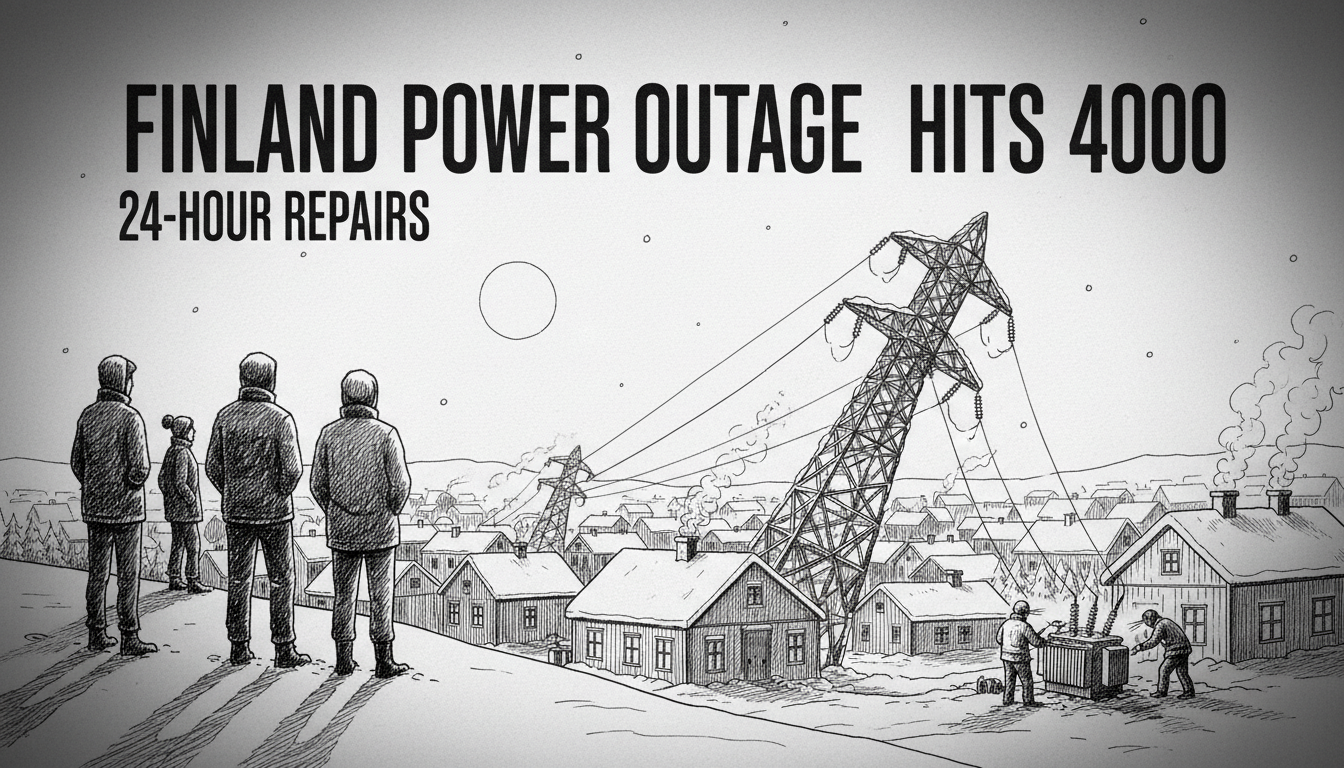
Finland's power grid faced a severe test as over 4,000 customers in Central Finland entered a second day without electricity on Sunday. A violent weekend storm, described by grid operator Elenia as the most destructive in a decade, caused widespread damage to overhead power lines across the Keski-Suomi region. Repair crews worked through the night, but officials warned some households and businesses could remain disconnected for up to 24 hours in the hardest-hit areas.
"This was the worst storm in ten years from Elenia's perspective. A very exceptional situation," said Heini Kuusela-Opas, Elenia's Communications Director, in a statement. The company, one of Finland's largest electricity distribution system operators (DSOs), has mobilized all available technical teams. Their immediate priority is restoring power to critical infrastructure and the largest customer blocks before addressing isolated rural connections.
A System Pushed to Its Limits
Finland's electricity network is renowned for its high reliability, consistently ranking among Europe's best for supply security. This reputation is built on a resilient, well-maintained grid and comprehensive preparedness for harsh Nordic winters. Sunday's extensive disruption, however, highlights a specific vulnerability: the vast network of overhead lines in forested regions. High winds and heavy, wet snow can bring down trees and branches onto power lines, causing cascading faults.
The storm in Keski-Suomi delivered precisely that combination. While Finnish DSOs are adept at managing typical winter weather, the intensity of this event exceeded standard operational parameters. The scale of the damage—scattered across a wide geographical area—slows assessment and repair, turning a localized outage into a multi-day crisis for thousands.
The Human and Economic Toll
Beyond the simple number of connections, an extended outage disrupts daily life profoundly. In rural Central Finland, many properties rely on electricity for heating, water pumps, and cooking. As temperatures hover near freezing, the lack of power quickly becomes a comfort and safety issue. Local municipalities activated emergency services to check on vulnerable residents.
For businesses, the timing on a weekend compounds commercial losses. Small enterprises, from grocery stores to workshops, face spoilage of goods and forced closure. "Every hour without power is a direct hit to our turnover and our ability to serve the community," remarked one local shop owner in the affected region, who asked not to be named. The incident serves as a stark reminder of modern society's fundamental dependence on a continuous electricity supply.
Climate Change and Grid Resilience
Energy experts are framing this event within a broader, concerning trend. "What we classify as an 'exceptional' storm is becoming less of an exception," notes Dr. Eero Vartiainen, a researcher specializing in energy systems at the University of Helsinki. "Climate projections for the Nordic region indicate increased volatility in weather patterns, including more frequent and intense winter storms."
This reality forces a difficult conversation about infrastructure investment. Burying power lines underground offers superior storm resistance but comes at a cost estimated to be up to ten times higher than overhead lines. For sparsely populated regions like parts of Keski-Suomi, the economic case for such large-scale investment is challenging. The alternative is enhancing the speed and capacity of repair operations—a reactive, rather than preventative, strategy.
The Finnish government and the Energy Authority monitor these events closely, as they influence national energy security policy. Prolonged regional outages test the limits of contingency plans and resource sharing between DSOs. This incident will likely feed into ongoing parliamentary discussions in the Eduskunta about funding for critical infrastructure hardening.
The Road to Restoration
Elenia's restoration strategy follows a standard protocol: secure high-voltage lines first, then repair medium-voltage backbone networks, and finally reconnect individual low-voltage customer connections. This method ensures the fastest return of power to the greatest number of people. However, the final phase—reaching isolated farms and homes at the end of long forest roads—is the most time-consuming.
Customers reported receiving automated updates via Elenia's outage map and SMS service, a system that has improved significantly in recent years. Communication during such crises is vital for managing public expectation and safety. The company stated that all available external contractor teams were also enlisted to assist their own crews, highlighting the all-hands-on-deck nature of the response.
Looking Beyond the Immediate Crisis
Once the lights are back on across Keski-Suomi, the analysis will begin. Elenia will be required to report on the causes and response to the Energy Authority. Key performance indicators, such as the System Average Interruption Duration Index (SAIDI), will reflect this event, potentially impacting the company's regulated returns and incentivizing future investment in resilience.
The storm arrives amid a pivotal moment for Finland's energy landscape. The nation has aggressively added wind power and closed its last Russian energy imports, achieving a high degree of self-sufficiency. This success story at the national generation level, however, depends entirely on the integrity of the regional distribution grids that deliver power to end-users. A vulnerability in one link can compromise the whole chain.
For residents waiting in the cold and dark, the broader policy debates are secondary to the immediate need for heat and light. Their experience underscores a universal truth: the reliability of a nation's infrastructure is only as strong as its weakest point during a storm. As Finland continues to navigate its energy transition, balancing affordability with resilience in the face of a changing climate will be one of its defining challenges. How the country chooses to invest in its grid today will determine who stays warm and connected during the next decade's worst storm.