
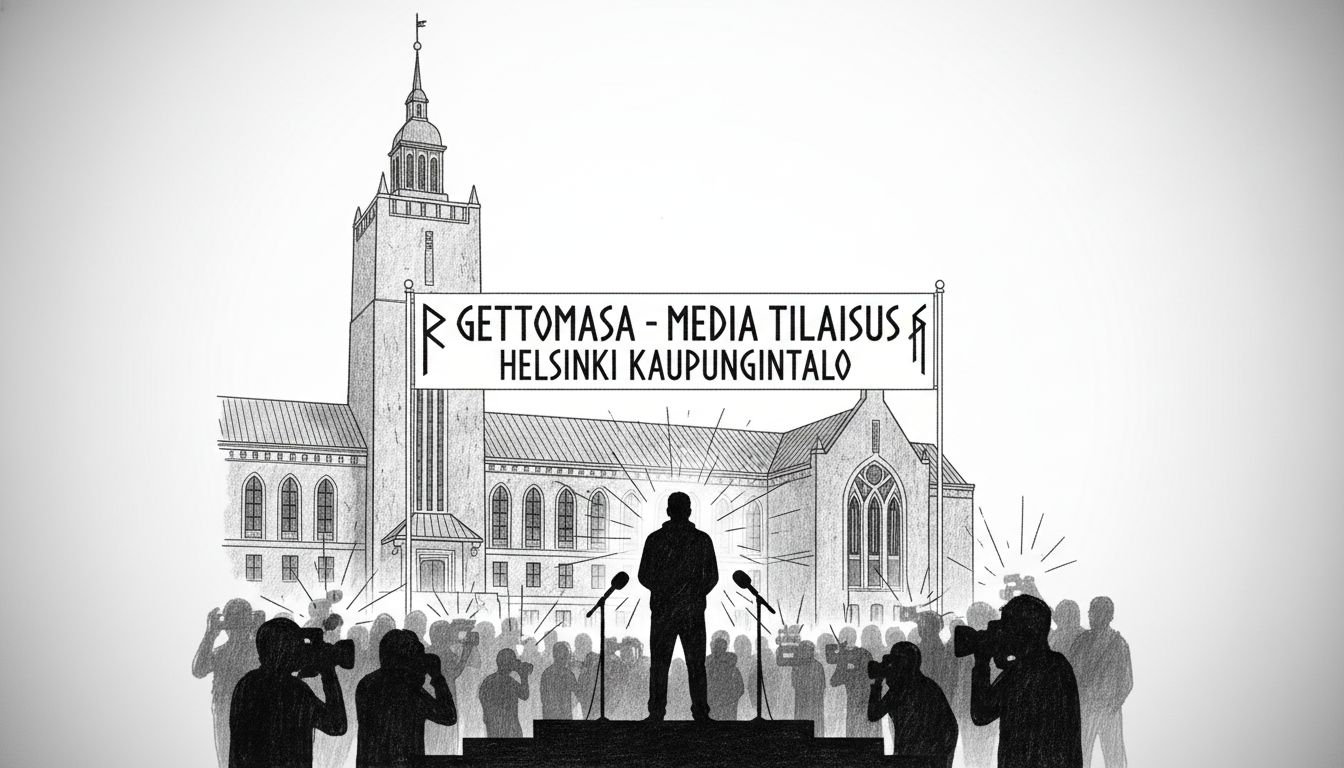
Finnish rapper Gettomasa's media conference at Jyväskylä City Hall represented a rare breach of municipal policy that strictly limits private use of the historic building. The Wednesday morning event in central Finland's educational hub caused surprise, highlighting a tension between traditional governance spaces and modern cultural promotion. This exception to Jyväskylä's long-standing rules offers a case study in how Finnish municipalities balance public resource management with supporting national arts.
A Strict Policy Meets a Cultural Request
Jyväskylä City Hall typically functions as the administrative heart of the city, hosting council meetings and official municipal business. The building rarely opens for private events, weddings, or commercial activities. City officials occasionally permit events from partner organizations like the University of Jyväskylä or city-owned corporations. All other requests undergo meticulous scrutiny.
Maarit Laukkala, secretary to the city manager, confirmed the rapper's label approached the city in October. The request was for a media event to promote Gettomasa's new work. Laukkala and chief of staff Heli Leinonkoski evaluated the proposal with great care. Their decision to approve marked a significant departure from standard operating procedure.
The Deliberation Behind the Decision
City officials weighed the request against policy guidelines for weeks. They considered the building's primary role in municipal governance and its symbolic importance to Jyväskylä. The final verdict acknowledged the value of occasionally hosting diverse cultural events. 'We thought about it very carefully and finally concluded that it's nice to have these kinds of events at the city hall sometimes,' Laukkala said.
This careful deliberation underscores the formal process governing public space use in Finland. Municipal buildings are not lightly offered for promotional activities. The decision reflects a conscious choice to make an exception for a prominent figure in Finnish music. It signals a potential shift in how cultural contributions are valued within civic infrastructure.
Expert Analysis on Municipal Governance
Municipal governance experts note that Finnish cities face constant pressure to keep public buildings accessible yet focused on core functions. Dr. Elina Virtanen, a professor of public administration at the University of Helsinki, explains the typical stance. 'City halls are symbols of democratic governance, not commercial venues. Policies restricting private use protect public resources and maintain decorum.'
Virtanen points out that exceptions require strong justification. They often involve community benefit or alignment with city strategic goals. In this case, promoting a local artist with national fame might align with Jyväskylä's cultural objectives. The decision could reflect an evolving view of public spaces as hubs for broader civic life, not just administration.
Other experts caution against setting precedents that blur lines between public service and private gain. Ensuring transparency in decision-making is crucial. The Jyväskylä case shows a balanced approach, with officials documenting their rationale. This maintains public trust while allowing for flexibility.
The Music Industry's Perspective on Venue Choice
Finnish hip-hop has grown from underground scenes to mainstream popularity over the past decade. Artists like Gettomasa command significant audiences and media attention. Music industry analysts see strategic value in holding a media event at an unconventional location like a city hall.
'Municipal buildings carry an aura of authority and seriousness,' notes Tapani Järvinen, a Helsinki-based music promoter. 'For a rapper, using that space breaks expectations and generates buzz. It elevates the artist's profile by associating them with institutional legitimacy.' This move can differentiate an artist in a competitive market.
Jyväskylä itself has a vibrant cultural scene, supported by its university and student population. Hosting a rapper's event connects the city administration with youthful, dynamic cultural expressions. It demonstrates municipal support for contemporary arts beyond classical forms. This alignment can enhance the city's image as a progressive educational center.
Cultural Integration and Policy Evolution
Finland's cultural policies often emphasize supporting diverse artistic expressions through institutions like the Arts Promotion Centre. However, direct municipal involvement in hip-hop promotion is less common. The Jyväskylä event suggests a gradual integration of modern music forms into traditional civic spaces.
Historically, Finnish city halls have hosted cultural events like concerts or exhibitions, but usually with a public service ethos. Commercial media events for individual artists are far rarer. This incident may inspire other municipalities to reconsider how they engage with popular culture. It could lead to more flexible policies that accommodate cultural relevance.
Public reaction in Jyväskylä has been mixed. Some residents appreciate the city's openness to contemporary culture. Others question whether public resources should support commercial promotions. This debate mirrors wider discussions in Nordic societies about the role of public institutions in cultural life.
Future Implications for Finnish Cities
The Jyväskylä precedent does not automatically open city halls to all private events. Officials stress that each request will continue to be assessed individually. The key factors include the event's nature, its alignment with city interests, and potential community benefit. This case highlights the importance of discretionary judgment in municipal governance.
Other Finnish cities, such as Tampere or Oulu, might observe this case when reviewing their own policies. The trend towards multifunctional public spaces is growing across the Nordic region. Cities are exploring ways to make buildings more accessible and relevant to diverse populations. Cultural events can activate spaces outside business hours, adding vitality to urban centers.
For artists, the message is that traditional institutions may become more accessible with compelling proposals. The success depends on demonstrating broader value beyond mere promotion. Gettomasa's event likely benefited from his status as a well-known figure with ties to Finnish youth culture.
A Look Ahead: Balancing Tradition and Innovation
Jyväskylä's decision to host Gettomasa's media conference is a small but significant moment in Finnish cultural policy. It shows that municipal rules can adapt to contemporary realities without compromising core principles. The careful deliberation process sets a model for other cities facing similar requests.
As Finnish hip-hop continues to influence mainstream culture, its intersection with public institutions may increase. This requires ongoing dialogue between artists, officials, and citizens. The goal is to ensure public spaces serve the community's evolving needs while maintaining their foundational purposes.
Ultimately, the rare sight of a rapper at the city hall podium reflects a dynamic society. It underscores Finland's ability to blend tradition with innovation in governance and culture. The lasting impact will depend on how such exceptions are managed and justified in the years to come.