
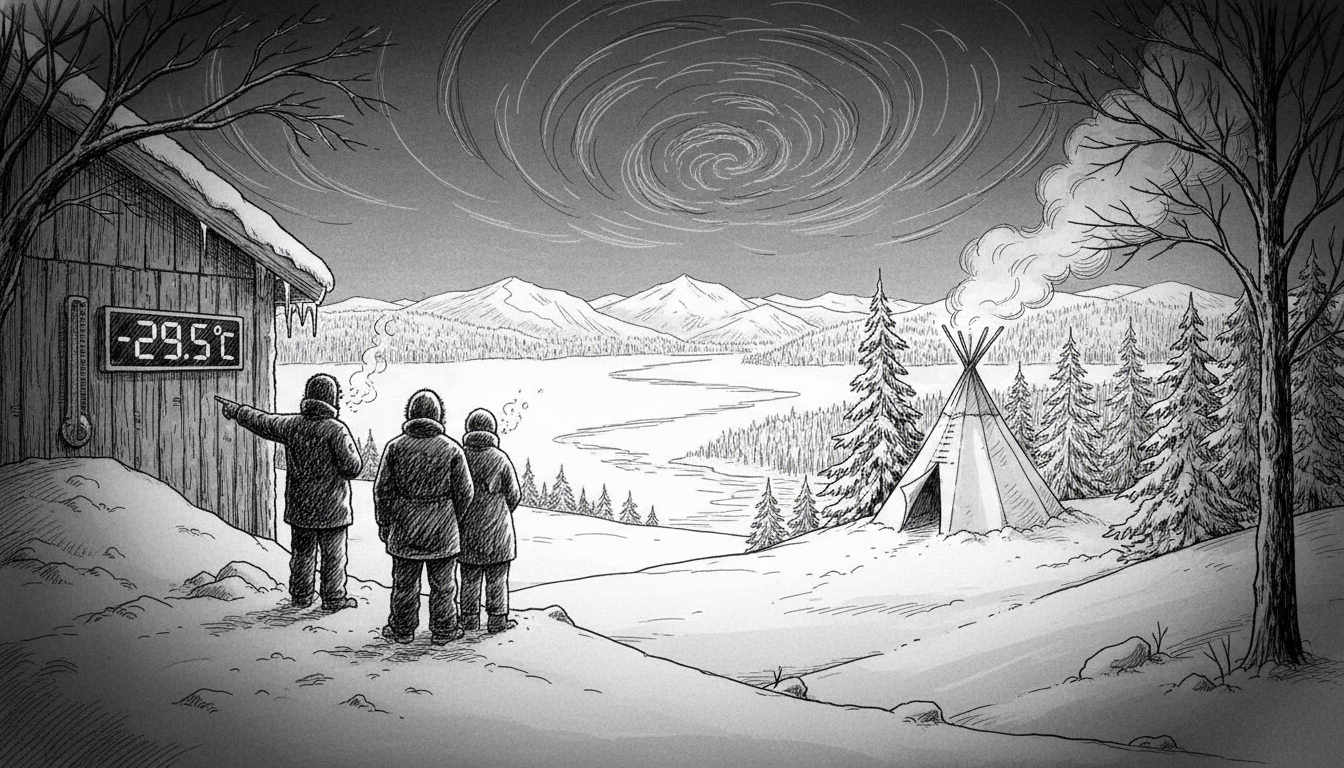
Finland is experiencing unusually cold weather that will persist through late November, according to the latest monthly forecast from the European Centre for Medium-Range Weather Forecasts. The entire country faces below-average temperatures with widespread frost conditions affecting nearly all regions.
This week brings colder-than-normal conditions across Finland. Most areas will see temperatures 2-5 degrees Celsius below seasonal averages. In Lapland, temperatures are running 5-10 degrees colder than typical for this time of year. Only coastal western areas might experience temperatures fluctuating around the freezing point.
The weather pattern shifted toward winter conditions around mid-November. Frost has become widespread nationwide. Behind this unusual cold spell lies a weakening of the polar vortex in the stratosphere. This atmospheric phenomenon has moved directly over Fennoscandia, driving the persistent chill.
The week began with a record-breaking cold measurement. At the Vuotso observation station in Sodankylä, temperatures plunged to -29.5 degrees Celsius on Monday, November 17. This marks the coldest temperature recorded so far this winter season.
Most of Finland will experience relatively dry conditions this week. However, southern and central regions could see snowfall during Wednesday and Thursday. The cold pattern appears likely to continue into the week beginning November 24.
Recent forecasts show some variation in the track of low-pressure systems. Some weather models suggest these systems might bring milder air to parts of Finland. The exact timing and extent of any temperature moderation remains uncertain.
This early cold snap has significant implications for energy consumption and transportation. Finnish households typically face higher heating costs during prolonged cold periods. Road maintenance crews must contend with icy conditions much earlier than usual.
The intensity of this November cold stands out even for Finland, a country accustomed to harsh winters. Such early deep freezes can affect everything from agriculture to winter tourism preparations. Many residents are adjusting to the sudden arrival of winter-like conditions nearly a month ahead of schedule.