
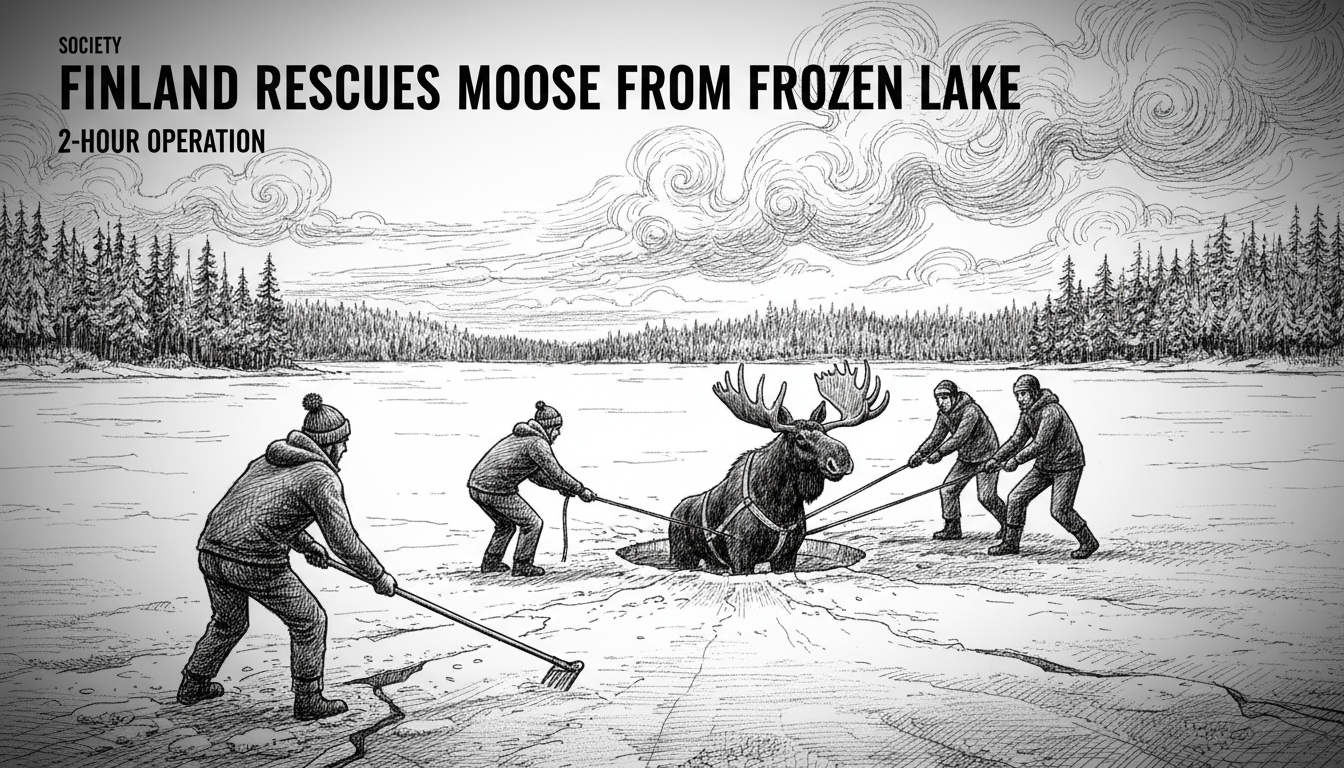
Finland moose rescue crews performed an unusual two-hour operation in Karstula on Monday, saving a large animal that had fallen through the ice on Hirvijärvi lake. The dramatic incident unfolded around noon when the moose, unable to climb back onto the frozen surface, found itself trapped in freezing water roughly 50 meters from shore. Rescue services from Keski-Suomi meticulously broke a path through the ice, creating an escape route for the exhausted animal to swim to safety.
"It was pretty slow work," said Leevi Hetekorpi, the on-duty fire chief for Central Finland. The moose finally reached land a little after 2 p.m. and immediately continued its journey into the nearby forest. Hetekorpi reported the animal was tired and likely very cold, but otherwise appeared to be in good health following its ordeal. The operation's duration was extended by the long travel distances to the remote location and the physical difficulty of breaking thick ice.
A Delicate Operation on Thin Ice
The rescue posed unique challenges for the Central Finland emergency team. Unlike human ice rescues, which often involve ropes and flotation devices, the strategy for the large, panicked animal required a different approach. Crews worked to fracture the ice sheet in a direct line toward the shore, a painstaking process covering the 50-meter distance. The goal was to reduce the physical barrier preventing the moose from using its own strength to swim to shallow water.
Wildlife experts note that such incidents highlight the precarious interface between Finland's robust animal populations and human-managed landscapes. Moose are powerful swimmers, but a sudden fall through ice can lead to hypothermia and exhaustion, leaving them unable to haul their considerable mass—often over 500 kilograms—back onto a slippery surface. The successful outcome in Karstula was a relief, but not all such stories end well.
Finland's Complex Relationship with Its Largest Land Animal
Moose hold a distinctive place in Finnish ecology and culture. They are the country's largest land mammal, with a population managed through regulated hunting licenses to prevent overgrazing and control forest damage. Encounters are common, especially in rural regions like Central Finland, where forests and lakes create a vast habitat. These animals are generally well-adapted to the harsh climate, but changing environmental conditions are creating new risks.
The name of the lake itself, Hirvijärvi, translates to "Moose Lake," adding a layer of irony to the event. It underscores how deeply intertwined these animals are with the Finnish sense of place. Local reactions to the rescue were positive, with many following the story online and expressing gratitude for the crews' efforts to save a national symbol from a grim fate.
Climate Change and Unstable Ice: A Growing Threat
This incident raises pointed questions among conservationists about the broader environmental context. While late-winter and early-spring ice has always been hazardous, climate scientists warn that warming temperatures are leading to more unpredictable and weaker ice conditions. Periods of thaw and refreeze create unstable layers that can deceive both animals and humans.
"What we are observing is an increase in the volatility of ice formation," explains a Finnish environmental researcher familiar with boreal ecosystems, who preferred not to be named as they were not directly involved in the case. "The seasonal windows for safe, thick ice are shortening. This affects wildlife mobility and migration patterns across frozen waterways, which moose and other animals rely on during winter." These conditions may lead to more frequent tragedies for wildlife, posing challenges for rescue services and conservation alike.
Public Safety and Wildlife Awareness
The Karstula operation also serves as a critical reminder of public safety. Finnish rescue authorities consistently warn people about the dangers of venturing onto ice, particularly during transitional seasons. The same unstable conditions that trapped the moose pose a severe risk to humans. The Rescue Department's work, while in this instance focused on an animal, highlights the specialized skills and equipment required for any ice emergency.
Furthermore, the event illustrates what to do—and what not to do—when encountering wildlife in distress. The public is advised never to attempt a rescue themselves, especially with a large, frightened animal like a moose. Instead, they should immediately call the national emergency number 112, providing the exact location and situation, just as was done successfully at Hirvijärvi. Professional crews are trained to assess risks and execute a plan that prioritizes both human and animal safety.
A Symbolic Rescue in the Finnish Wilderness
Ultimately, the story of the moose in Hirvijärvi is a small but resonant chapter in Finland's relationship with its natural world. It reflects a societal willingness to commit significant resources to save a single wild animal, a value not universally shared. The two-hour effort by the rescue team speaks to a practical compassion embedded in Finnish society.
As the moose disappeared into the forest, the crews packed up their gear, their Monday shift marked by an unusual and successful mission. The animal's fate after its rescue remains unknown, but it was given a second chance—a testament to a day where human intervention positively altered the course of a wild life. In a landscape where nature is often both majestic and merciless, this intervention stands as a hopeful exception. It prompts a broader reflection on our responsibility in an environment where the lines between wild and managed spaces are increasingly blurred by changing climates.