
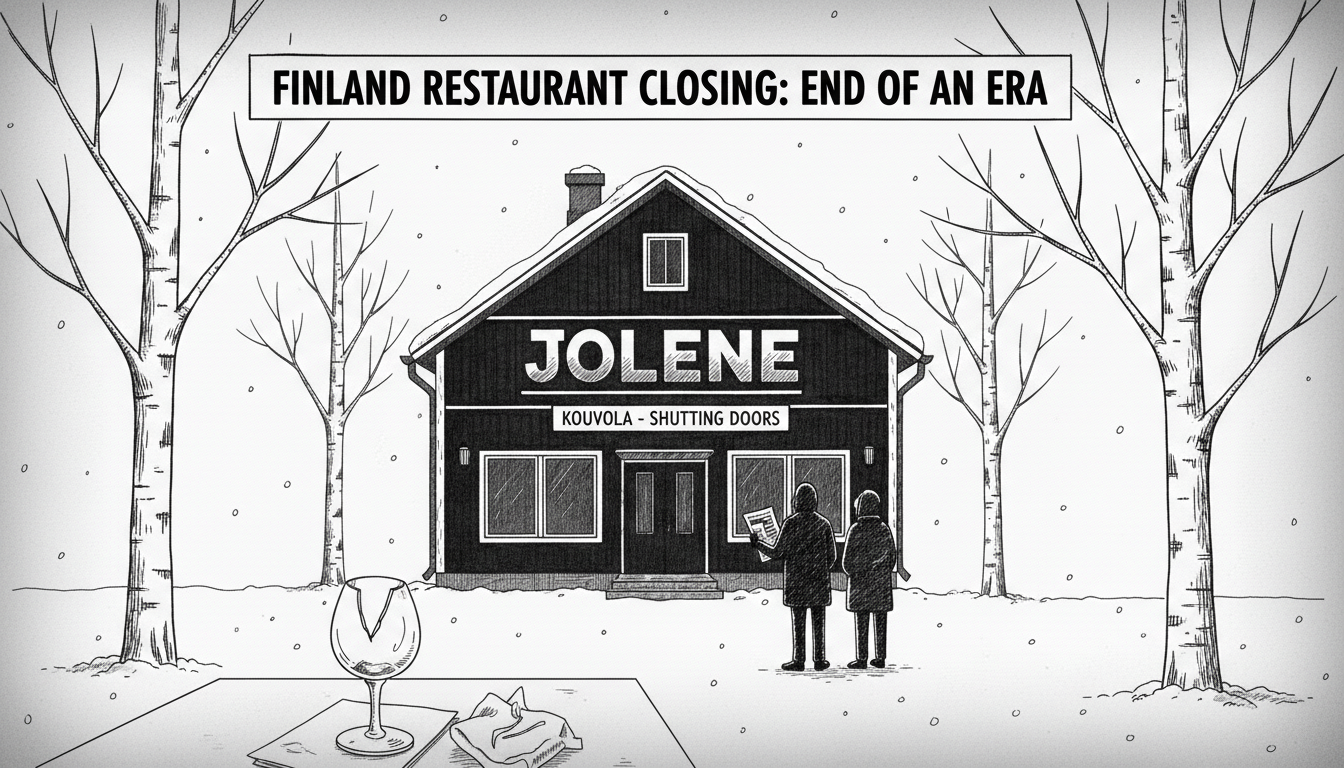
Finland restaurant closing news hits the southeastern city of Kouvola as Happy Bar Jolene prepares for its final service this Saturday. The popular venue, situated on the edge of Kouvola's central square, will close after the business owner and property owners reached a mutual agreement. This closure highlights the persistent challenges facing Finland's regional hospitality sector beyond the capital region, where economic pressures are often felt more acutely.
A Weekend Farewell on Kouvola Square
Patrons will have one last chance to visit the restaurant this coming weekend. The final day of operation marks the end of a chapter for a social hub in the city center. While the specific financial terms of the agreement between the entrepreneur and the property owners remain confidential, such mutual decisions often point to a reassessment of commercial viability. The closure removes a familiar fixture from the urban landscape of Kouvola, a city of approximately 80,000 people located 134 kilometers northeast of Helsinki.
Local residents often view restaurants like Jolene as more than just places to eat; they function as community landmarks. The loss of such an establishment can impact the perceived vitality of a city center, a concern for municipal planners across Finland. Kouvola, as the most populous municipality in the Kymenlaakso region, has worked to reinvent its image and economy following historical industrial transitions. The departure of a well-known restaurant represents a small but symbolic setback in efforts to animate public spaces.
Analyzing the Pressures on Regional Hospitality
Industry analysts point to a confluence of factors squeezing restaurants outside major urban centers. "Operating costs have risen sharply across the board, from energy and ingredients to labor," explains a hospitality sector economist familiar with the Finnish market. "For establishments in cities like Kouvola, the customer base is more limited and often more sensitive to discretionary spending. A slight downturn in local economic confidence or an increase in living costs can directly translate to empty tables."
These challenges are compounded by changing consumer habits. The growth of food delivery platforms has altered dining patterns, while post-pandemic social behaviors continue to evolve. For a restaurant tied to a specific location, like Jolene on the town square, foot traffic is essential. Any decline in the number of people visiting the city center for shopping or entertainment has a direct and immediate impact. Nationally, the Finnish Restaurant Association has repeatedly highlighted the thin profit margins in the industry, advocating for government measures to reduce taxation and bureaucratic burdens on small and medium-sized enterprises.
The Municipal Context and Urban Development
The closure occurs within a broader context of urban development in Kouvola. City planners have long focused on enhancing the attractiveness of the central area to residents and visitors. A vibrant restaurant and cafe scene is a critical component of this strategy. When a business closes in a prominent location like the town square, it creates a visible gap that the municipality is keen to fill quickly to prevent a perception of decline.
Kouvola's government, led by Mayor Marita Toikka, has pursued various initiatives to support the city center's commercial ecosystem. These include events to draw crowds and investments in public spaces. However, national economic policies and EU regulations on VAT for the hospitality sector also play a decisive role. Finland's current government, under Prime Minister Petteri Orpo, has faced calls from the opposition and industry groups to reconsider tax structures to support the service sector, especially in regions facing population stagnation or decline.
The Human Element of Business Closure
Behind the business decision lies a personal story of entrepreneurship. Running a restaurant is notoriously demanding, often requiring long hours and deep personal investment. The agreement to close suggests a pragmatic resolution, possibly avoiding a more contentious eviction or bankruptcy process. For the staff employed at Jolene, the closure means seeking new opportunities in a local job market that may not have an abundance of similar positions.
This human impact is a recurring theme in Finland's regional economies. Skilled service sector workers sometimes relocate to larger cities like Helsinki, Tampere, or Turku for stable employment, further draining local talent pools. The closure of a social anchor like a restaurant can have a subtle ripple effect, diminishing the options for community interaction and making the town slightly less attractive for young professionals and families.
Looking Ahead for Kouvola's City Center
The immediate question for Kouvola is what will replace Happy Bar Jolene in its prime location. The property owners will now seek a new tenant, and the type of business that moves in will signal broader trends. Will it be another restaurant, a retail store, or a service provider? The answer will depend on the owners' assessment of the market and the rental terms they set.
Municipal authorities have a vested interest in seeing another vibrant business occupy the space. They may engage with property owners to encourage uses that align with the city's planning goals. Ultimately, the fate of the location will be a small but telling indicator of commercial confidence in Kouvola's heart. For now, regulars will say their goodbyes this weekend, marking the end of an era on the square and leaving a quiet reminder of the precarious balance that defines Finland's regional business landscape. The story of Jolene is not an isolated one, but part of an ongoing narrative about the vitality of communities outside the capital's orbit.