
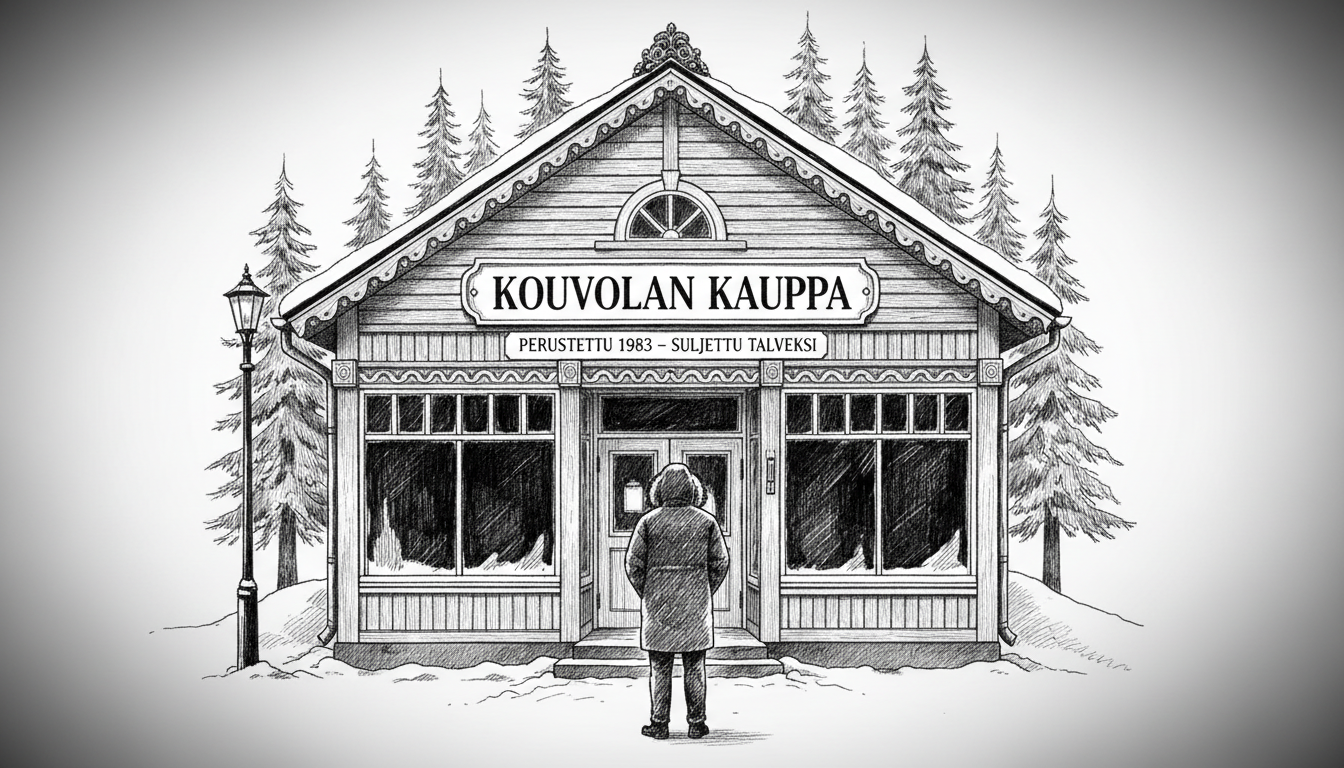
Finland's retail transformation is reaching a new phase as a nearly 40-year-old family business in Kouvola closes its physical store for the winter season. Solarshop Bergman, operating in the Korjala district, will shutter its brick-and-mortar location to concentrate fully on its online store and product development. Owner Kalervo Bergman's decision highlights a strategic pivot becoming increasingly common for small and medium-sized enterprises across the country.
This move is not a permanent closure but a seasonal recalibration. It reflects a pragmatic adaptation to Finland's harsh winter retail environment and shifting national shopping habits. For decades, the store served as a local fixture, but consumer behavior now demands a stronger digital presence. The company plans to reopen the physical store next spring, betting that a hybrid model can secure its future.
A Strategic Pivot in a Seasonal Market
Kalervo Bergman's choice to temporarily close the Kouvola storefront is a calculated business decision. Winter months in Finland, particularly outside major urban centers, often see a significant drop in foot traffic. High fixed costs for heating, lighting, and staffing a physical location can quickly erode margins when customer visits decline. By redirecting resources from maintaining a winter-quiet shop floor, Bergman can invest more aggressively in his online platform.
"We are focusing on e-commerce and product development at the start of the year," Bergman stated. This focus allows the business to reach customers far beyond the Kouvola region without the limitations of geography or store hours. Product development efforts can also respond more swiftly to trends and customer feedback gathered through online channels. This seasonal closure model, while notable, represents an evolution rather than a surrender to digital forces.
The Broader Finnish E-Commerce Landscape
The story of Solarshop Bergman is a microcosm of a nationwide trend. Official statistics show e-commerce accounted for approximately 14% of total Finnish retail sales in 2023. This segment has been growing at a steady rate of 10-15% annually, a trend accelerated by the pandemic and now solidified in consumer behavior. For SMEs, establishing a competent online sales channel is no longer optional; it is a fundamental requirement for survival and growth.
This digital shift presents both challenges and opportunities for towns like Kouvola. While local storefronts may see reduced hours or seasonal adjustments, businesses that successfully build online operations can tap into national and even Nordic markets. The revenue generated online can, in turn, help sustain a local physical presence that serves community needs and provides product showrooms. The dynamic is changing from a purely local transaction to a blended economic model.
Expert Analysis: Hybrid Models as the Future
Retail analysts view decisions like Bergman's as strategically sound, especially for niche retailers. "This is a smart optimization of resources," commented a retail sector expert familiar with the Finnish market. "The winter months are ideal for businesses to strengthen their digital infrastructure, analyze annual sales data, and develop new products without the daily distraction of store operations. It's a seasonal hibernation for the physical space, but an active period for the business's core development."
Experts frequently advise smaller Finnish businesses to adopt a flexible, hybrid approach. The ideal model combines the tangible benefits of a physical location—customer service, product experience, and local community ties—with the vast reach and efficiency of a robust e-commerce operation. Solarshop Bergman's plan to reopen in the spring suggests this is precisely the path it is pursuing. The temporary closure is a tactical retreat, not a permanent exit.
The Human Element and Community Impact
Behind the statistics and business strategy lies a human story of adaptation. For nearly four decades, Solarshop Bergman has been a part of Kouvola's commercial fabric. A seasonal closure affects not just the owner but also local shopping patterns and the street-level vitality of the Korjala district. It underscores the difficult calculations small business owners must make in balancing tradition with innovation, and community service with economic reality.
Other SMEs in Finnish towns are watching closely. Bergman's experiment with a seasonal, digitally-focused model could provide a blueprint for others facing similar pressures. The success of this pivot will be measured not just by online sales figures, but by the ability to successfully reopen the doors next spring, sustaining the business's long-term role in the community. The goal is renewal, not replacement.
Looking Ahead: The Future of Finnish Retail
The coming months will be a critical test for Solarshop Bergman's strategy. Its ability to grow its online sales and return with new products or services in the spring will demonstrate the viability of this seasonal hybrid model. For Finland's retail sector, these adaptations by long-standing SMEs are essential indicators of economic health and resilience. They show a capacity for innovation within the framework of traditional business values.
As e-commerce continues its steady growth across Finland, the relationship between physical and digital retail spaces will keep evolving. The story from Kouvola suggests that the future may not be a stark choice between online and offline, but a more fluid, seasonal, and strategic integration of both. The winter closure of a familiar store is not an endpoint, but a deliberate pause—a chance to rebuild, rewire, and prepare for a new chapter in a 40-year history. The ultimate question for many Finnish towns is whether their local businesses can navigate this transition while preserving the community connections that physical stores uniquely provide.