
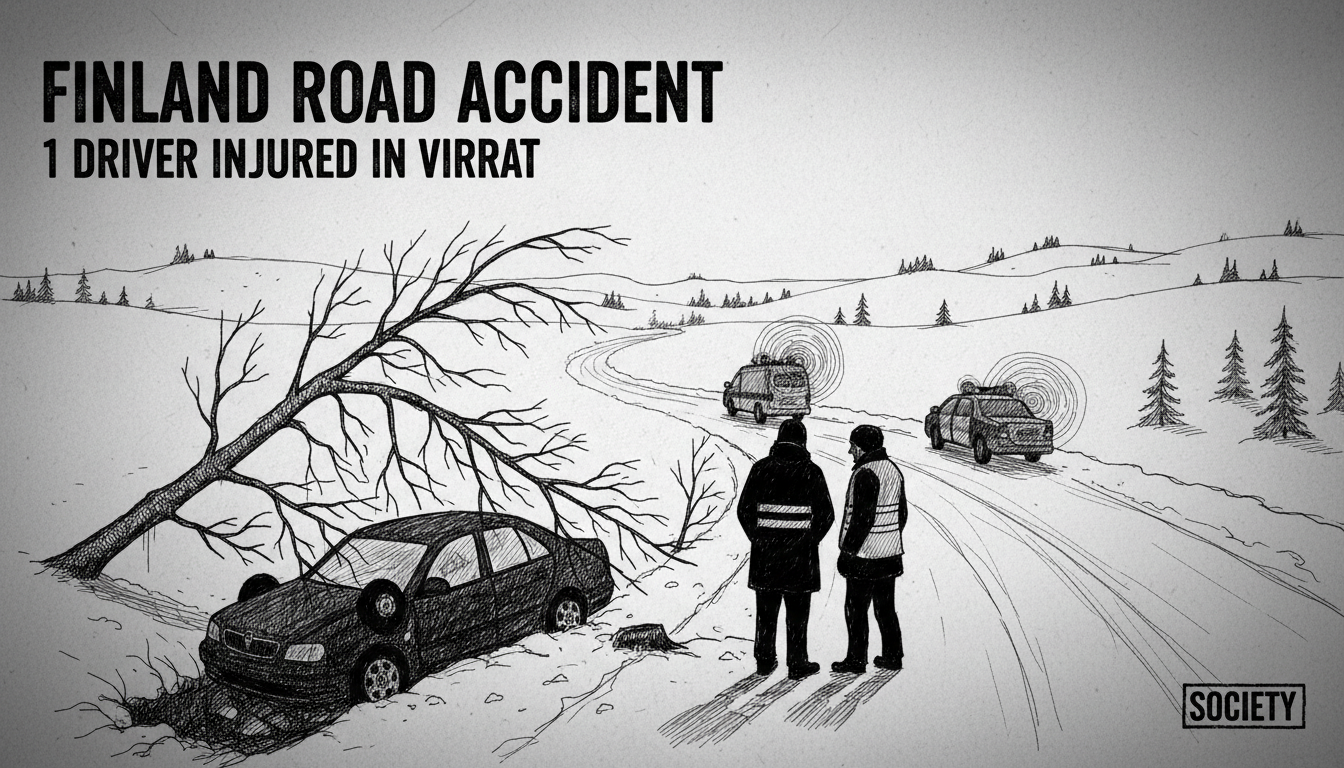
Finland road accident on Boxing Day morning left one driver with minor injuries after a car veered off the road in Virrat. Emergency services responded to Liedenpohjantie near the Sulkava intersection at approximately 9:40 AM, transporting the sole occupant of the vehicle for further medical care. The rescue service managed traffic during the operation, highlighting a routine yet revealing incident in Finland's challenging winter driving season.
The Boxing Day Morning in Virrat
Police reports confirm the single-vehicle crash occurred on December 26, known as Tapaninpäivä in Finland. The driver, who was alone in the car, sustained light injuries and was taken to hospital by paramedics. Authorities have not released the cause of the ulosajo, a Finnish term for running off the road, but initial investigations point to typical winter hazards. Virrat, a municipality in Pirkanmaa region, features rural roads like Liedenpohjantie that can become treacherous with ice and snow.
This incident underscores the silent risks of Finnish winter mobility. While not fatal, it adds to thousands of similar annual occurrences where vehicles leave the roadway. Finnish police consistently urge drivers to adjust speed according to conditions, especially after holiday periods when travel increases. The Boxing Day timing is significant, as it follows Christmas celebrations and often involves people returning from visits.
Finland's Road Safety Record and Climate Challenges
Finland maintains a well-developed road network, but its northern climate imposes severe driving conditions for much of the year. Black ice, heavy snowfall, and limited daylight during winter months significantly elevate accident risks. In 2022, Finnish roads saw 207 fatal accidents resulting in 241 deaths, according to official statistics from the Finnish Transport and Communications Agency Trafi.
These figures represent a long-term decline due to rigorous safety campaigns, but non-fatal incidents like the Virrat crash remain frequent. The Finnish government prioritizes road safety through strict traffic laws, mandatory winter tire use from November to March, and extensive road maintenance. The Ministry of Transport and Communications regularly updates strategies aligned with the European Union's goal of halving road deaths by 2030.
Finnish Parliament Eduskunta has debated increasing investments in road infrastructure, particularly in rural areas like Virrat. Recent budget allocations have focused on improving road surface quality and signage. However, experts argue that driver behavior is equally critical. Even with robust policies, human error in harsh conditions can lead to accidents.
Expert Analysis on Winter Driving Risks
Road safety researchers emphasize that accidents often stem from a mismatch between driving speed and road conditions. Professor Liisa Hakamäki from the University of Helsinki's traffic safety unit notes, "Winter in Finland demands constant vigilance. A clear road can hide patches of black ice, especially at intersections like Sulkava where the Virrat incident occurred." She stresses that proper tires are legally required but not sufficient without cautious driving.
Finnish driving instructors incorporate extensive winter training, teaching techniques for skid control and safe braking. The Finnish Motor Insurers' Centre records data showing that run-off-road accidents peak during temperature fluctuations around freezing point. This Boxing Day crash fits that pattern, with typical December weather in the region.
Authorities like the Finnish National Police Board run annual campaigns reminding motorists to check vehicle conditions before journeys. They highlight battery reliability, windshield washer fluid, and lighting systems as key factors. The Virrat case, though minor, serves as a timely reminder after the Christmas break when vehicles may have been idle.
Government Policies and EU Coordination
Finland's approach to road safety is multifaceted, involving legislation, enforcement, and public education. The government coalition, led by Prime Minister Petteri Orpo, has endorsed the National Road Safety Programme 2022-2026. This plan aims to reduce serious injuries by 30% through measures like lower speed limits in high-risk areas and enhanced traffic monitoring.
EU directives play a crucial role, setting standards for vehicle safety, road design, and cross-border cooperation. Finland actively participates in EU projects like the Safe System approach, which designs roads to forgive human error. Finnish MEPs have advocated for stricter EU-wide regulations on winter tire standards, reflecting Nordic concerns.
In Helsinki, the government district buzzes with policy discussions linking transport to climate goals. Electric vehicle adoption is rising, but winter range anxiety and charging infrastructure in rural locations like Virrat present new challenges. The Ministry of Transport frequently consults with regional councils to adapt national strategies to local conditions.
Community Response and Preventive Measures
Local authorities in Pirkanmaa region conduct regular road inspections, especially after weather events. Virrat's municipal engineering team is responsible for winter maintenance on roads like Liedenpohjantie. They use weather forecasting systems to pre-salt roads, but remote areas may experience delays.
Community safety initiatives include volunteer-led driver awareness sessions. The Finnish Red Cross and other organizations offer free vehicle checks during winter. These efforts complement state actions, creating a layered safety net. The minor injury in the Boxing Day crash suggests that safety systems, from car design to emergency response, functioned effectively to prevent worse outcomes.
Analysis of this incident reveals the importance of preparedness. Drivers should plan routes, allow extra time, and avoid distractions. The Finnish Transport Infrastructure Agency provides real-time road condition updates via mobile apps and websites. Utilizing these tools can prevent many off-road events.
Looking Ahead: Safety in the Nordic Winter
As Finland continues its dark winter months, road safety remains a daily concern. The Virrat accident, while not catastrophic, illustrates the ever-present risks. Finnish policymakers must balance investment between urban and rural networks, ensuring that regions with lower traffic volumes still receive adequate safety upgrades.
The EU's Vision Zero strategy, aiming for zero road deaths, influences Finnish targets. Eduskunta committees regularly review progress, with opposition parties pushing for faster implementation. Upcoming debates may focus on technology, such as intelligent speed assistance systems mandated in new EU vehicles from 2024.
This single morning in Virrat should prompt all drivers to reflect on their habits. Are winter tires properly inflated? Is speed adjusted for the road? The answers could determine whether another Boxing Day passes without incident. Finland's journey toward safer roads continues, driven by data, policy, and collective responsibility.