
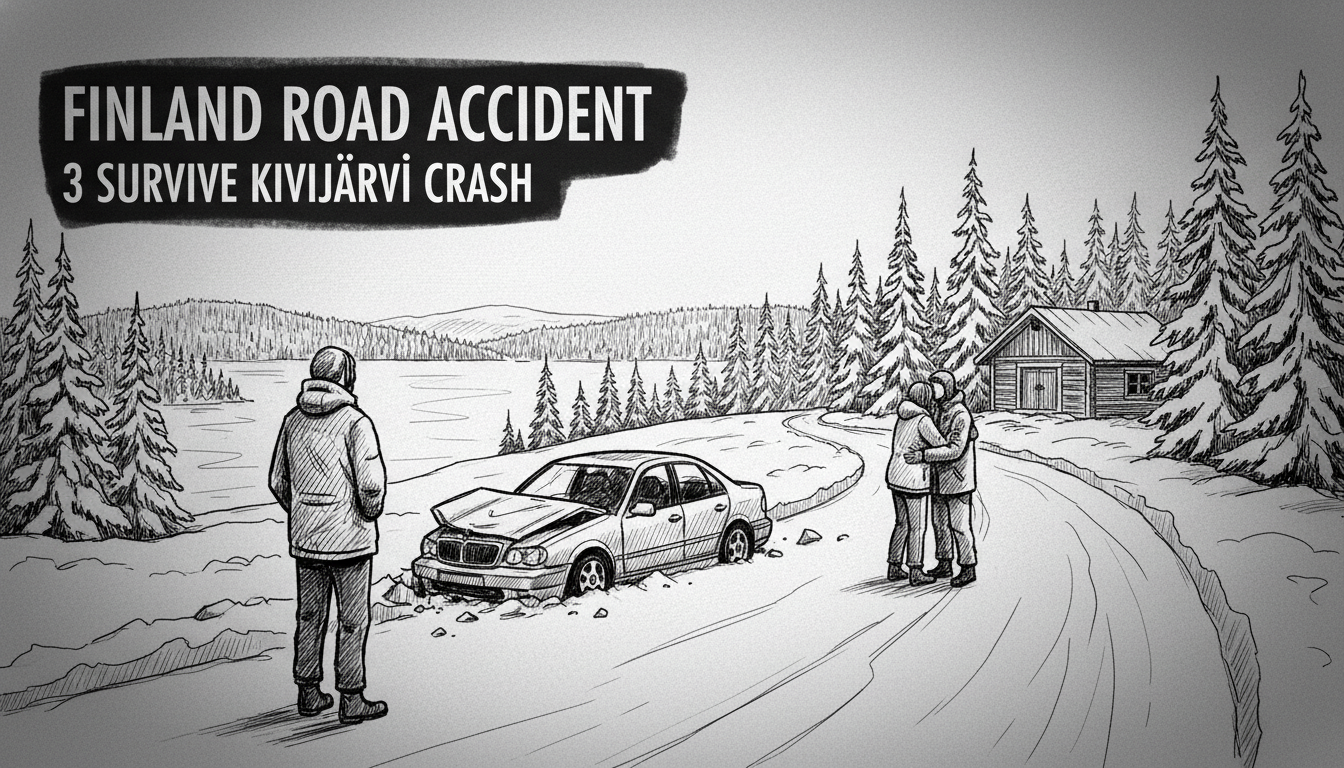
Finland road accident statistics underscore a persistent challenge behind Monday's collision in Kivijärvi. A passenger car and a camper van collided on Hiitolantie road around 1:30 PM. The force of the impact sent the camper van careering into a roadside ditch. Remarkably, all three people involved in the crash emerged without physical injury, according to initial reports from the scene. Authorities have not yet determined the cause of the collision. This specific incident, while minor, opens a window into Finland's broader and ongoing national effort to improve road safety and achieve its ambitious 'Vision Zero' goals.
From Local Ditch to National Data
The quiet road in Kivijärvi, a municipality in Central Finland, became the latest point on the map of Finnish traffic incidents. The involvement of a camper van, or asuntoauto, highlights a seasonal trend. Finnish roads see increased recreational vehicle traffic during the summer months, mixing with regular commuter and commercial travel. "Every accident, even one without serious injury, is a signal we must analyze," said a senior traffic safety official from the Finnish Transport and Communications Agency, Trafi, speaking generally about safety protocols. Investigators will typically examine factors like driver attention, vehicle condition, signage, and road layout at the Hiitolantie site.
Finland recorded 4,173 personal injury accidents on its roads in 2023. Within those, 338 people lost their lives. While the number of fatalities has decreased dramatically over decades, each year's toll reinforces the work ahead. The Kivijärvi crash, where three people walked away, represents the far more common outcome where property damage is the primary result. Yet, experts argue these non-fatal incidents are critical data points for preventing future tragedies.
The Complex Pursuit of 'Vision Zero'
Finland's strategic road safety plan operates under the 'Vision Zero' framework, adopted from Swedish policy. This philosophy aims to eliminate all traffic fatalities and severe injuries. It represents a systemic shift from blaming driver error to designing a fault-tolerant transport system. The Finnish government and agencies like Trafi and the Finnish Transport Infrastructure Agency focus on the "Safe System" approach. This method integrates safer roads, safer speeds, safer vehicles, and safer road user behavior.
Parliamentary committees routinely review legislation tied to this goal. Recent years have seen debates on lowering general speed limits, increasing enforcement of distracted driving laws, and enhancing infrastructure spending for rural roads like those found in the Kivijärvi region. "The political commitment to 'Vision Zero' is cross-party," notes political observer Laura Mäkinen. "The debates are not about the goal itself, but the pace, funding, and methods of getting there."
Environmental and Human Factors at Play
In Central Finland, environmental conditions play a significant role in road safety. While Monday's accident occurred in daylight, the region faces long periods of winter darkness, ice, and snow. Road maintenance and winter tire regulations are pivotal parts of the safety equation. Furthermore, driver fatigue on long, straight forest roads is a recognized risk factor that safety campaigns consistently address.
The absence of injury in the Kivijärvi crash is fortunate, but it does not diminish the psychological impact or the economic cost of such events. Vehicle repairs, insurance processes, and potential trauma impose a burden. For the individuals involved, a routine journey suddenly turned into a disruptive and frightening event. This human element is at the core of all traffic safety work, driving the push for more resilient systems.
Policy Roads Leading from Helsinki
In Helsinki's government district, ministries coordinate national safety strategies that directly influence roads in municipalities like Kivijärvi. Funding allocations for road improvements, public awareness campaigns, and police enforcement priorities are set at the national level. Finland also actively participates in EU-wide road safety initiatives, aligning its technical standards and policies with broader European directives.
The European Commission's target to halve road deaths by 2030 provides an external benchmark for Finnish efforts. Finland's own performance is generally strong within the EU, often ranking among the safest countries. Maintaining and improving that position requires constant vigilance and investment. Every local police report on an accident like the one on Hiitolantie feeds into this larger analytical machine.
The Road Ahead After a Close Call
The three individuals involved in the Kivijärvi collision will likely remember their close call for a long time. For Finnish transport authorities, the incident is another entry in a vast dataset. The ultimate goal is to make such entries increasingly rare. Continued advancement hinges on technology like advanced driver-assistance systems, infrastructure upgrades, and sustaining a strong culture of safety among all road users.
As the sun sets on Hiitolantie, the repaired vehicles will eventually drive away, and the scar in the ditch will heal. The unanswered question from Monday afternoon—the cause—remains crucial for preventing the next collision on that stretch of road. Finland's journey toward safer roads is paved with millions of kilometers driven and thousands of incidents investigated, each one, like this minor crash in Kivijärvi, offering a lesson waiting to be learned.