
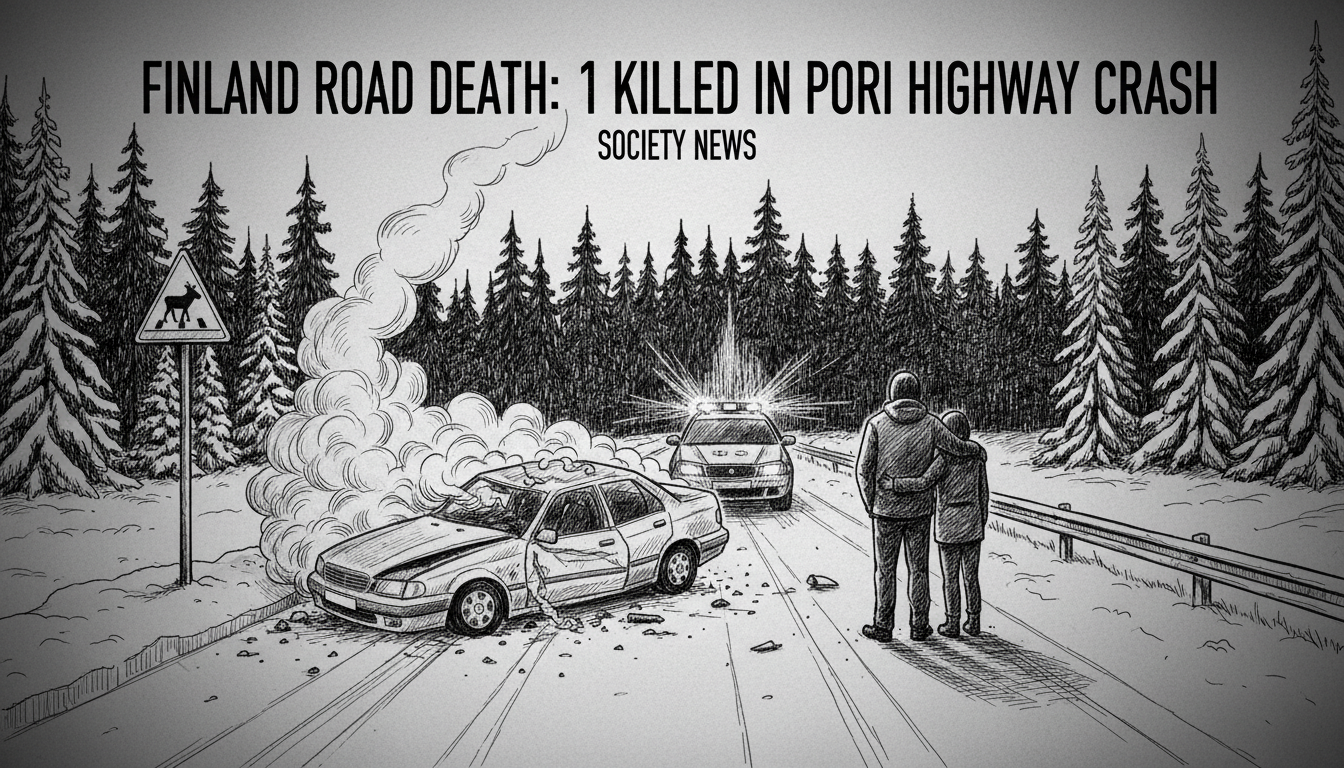
Finland's Highway 23 became the site of a fatal tragedy on Tuesday afternoon when a rear-end collision in Noormarkku, Pori, claimed one life and sent another person to the hospital. The Lounais-Suomen police department confirmed the death of one adult following the crash at the intersection of Valtatie 23 and Rauhalammintie. Emergency services received the alarm just after 4:30 PM, dispatching rescue units to the scene. This incident adds another somber data point to Finland's ongoing efforts to achieve its Vision Zero goal of eliminating road deaths and serious injuries.
A Routine Stretch of Road Turns Deadly
Valtatie 23 is a vital artery connecting the port city of Pori on Finland's west coast to the eastern city of Joensuu. The stretch near Noormarkku, a former municipality now incorporated into Pori, typically carries a mix of local and through traffic. On Tuesday, under the dimming afternoon light of a Finnish winter, this routine transit corridor transformed into a scene of emergency response. Preliminary reports indicate a direct rear-end collision between two vehicles, a common but often severe type of accident. Police have launched a standard investigation, which will meticulously reconstruct the events leading to the impact. Investigators will examine vehicle data, road surface conditions, visibility, and driver actions in the critical moments before the crash.
The Human Cost Behind the Statistics
While the police report provides the clinical facts—one deceased, one hospitalized—it cannot convey the profound human loss now unfolding for families and the community in Satakunta. Each road death in Finland represents a rupture in the social fabric, leaving behind grieving relatives, friends, and colleagues. The person hospitalized faces an uncertain physical and psychological recovery. This event in Pori is not an isolated statistic but a stark reminder of the vulnerability inherent in every journey. It underscores the reality that despite Finland's reputation for safe infrastructure and disciplined drivers, the complex interplay of human judgment, vehicle mechanics, and environmental factors can have irreversible consequences in a split second.
Expert Analysis on Collision Prevention
Traffic safety researchers consistently identify rear-end collisions as a primary category of preventable crashes. "The fundamental cause is almost always an insufficient safety margin," explains a senior traffic safety consultant familiar with Finnish road safety work. "This margin is a combination of following distance, appropriate speed for conditions, and driver attentiveness. On highways like the 23, even a momentary lapse—a glance at a phone, adjusting the radio, or driver fatigue—can eliminate the distance needed to stop safely." Experts note that winter conditions, even on well-maintained Finnish roads, compound these risks. Reduced daylight, potential for icy patches, and glare can dramatically shorten effective reaction times. Investigators will determine if any such factors played a role in the Noormarkku collision.
Finland's Road Safety Ambition Meets a Harsh Reality
This fatality occurs within the context of Finland's ambitious national road safety strategy. The country has long been a European leader in traffic safety, pioneering initiatives like stringent drunk-driving laws and extensive winter tire requirements. The current strategy aims for a further significant reduction in serious accidents. Yet, each death, such as the one on Highway 23, highlights the immense challenge of reaching zero. It prompts renewed scrutiny of enforcement, road engineering, and vehicle safety technology. Are current speed limits on such highways appropriate? Could different intersection designs at junctions like Rauhalammintie improve safety? The police investigation's findings may feed directly into these ongoing policy discussions at the Finnish Transport and Communications Agency, Trafi.
A Community Mourns and Looks for Answers
In Pori and the wider Satakunta region, the response moves from emergency protocol to community mourning. Local authorities often provide crisis support to those affected by sudden traumatic loss. The practical aftermath also begins: insurance assessments, vehicle recovery, and the painstaking official process following a fatal accident. For regular users of Highway 23, the crash site may now hold a grim new association, a silent warning on their daily commute. The collective hope is that a clear understanding of the cause will emerge, offering some closure to the bereaved and potentially informing preventative measures that could save lives in the future. The question of "why" hangs heavily over the incident until the investigation concludes.
The Long Road Ahead for Safer Travel
The tragedy near Pori is a sobering checkpoint on Finland's journey toward Vision Zero. It demonstrates that even with a world-class safety system, the goal remains elusive. The incident will likely be cited in future safety campaigns as a tragic example of the consequences of failed risk management, whether mechanical, environmental, or human. It reinforces the need for continuous improvement in all areas: advancing driver assistance systems like automatic emergency braking, maintaining impeccable road upkeep, and fostering a culture of uncompromising attentiveness behind the wheel. As the dark winter months continue, this fatal crash serves as a critical reminder for all road users. The memory of the life lost on Highway 23 must fuel a redoubled commitment to making every journey a safe one, from the bustling streets of Helsinki to the regional highways connecting the nation's heartland.