
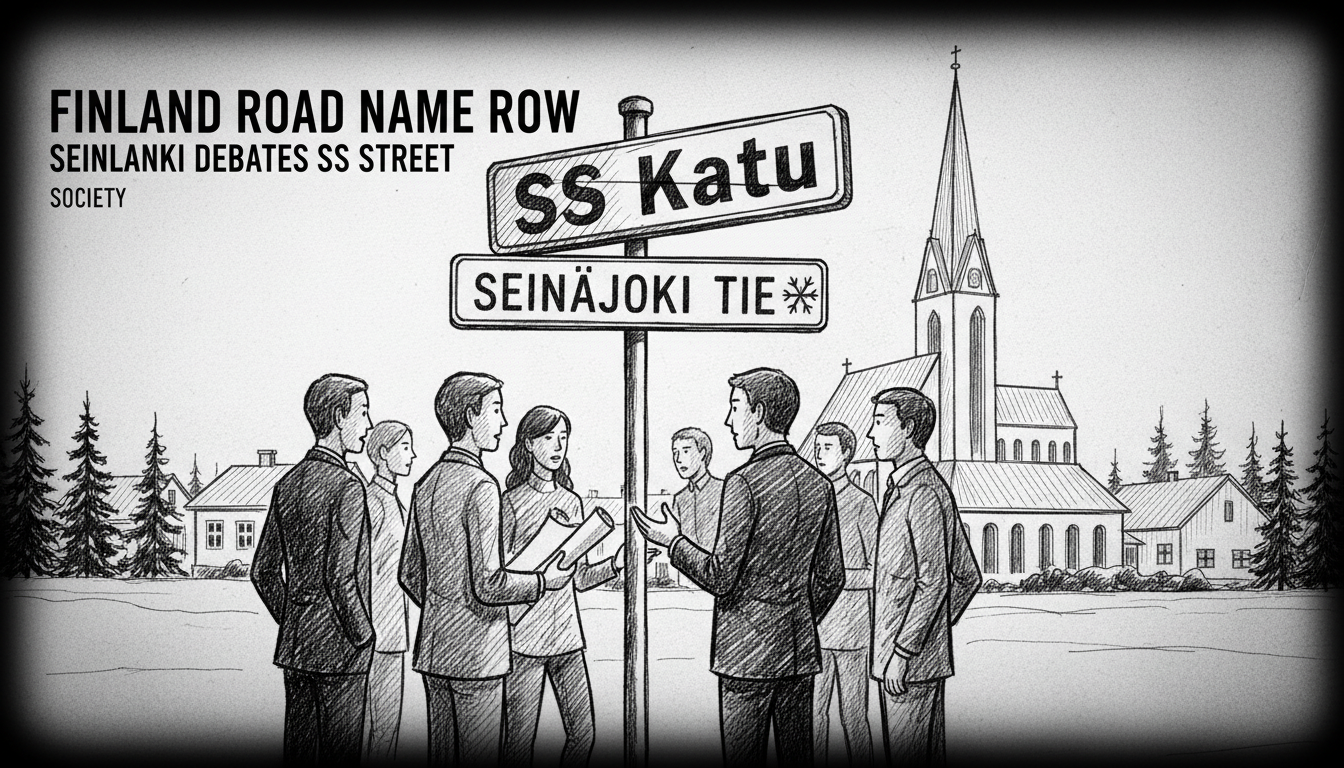
Finland's city of Seinäjoki is embroiled in a heated debate over a rural road named after a soldier who served in the Nazi Waffen-SS. The controversy over 'SS-sotilaantie' or 'SS Soldier Road' has split the local community, pitting historical tradition against modern sensibilities and raising questions about how nations remember their complex wartime past.
A city nomenclature group's unanimous decision in November to rename the road 'Satimennevantie' has been met with fierce resistance from local residents. They have filed a formal appeal, forcing the city's environment board to reconsider the matter in January. The dispute centers on a quiet, unpaved track in the Ylistaro district, named decades ago for a local man, Jaakko Salminen, who left for Germany at age 18 and fought in Waffen-SS units during World War II.
"It did not surprise me. I know the South Ostrobothnian mentality. They are very patriotic," said Markku Lehtola, chairman of the Seinäjoki city nomenclature group, who has borne the brunt of local criticism. He argues the name change is necessary because the Nazi-linked title has caused confusion and raised eyebrows in international contexts. "That [Nazi Germany] history is not a fine one. There have been efforts to abandon such names elsewhere in Europe too," Lehtola stated.
A Clash of Patriotism and Perception
For opponents of the change, the issue is one of erasing local history and dishonoring a native son. Residents argue that renaming the road amounts to wiping away history and is an unpatriotic act that insults the soldier's memory. The debate taps into deep-seated regional identity in South Ostrobothnia, known for its strong national pride and tight-knit communities. The road's name, for them, is a piece of local lore, a marker of a specific individual's story rather than an endorsement of the ideology he served under.
Lehtola acknowledges this perspective, noting the renaming has been perceived as "unpatriotic and offensive to the honor of a local soldier." He frames the conflict as a tension between preserving tradition and responding to a changed world. The road signs themselves have become a subplot, repeatedly stolen by vandals or collectors over the years, highlighting the name's provocative power.
The Shadow of the Waffen-SS
The core of the controversy lies in the historical weight of the Waffen-SS. As the military wing of the Nazi SS, it was declared a criminal organization at the Nuremberg Trials for its direct involvement in war crimes and the Holocaust. While Finland fought alongside Nazi Germany as a co-belligerent against the Soviet Union during the Continuation War (1941-1944), primarily to regain lost territory, official Finnish troops remained separate from the German command. However, approximately 1,400 Finnish volunteers served in the Waffen-SS, motivated by anti-communism and the desire for military experience.
Finland's relationship with this history is nuanced. The country has long focused its national narrative on its separate war aims and successful defense of independence against the USSR, often downplaying the alliance with Germany. A public road name explicitly referencing the SS is exceptionally rare in modern Europe, where many nations have laws against displaying Nazi symbols. The proposal to change it aligns with a broader European trend of re-evaluating public spaces and monuments linked to oppressive historical regimes.
A Procedural Roadblock and a Wider Debate
The city's initial move followed a proposal from Seinäjoki's geographic data specialist, Atte Honkaniemi. The three-member nomenclature group approved it unanimously. However, the formal appeal by locals has triggered a mandatory review process, pushing the final decision to the city environment board. This procedural hurdle underscores the democratic tensions at play: between administrative authority aiming for a coherent, sensitive naming policy and the will of a directly affected community.
Experts on historical memory suggest this case is a microcosm of a global struggle. "These debates are never just about a street sign," says Dr. Laura Saarenmaa, a University of Helsinki researcher specializing in cultural memory. "They are about who controls the narrative of the past and what values a community chooses to symbolize in its public space. Is it individual local legacy, or is it the broader, horrific context of the organization that individual was part of? Finland, like many nations, is still negotiating its complicated WWII heritage."
Notably, the proposed new name, Satimennevantie, reverts to an older, geographical identifier based on a nearby marsh, Satimenneva. Lehtola confirmed that reviving this original, neutral name has been discussed as a solution.
Finland's Evolving Historical Consciousness
The Seinäjoki dispute occurs as Finland's relationship with its wartime history continues to evolve. Recent years have seen increased academic and public discussion about the more challenging aspects of the war years, including the treatment of Soviet prisoners of war and the Holocaust's connections to Finland. While Finland protected its own Jewish citizens, it handed over several dozen Soviet Jewish prisoners of war to Germany.
This growing historical scrutiny makes symbols like the SS-sotilaantie increasingly anachronistic and contentious. For the city administration, the international perception is a key concern. In an interconnected Europe, such a name can project an image that conflicts with Finland's modern values and its role in the European Union, where confronting the legacy of Nazism is a foundational principle.
A Decision for the Community and the Country
When the Seinäjoki city environment board reconvenes in January, its members will weigh more than a simple name change. They will be making a statement about how a Finnish community engages with the darkest chapters of 20th-century European history. The board's decision will signal whether local tradition outweighs the offensive connotations the name carries for the wider world, or whether Finland aligns with the continental consensus that certain symbols are beyond rehabilitation.
The outcome will resonate beyond Ylistaro. It will be studied as an example of how Finnish municipalities handle the legacy of the wartime German alliance. Will the road remain a hyper-local tribute, or will it be reclassified as a diplomatic and ethical liability? The answer lies at the muddy intersection of a country lane, a soldier's personal history, and the immense shadow of the organization he joined. The debate proves that in Finland, history is not just found in textbooks, but etched onto the very signposts of its rural landscapes, waiting for the present day to decide their meaning.