
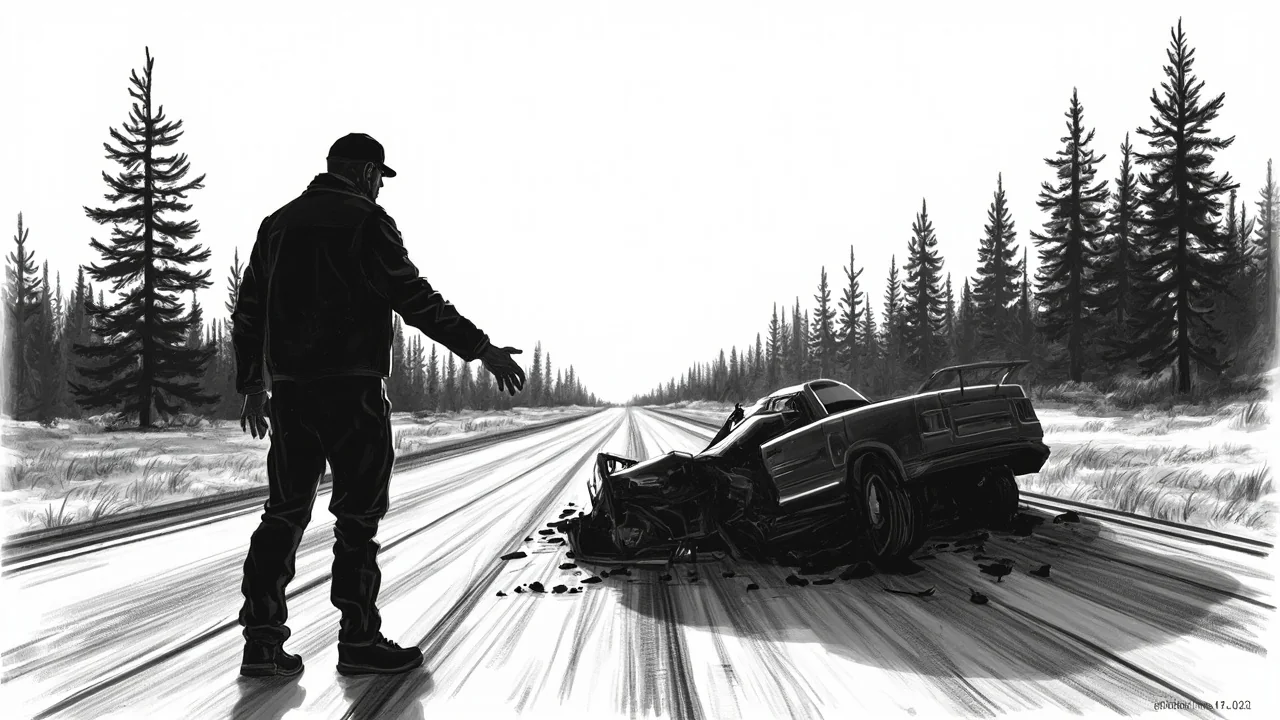
Finland's road safety record faces scrutiny after a dump truck and a passenger car collided head-on in Virrat on Sunday afternoon. One person sustained minor injuries in the low-speed crash on Hollitie road, requiring emergency medical attention. The Pirkanmaa Rescue Department reported the accident occurred with minimal situational speed, allowing other traffic to pass the scene shortly after. Emergency services logged the traffic accident alert at 3:07 PM, deploying resources to the rural municipality known for its forested landscapes.
This incident, while resulting in only minor injuries, highlights persistent vulnerabilities on Finland's regional road network. It occurs against a backdrop of national road safety targets and ongoing EU-wide initiatives to reduce serious traffic injuries to zero by 2050. The location in Virrat, part of the Pirkanmaa region, represents the type of lower-traffic rural road where a significant portion of Finland's traffic incidents occur, often with disproportionate severity due to response times and road conditions.
Analyzing Finland's Traffic Safety Landscape
Finland has long been a global leader in road safety, with its Vision Zero policy aiming to eliminate traffic fatalities and serious injuries. The country's systematic approach, combining strict legislation, extensive enforcement, and infrastructure investment, serves as a model within the European Union. However, isolated incidents like the Virrat collision remind experts that continuous improvement is necessary. The focus has increasingly shifted toward preventing all injuries, not just fatalities, aligning with the EU's new strategic road safety framework.
“Every collision is a system failure,” is a principle often cited by the Finnish Transport and Communications Agency, Trafi. The agency's data-driven approach analyzes factors from road design and vehicle safety to driver behavior and weather conditions. While Sunday's crash involved low speeds, the head-on nature of the collision between a heavy vehicle and a passenger car underscores the ever-present risk of mass disparity, a key focus area in modern vehicle safety regulations emanating from Brussels.
The Human and Systemic Response
The response to the Virrat incident followed standard Finnish emergency protocols. The Pirkanmaa Rescue Department, responsible for emergency services in the region, managed the scene. Their report of "minimal situational speed" suggests the vehicles were moving slowly, likely at an intersection or during a turning maneuver, which prevented a more severe outcome. The injured individual received prompt first aid and was transported for further care, demonstrating the efficiency of Finland's decentralized emergency response network, which is crucial for covering vast, sparsely populated areas.
Finland's emergency medical system, integrated with rescue services, is designed for rapid intervention. The fact that only one injury was reported and deemed minor indicates successful containment of the incident's consequences. This outcome, while positive, does not preclude a thorough investigation. Finnish authorities typically examine such events to identify potential infrastructure flaws, such as unclear signage, poor visibility, or road surface issues, that could be remedied to prevent recurrence.
EU Directives and National Policy Intersections
This minor collision sits within a complex web of regulation. Finland's domestic road safety strategy is heavily influenced by EU directives on vehicle safety, infrastructure management, and post-crash care. The European Commission's 2020 road safety policy framework, which sets a target to halve serious injuries by 2030, directly informs funding and priorities for member states. Finnish MPs in the Eduskunta regularly debate national appropriations for road maintenance and safety upgrades, with rural roads like those in Virrat often at the center of funding discussions.
Recent EU regulations on advanced vehicle safety features, such as mandatory Intelligent Speed Assistance (ISA) and improved direct vision for trucks, are gradually being implemented. These technologies aim to prevent exactly the type of low-speed, situational collision that occurred in Virrat. Finnish Transport Minister Lulu Ranne has consistently emphasized the importance of adopting EU safety standards swiftly, arguing that they save lives and reduce healthcare costs. The incident provides a tangible, though minor, case study for policymakers reviewing the real-world impact of these evolving regulations.
Rural Roads: A Persistent Challenge
The Virrat collision brings attention to the specific challenges of maintaining safety on Finland's extensive network of rural and municipal roads. Outside major highways, these roads experience lower traffic volumes but can present unique hazards, including wildlife, agricultural vehicles, and limited lighting. Municipalities like Virrat are responsible for local road maintenance, often operating with constrained budgets. This financial pressure can create tensions between local councils and the state over who bears responsibility for safety upgrades.
National funding programs, such as those administered by the Finnish Transport Infrastructure Agency, aim to support municipalities in improving high-risk locations. Data from Trafi is used to identify black spots and prioritize investments. A single minor crash may not trigger a major review, but patterns of incidents on specific routes like Hollitie can lead to targeted safety measures, such as improved signage, rumble strips, or minor realignments. This data-centric approach is a hallmark of Finnish public administration.
The Path Forward for Finnish Road Safety
Finland's goal remains ambitious: to have the safest roads in the world. Achieving this requires moving beyond preventing fatalities to eliminating all injuries, a concept known as "safe system" thinking. This means designing roads, setting speed limits, and regulating vehicles so that human error does not lead to severe consequences. The Virrat incident, where low speed likely prevented worse injury, inadvertently demonstrates the principle—the system's parameters (likely low speed limits or natural traffic calming) contained the outcome.
Future efforts will involve further integration of technology. The Finnish government is exploring connected vehicle systems and even more sophisticated infrastructure-to-vehicle communication, especially as part of broader EU digital transport goals. For rural areas, these technologies could provide warnings about upcoming intersections, blind curves, or slow-moving vehicles like dump trucks. The ongoing evolution of Finland's road safety policy is a continuous dialogue between Helsinki-based ministries, EU institutions, regional authorities, and traffic safety research organizations like VTT.
While the Sunday collision in Virrat was a minor event swiftly resolved, it serves as a microcosm of the larger, unending task of road safety management. It touches on funding debates in the Eduskunta, the implementation of EU law, the effectiveness of local emergency services, and the ultimate resilience of the transport system. Each journey on Finland's roads, from the busiest Helsinki artery to the quietest rural lane in Pirkanmaa, is underpinned by this complex, silent safety infrastructure. The system worked in Virrat to minimize harm, but the relentless pursuit of improvement continues, aiming for a day when such collisions do not happen at all.