
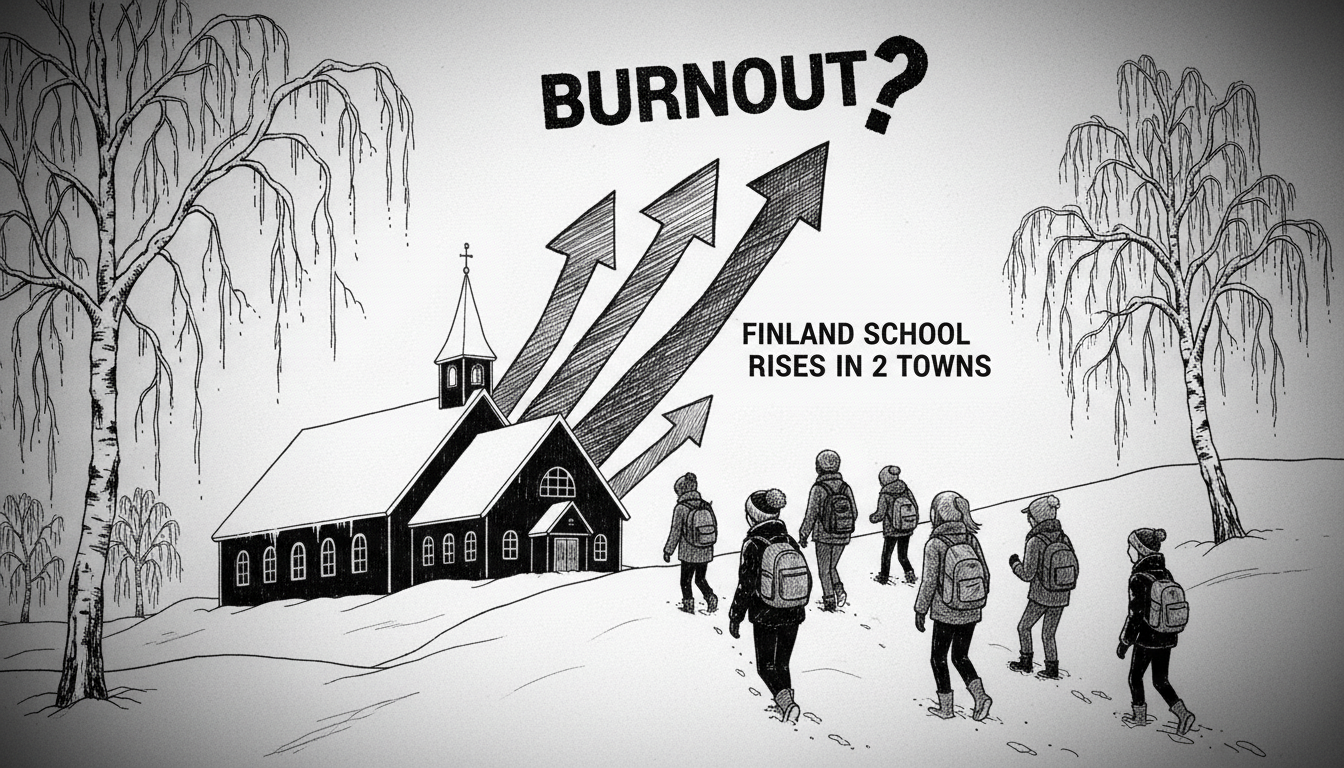
Finland school burnout has risen sharply in the municipalities of Hyvinkää and Riihimäki, according to the latest national school health survey. The findings from the National Institute for Health and Welfare (THL) reveal a significant increase in exhaustion among 8th and 9th graders, marking a concerning trend in two Uusimaa region communities. This data challenges the international reputation of Finland's education system, which is often lauded for equality and student support. Local officials are now grappling with the reasons behind this spike and its implications for future policy.
Survey Highlights a Sharp Regional Increase
The THL's biennial Kouluterveyskysely, or School Health Survey, provided the alarming metrics. While national data shows a gradual rise in student burnout, Hyvinkää and Riihimäki reported notably steeper climbs compared to the previous survey two years ago. In Hyvinkää, the increase was described as substantial, while Riihimäki also saw a clear upward trend. The survey assesses emotional and physical exhaustion related to schoolwork among adolescents, serving as a key barometer for youth wellbeing. These results have triggered urgent discussions in both municipal education departments and at the national level within the Ministry of Education and Culture.
Education heads in the affected towns acknowledge the problem. "In school, we practice determination, but there we should also enjoy time without stress yet," said Riihimäki's head of education, commenting on the balance between academic rigor and student wellbeing. This statement underscores a central tension in modern Finnish schooling. The focus on cultivating perseverance and goal-setting, essential for future success, may be overshadowing the need for a supportive and low-pressure learning environment. Local governments are now examining their own curricula and support services to identify gaps.
Probing the Causes Behind the Burnout Spike
Experts point to a confluence of factors driving this burnout surge. Academic pressure, amplified by an increasingly competitive landscape for upper secondary and university placements, is a primary contributor. Social media's pervasive influence and the constant comparison it fosters add another layer of stress for teenagers. Furthermore, the lingering effects of the COVID-19 pandemic on social skills and learning routines cannot be overlooked. The disruption to normal school life has had long-term impacts on student resilience and mental health.
Municipal differences in resources and community support may explain why Hyvinkää and Riihimäki are standout cases. Both are mid-sized towns facing typical urban challenges, but they might have varying capacities in student welfare services. A cut in municipal funding for school psychologists or a lack of integrated wellbeing programs could exacerbate feelings of burnout. The Finnish Parliament, the Eduskunta, has debated increasing state subsidies for municipal health services, but local implementation varies widely. This disparity highlights the inequality in how national education policies are executed on the ground.
Finland's Education Paradox Under Scrutiny
Finland's global esteem for its education system makes this burnout trend particularly paradoxical. The system is built on principles of minimal standardized testing, highly qualified teachers, and strong equity. However, the THL survey suggests that these pillars may be insufficient against modern socio-economic pressures. The rise in burnout indicates that student wellbeing is becoming a critical fault line. It reflects a broader Nordic concern, where high living standards and social safety nets do not fully shield young people from anxiety and exhaustion.
National policy makers are taking note. The Ministry of Education and Culture has initiated reviews of the core curriculum to emphasize wellbeing more strongly. There is also discussion about adjusting the school day structure and homework loads. However, any major reform requires careful consideration to maintain academic standards. The Finnish government, led by Prime Minister Petteri Orpo's coalition, has listed youth mental health as a priority, but concrete budgetary allocations for schools are still under negotiation. The issue also touches on EU directives regarding child and adolescent health, pushing Finland to align with broader European strategies.
Local Responses and National Implications
In response to the survey, Hyvinkää and Riihimäki are launching targeted interventions. These include training teachers to identify early signs of burnout, expanding access to student welfare officers, and promoting peer support networks. Some schools are experimenting with mindfulness sessions and flexible deadlines to reduce pressure. The goal is to create a more balanced school culture where achievement does not come at the cost of mental health. These local initiatives could serve as models for other municipalities if they prove effective.
Long-term solutions require a comprehensive approach. Experts advocate for stronger collaboration between schools, parents, and healthcare providers. They also recommend continuous monitoring of student wellbeing through regular surveys like the THL's. Investing in early intervention programs is crucial to prevent chronic issues. The Finnish Education Evaluation Centre is likely to incorporate wellbeing metrics more prominently in its assessments of schools. This shift would signal a fundamental change in how educational success is measured, moving beyond pure academic performance.
The rising burnout in Hyvinkää and Riihimäki is a warning sign for all of Finland. It questions whether the education system is adapting quickly enough to the challenges faced by today's youth. As Finland prepares for future education reforms, the experiences of these two towns will be critical. The nation must find a way to uphold its high academic standards while ensuring that schools remain places where students can thrive without overwhelming stress. The path forward will define the next generation's relationship with learning and their overall life satisfaction.