
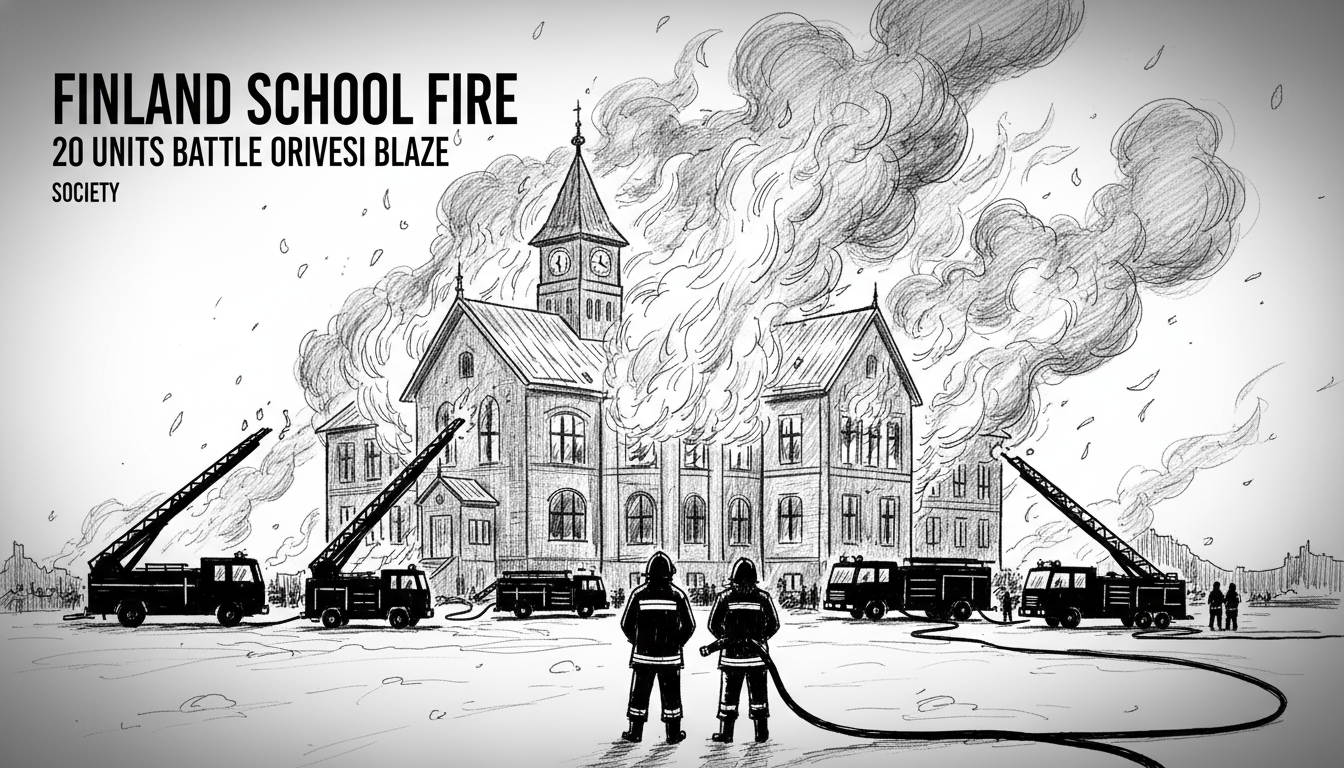
Finland school fire erupted Thursday morning at the Rovastikangas primary school in Orivesi, sending thick plumes of smoke over the Pirkanmaa region. More than 20 rescue units from the Pirkanmaa Rescue Department raced to the scene as flames consumed a construction site for a major new school extension. The fire, which began at the site of a new dining hall and multi-purpose sports facility, triggered the immediate evacuation of all pupils and staff from the adjacent, occupied school building.
"The fire started at the construction site of the new building," confirmed school principal Markku Pupuntti in a statement to local authorities. He emphasized that the existing school premises were not directly affected by the flames, but the decision to evacuate was swift and precautionary. Eyewitnesses described seeing intense flames roaring from the wooden structures of the unfinished extension, a stark contrast to the quiet, forested surroundings typical of the Orivesi community.
A Swift and Coordinated Emergency Response
The response from Finnish emergency services was immediate and large-scale, reflecting the high priority placed on school safety. Dispatchers sent over twenty separate rescue units to the Rovastikangas school, including fire engines, command vehicles, and support personnel. The Pirkanmaa Rescue Department confirmed that extensive firefighting and rescue operations were underway throughout the morning, working to contain the blaze and prevent any spread to the main school building.
This rapid mobilization is standard protocol in Finland, where integrated rescue services are trained for scenarios involving public institutions, especially schools. The absence of any reported injuries among students or staff stands as a testament to the effectiveness of both the school's evacuation plan and the firefighters' rapid containment efforts. All evacuated individuals were moved to a secure location away from the smoke and danger, with parents being notified through the school's standard communication channels.
Construction Site Fires: A Persistent National Challenge
While school fires in occupied buildings are rare in Finland, blazes at construction sites present a recurring national challenge. The Rovastikangas incident highlights the specific risks associated with building extensions attached to functioning institutions. Experts point to several factors that elevate fire risk during construction, including the presence of flammable materials like timber, temporary electrical installations, and hot work such as welding.
"A construction site is inherently a higher-risk environment," explains Jari Laukkanen, a fire safety engineer based in Tampere. "When that site is directly connected to an occupied school, the protocols need to be exceptionally rigorous. This includes strict compartmentalization, constant monitoring of hot work, and clear, rehearsed evacuation pathways for the existing building." Finnish building codes (Rakentamismääräyskokoelma) have stringent fire safety regulations, but enforcement and daily oversight on active sites are critical. The cause of the Orivesi fire is now the subject of a preliminary investigation by rescue authorities, which will scrutinize site practices and compliance.
The Community Impact in Orivesi
The fire at Rovastikangas school disrupts the rhythm of a close-knit community. Orivesi, a town of approximately 9,000 residents, is known for its strong sense of local identity and its beautiful lakeside setting. The school extension, which was to include a new dining hall and a multi-purpose sports hall, represented a significant community investment and a upgrade to local facilities. Its construction phase was a visible sign of progress, now marred by the dramatic fire.
For parents, the morning brought moments of anxiety followed by relief. The efficient evacuation ensured children's safety, but the event underscores the vulnerability of community hubs. The school serves as more than just an educational facility; it is a center for social activity and community cohesion. Local officials now face the dual tasks of supporting the school's return to normal operations and assessing the significant damage to the new building project. The financial and timetable implications for the construction project are likely to be substantial, involving insurance assessments and potential redesigns.
Analysis: Finland's Safety Culture Put to the Test
This incident provides a real-time case study of Finland's deeply ingrained culture of safety and preparedness. The successful evacuation aligns with a national framework where regular safety drills in schools are mandatory and taken seriously. The Finnish National Agency for Education (OPH) outlines strict guidelines for emergency preparedness, which every school must implement and practice.
The scale of the emergency response also reflects a societal consensus on resource allocation for public safety. Dispatching over twenty units to a regional town demonstrates a decentralized model of emergency services designed to guarantee a robust response anywhere in the country. From an analytical perspective, the event will likely prompt reviews at the municipal level in Orivesi and possibly trigger discussions at the Ministry of the Interior regarding fire safety oversight at attached construction sites.
While the direct human cost appears mercifully minimal, the material damage is severe. The investigation's findings will be crucial for future prevention. Key questions will focus on whether all flammable materials were stored correctly, if fire watches were in place during any hot work, and how effectively the construction site was isolated from the operational school. The answers will inform not only the reconstruction in Orivesi but also best practices for similar projects across Finnish municipalities.
Looking Ahead: Recovery and Lessons Learned
The coming days in Orivesi will involve cleaning up, investigating, and planning the way forward. Students will return to their classrooms in the undamaged section of the school, but the view from their windows will be a charred construction site rather than a rising new hall. The psychological impact on the younger pupils who witnessed the fire is something the school's well-being staff will undoubtedly address, in line with Finland's holistic approach to student welfare.
For the construction and safety authorities, this fire is a stark reminder. It reinforces the principle that safety protocols cannot be static documents but require dynamic, vigilant enforcement. The incident may lead to even tighter municipal permitting conditions for construction projects adjacent to occupied public buildings, particularly schools and daycare centers.
Finland's reputation for safe schools remains intact, bolstered by the successful evacuation. Yet the roaring flames at Rovastikangas serve as a powerful, smoky signal that constant vigilance is the price of that safety. The community's resilience will now be measured by how it rebuilds, not just the structure, but the confidence that such an alarming event will not be repeated.