
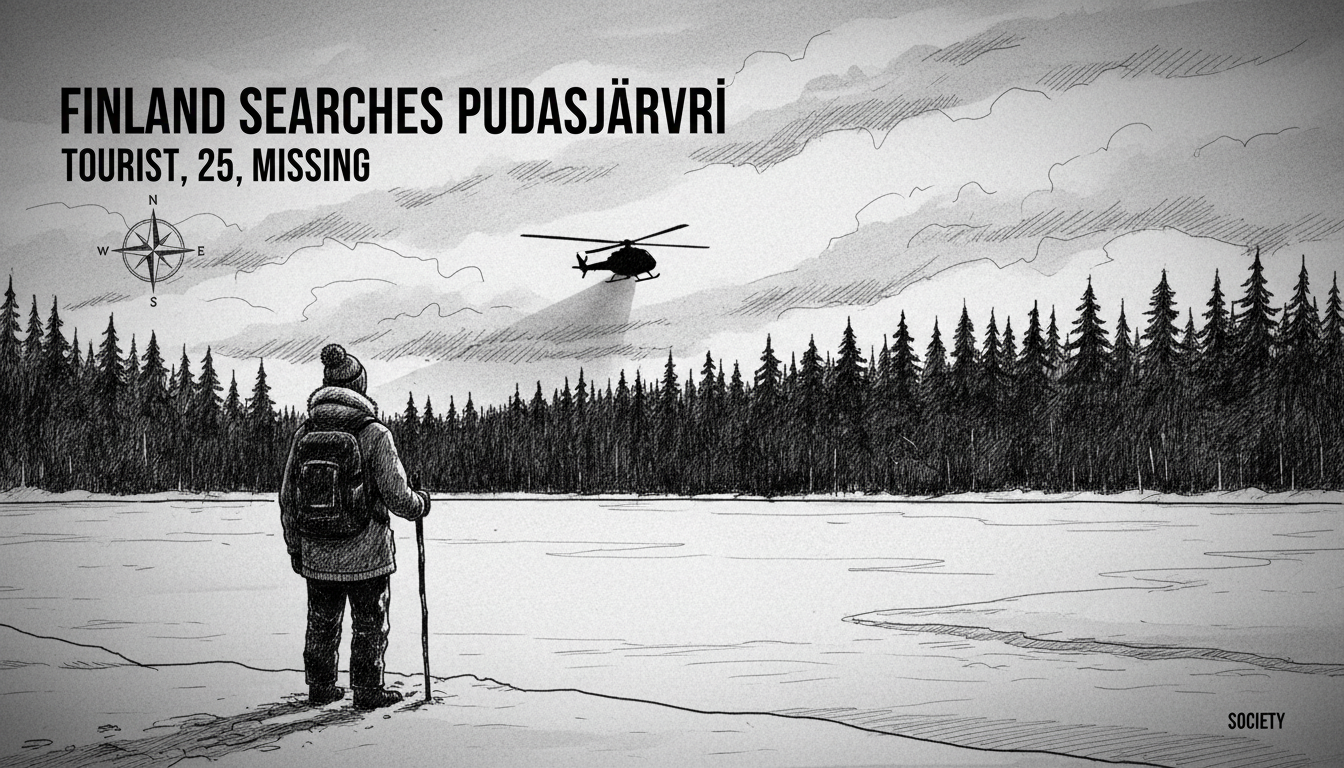
Finnish police are searching in Pudasjärvi for a 25-year-old woman who disappeared from a tourist group around noon on Boxing Day. The Oulu Police Department confirmed the disappearance occurred in the Panuma area of the Northern Ostrobothnia municipality on December 26th. Authorities have launched a significant search and rescue operation in the region, known for its vast wilderness and challenging winter conditions.
The Disappearance and Immediate Response
According to police statements, the young woman was part of an organized tourist group visiting the Pudasjärvi area. She was last seen in the Panuma district, a location characterized by forested terrain and sparse population. The precise circumstances leading to her separation from the group remain unclear and are a central focus of the investigation. Police have not released the woman's nationality or identity, citing standard practice in the early stages of a missing persons case.
The timing of the disappearance adds complexity. Boxing Day, known as Tapaninpäivä in Finland, sees many Finns enjoying outdoor activities during the Christmas holidays. However, daylight is extremely limited in northern Finland during late December, with only a few hours of twilight around noon. Temperatures in Pudasjärvi at this time of year routinely plunge well below freezing, posing an immediate risk to anyone unprepared in the wilderness.
The Challenge of the Pudasjärvi Wilderness
Pudasjärvi is a large municipality covering over 5,800 square kilometers, an area larger than many European countries. Its landscape is dominated by forests, hills, and national parks, including parts of the popular Syöte National Park. The Panuma area where the search is concentrated is typical of this terrain. While beautiful, it presents formidable challenges for search teams.
Dense coniferous forests can limit visibility to just a few meters. Snow cover, which is significant in late December, can obscure paths and landmarks. The remoteness of many areas means cellular network coverage can be patchy or non-existent. For a missing person, these factors combine to create a dangerous situation very quickly, especially without proper winter clothing or survival gear.
Mobilizing a Northern Search Operation
The Oulu Police have likely assumed command of the operation, coordinating with multiple specialized agencies. Standard protocol in such cases involves activating local rescue services (Pelastuslaitos), which include ground teams familiar with the local topography. The Finnish Border Guard (Rajavartiolaitos) is often involved in major wilderness searches, contributing helicopters equipped with thermal imaging technology crucial for scanning large areas, particularly during the limited daylight.
Volunteer organizations, such as the Finnish Red Cross Search and Rescue service, may also be mobilized. These volunteers are highly trained in wilderness tracking and first aid. The initial phase involves establishing a search perimeter based on the last known location and witness accounts from other members of the tourist group. Search patterns are then systematically expanded from that point.
“Operations in Lapland and Northern Ostrobothnia require specific preparedness,” said a veteran rescue coordinator familiar with northern operations, speaking on typical procedures. “The environment does not forgive mistakes. Coordination between air and ground units is critical, and speed is essential due to the cold. The first 48 hours are always the most important.”
Analysis: The Systems Behind Finnish Wilderness Rescue
Finland has a robust and internationally respected system for managing missing persons cases in its vast backcountry. The model relies on integration between police, border guards, rescue services, and volunteers. This inter-agency cooperation is drilled regularly and is considered a key strength. The country's jokamiehenoikeus (everyman's right) allows freedom to roam, but it also places responsibility on individuals to be prepared, a balance constantly reviewed in tourism strategy.
From a policy perspective, incidents involving international tourists prompt reviews of safety information dissemination. The Finnish National Tourism Board promotes nature extensively, and regional authorities balance attracting visitors with ensuring they understand the risks. This case may reignite discussions about guidelines for foreign tour groups operating in remote areas during winter, particularly regarding group integrity protocols and mandatory safety gear.
The psychological dimension of such searches is also a recognized factor. Search managers must weigh expanding the search area against the resource intensity of covering thousands of hectares of forest. Decisions are data-driven, using models that account for a person's likely travel distance based on terrain, weather, and their perceived physical condition.
What Happens Next
The coming hours are decisive. Police will continue gathering statements from the tourist group and any other witnesses to build a clearer timeline. The weather forecast will be a constant factor in planning; a drop in temperature or incoming snowfall could narrow the search window and complicate air operations. Authorities will also examine if the woman had any communication devices that could provide a location signal.
Families of missing persons are typically supported by police liaison officers. The public may be asked for information, such as dashcam footage from roads in the Panuma area around the time of the disappearance. As the operation continues, updates will depend on finding concrete clues or successfully locating the individual.
This incident underscores a stark contrast. It occurs in a nation renowned for its safety and order, yet its magnificent landscape holds inherent dangers that can escalate in moments. The full resources of Finland's search and rescue framework are now tasked with resolving that tension, aiming for a positive outcome against the formidable odds of the northern winter.
The silent forests of Pudasjärvi, usually a destination for tranquility and outdoor joy, are now the setting for a urgent and determined search, watched closely by a concerned nation and the international community awaiting news.