
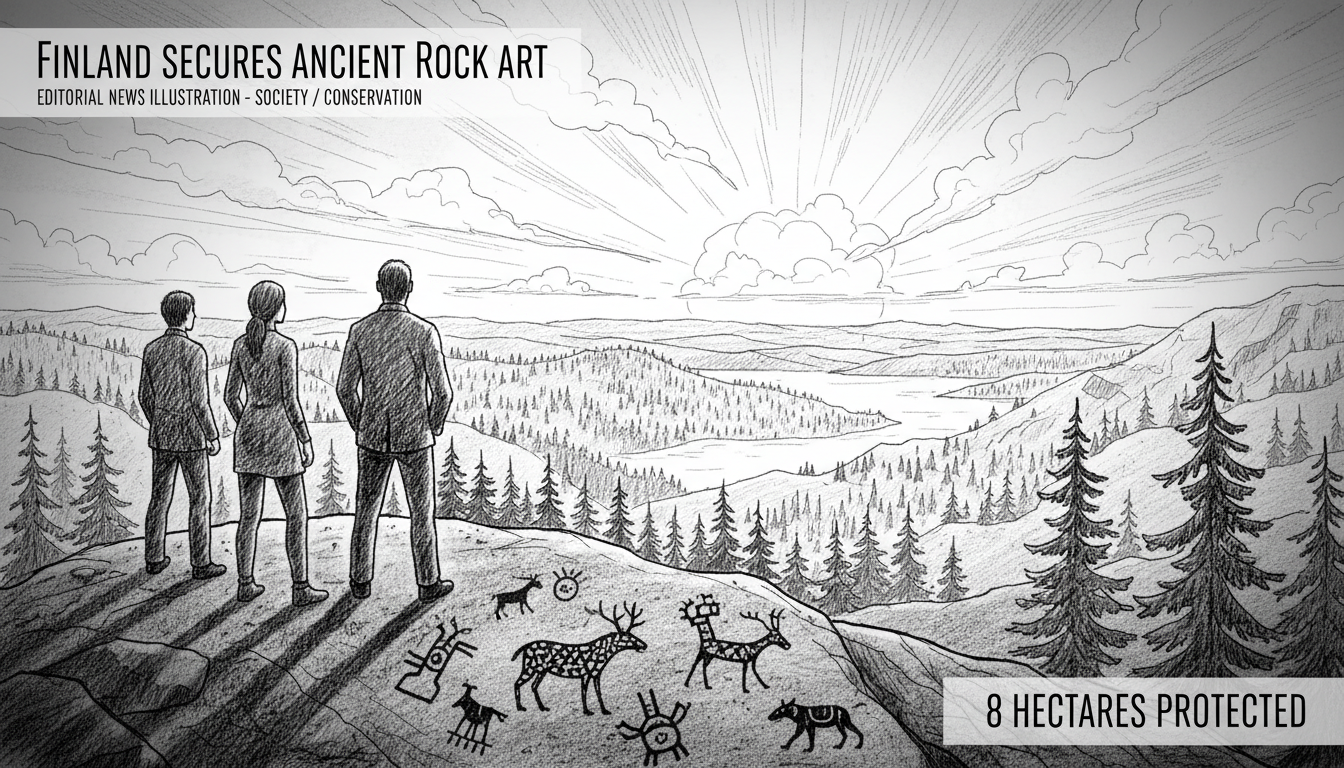
Finland's prehistoric Astuvansalmi rock paintings, a collection of over 60 figures etched into a lakeside cliff 5,000 years ago, now have a permanent guardian. The Finnish state, through the South Savo ELY Centre, has completed the acquisition of an eight-hectare area surrounding the site to establish a formal nature reserve. This decisive move, finalized on September 5th, aims to shield one of the nation's most significant cultural heritage sites from environmental and human threats for generations to come.
The acquisition represents a major victory for archaeologists and conservationists who have long advocated for stronger protections. The paintings, located on the shore of Lake Yövesi in Ristiina, Mikkeli, depict elk, human figures, handprints, and geometric patterns. They provide an irreplaceable window into the spiritual beliefs and daily life of Finland's Stone Age inhabitants. "This is not just about protecting rocks; it's about safeguarding a direct connection to our deepest past," said a senior heritage official familiar with the project, who spoke on background. "These paintings are a non-renewable resource. Once damaged, they are gone forever."
A Strategic Move for Permanent Preservation
The decision to purchase the land outright, rather than rely on existing protective regulations, signals a shift towards more proactive stewardship. The South Savo ELY Centre, responsible for regional environmental and development matters, executed the acquisition. Establishing a dedicated nature reserve provides a unified management framework. It allows authorities to control access, implement conservation measures, and potentially develop visitor infrastructure that minimizes impact. The eight-hectare buffer zone is crucial for protecting the entire archaeological context of the site, not just the painted cliff face itself.
Previously, the site's protection relied on a patchwork of cultural heritage and nature conservation laws. While these offered some defense, a dedicated reserve with clear boundaries and management plans is considered a more robust solution. It prevents potential conflicts with private land use and ensures long-term conservation goals are prioritized. The Finnish Heritage Agency has classified Astuvansalmi as a nationally significant built cultural environment, underscoring its importance.
Deciphering the Stories in Stone
The Astuvansalmi paintings are a masterpiece of Nordic rock art. Created during the Neolithic period, they belong to the tradition of hunter-gatherer societies that populated the lake-rich regions of present-day Finland. The most prominent motif is the elk, which appears in several forms. Experts interpret this as evidence of the animal's central role in both subsistence and cosmology. Human figures, some with distinctive headgear, and numerous handprints suggest rituals or acts of signing one's presence at a sacred location.
"Each figure is a sentence in a story we are still learning to read," explained Dr. Tiina Äikäs, an archaeologist specializing in Northern rock art. "The composition at Astuvansalmi is exceptionally rich. The location on a steep cliff by water is highly intentional, likely marking a boundary between worlds in the belief system of the time. Protecting the entire landscape around it is essential to understanding its full meaning." The paintings were made using red ochre, a pigment mixed with animal fat or blood, and their survival for millennia on an open cliff is remarkable.
The Pressures of Modernity on Ancient Art
The primary threats to the Astuvansalmi paintings are both natural and anthropogenic. Natural erosion from freeze-thaw cycles, water runoff, and lichen growth slowly degrades the cliff surface. Human activity poses more immediate risks. Unregulated visitor access can lead to accidental damage, graffiti, and littering. Fluctuations in water levels from nearby activities, if not managed, could also accelerate erosion at the base of the cliff.
The creation of the nature reserve allows for the implementation of targeted conservation science. This can include monitoring the stability of the rock face, studying the microclimate affecting the pigments, and installing non-intrusive walkways or viewing platforms to direct visitor flow. The goal is to make the site accessible for education and public enjoyment while eliminating behaviors that harm it. Similar protective measures have been successfully employed at other major Finnish rock art sites, like the Hossa Värikallio paintings in Northeastern Finland.
A Broader Trend in Cultural Stewardship
This acquisition aligns with a growing recognition across the Nordic region of the need to actively protect non-renewable cultural heritage. It moves beyond passive legal protection to active site management. The Finnish state's investment in this land purchase demonstrates a commitment to treating cultural landscapes with the same seriousness as pristine natural environments. The new reserve will likely integrate with broader tourism and cultural route development plans for the South Savo region, promoting sustainable heritage tourism.
The model could set a precedent for other significant but vulnerable archaeological sites in Finland. Several other rock painting locations, though smaller, face similar preservation challenges. The success of the Astuvansalmi project, combining state action, expert guidance, and regional development goals, provides a blueprint. It shows how cultural value can drive environmental protection, creating spaces that celebrate both natural beauty and human history.
The Path Forward for Astuvansalmi
With ownership secured, the detailed work of planning the nature reserve begins. This process will involve archaeologists, biologists, landscape architects, and local stakeholders. Key decisions will include defining access points, creating informative signage, and establishing a long-term monitoring regimen. Public engagement will be vital to foster a sense of shared ownership and responsibility for the site among local residents and visitors.
The ultimate vision is a protected landscape where the silent narratives of the rock paintings can continue to resonate. The figures at Astuvansalmi have witnessed six millennia of change, from the retreat of the glaciers to the rise of modern society. The Finnish state's intervention ensures they will witness many more, safe from harm. This act of preservation is a message to the future, affirming that understanding where we come from is fundamental to knowing who we are. As one heritage official put it, "We are not the owners of this history; we are its temporary custodians. This land purchase is our promise to the next generation of custodians."