
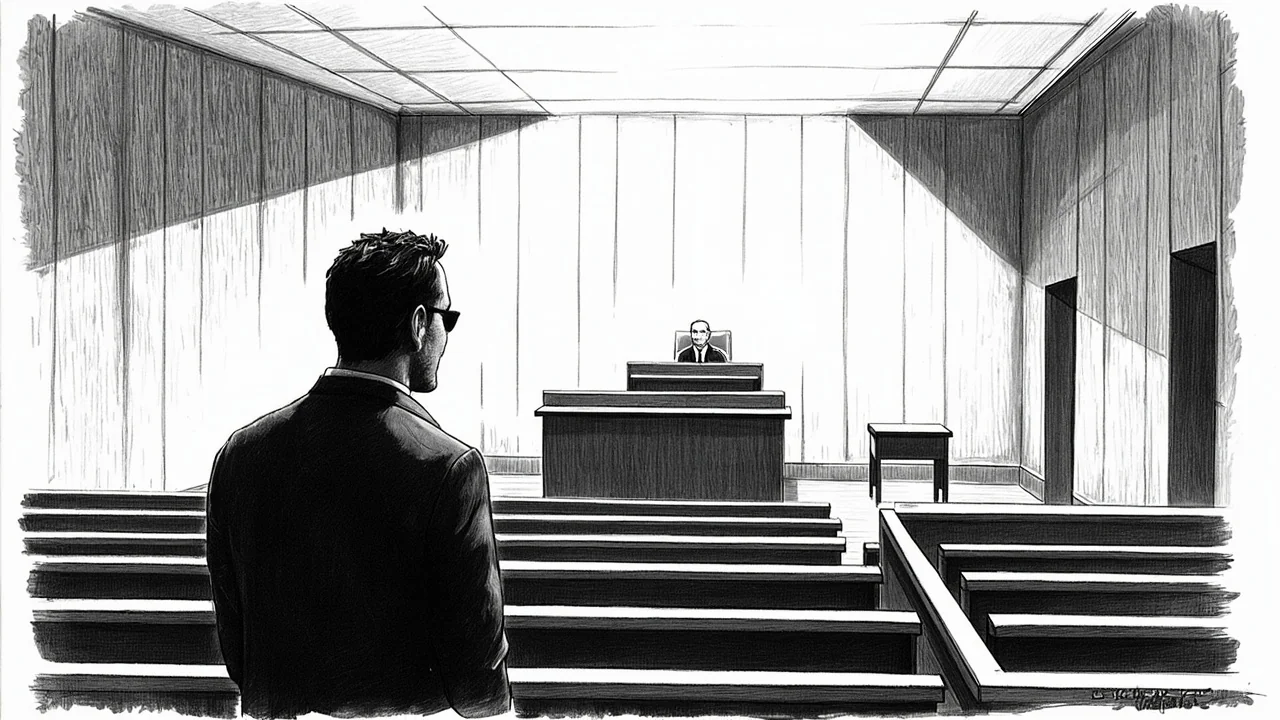
Finland's Pohjois-Savo District Court has delivered an eight-year prison sentence to a 20-year-old man for manslaughter. The conviction stems from a violent assault in Kuopio last May, where the perpetrator struck the victim in the head multiple times before applying a fatal forearm chokehold. Court documents state the strangulation was both forceful and prolonged, continuing even after the victim ceased resistance.
The ruling concludes a tragic case that has resonated in the Eastern Finnish city. It underscores the severe legal consequences for violent crime in a country often celebrated for its low homicide rates. This sentencing provides a stark counter-narrative to Finland's peaceful international image, revealing the human stories behind judicial statistics.
A Detailed Account of the Fatal Assault
According to the court's published findings, the incident occurred in late spring. The confrontation escalated rapidly from an altercation to a lethal attack. The convicted man first delivered several blows to the victim's head. He then used his forearm to choke the other man, applying significant pressure over an extended period.
The court emphasized a critical and disturbing detail in its written judgment. The assailant maintained the chokehold beyond the point where the victim stopped fighting back. This specific factor likely contributed to the court's assessment of the act's intent and severity, moving the crime beyond a simple tragic fight. The cause of death was ruled as asphyxiation due to strangulation.
Understanding Finland's Sentencing Framework for Homicide
An eight-year sentence for manslaughter, or 'tappo' in Finnish, falls within the typical range for such convictions. Finnish law distinguishes clearly between murder ('murha') and manslaughter ('tappo'). Murder requires proof of premeditation or exceptional brutality, carrying a standard sentence of life imprisonment, which typically means a minimum of 12-15 years before parole eligibility.
Manslaughter, defined as a killing without the specific aggravating factors of murder, carries a sentencing scale from four years to life imprisonment. The eight-year term in this case suggests the court found aggravating circumstances, such as the sustained nature of the attack after resistance ended. However, the absence of proven premeditation placed it in the manslaughter category.
“Sentencing in homicide cases always weighs the brutality of the act, the perpetrator's intent, and any mitigating factors,” explains a Helsinki-based criminal law professor who wished to remain anonymous as the case is not appealed. “The prolonged strangulation is a key element here. It speaks to a level of intent that the court has punished seriously.”
The Human Toll Beyond the Courtroom
While the legal process focuses on facts and statutes, the human impact of such violence is profound and lasting. The victim, whose identity is protected under Finnish privacy conventions, is mourned by family and friends. His death leaves a permanent void in his community.
The perpetrator, now a convicted felon at age 20, faces a substantial portion of his young adulthood in prison. The Finnish penal system emphasizes rehabilitation, but an eight-year sentence represents a significant life disruption. His future prospects for employment, education, and social integration will be challenged upon eventual release.
Cases like this also strain local community bonds. Kuopio, a city known for its beautiful lakefront and university atmosphere, is confronted with a brutal crime that contradicts its generally safe environment. Residents are left to reconcile this violence with their perception of home, a common experience in communities worldwide when tragedy strikes.
Finland's Broader Context of Violent Crime
Statistically, Finland remains a safe country with a homicide rate that, while higher than its Nordic neighbors Norway and Denmark, is low by global standards. According to the latest official data from Statistics Finland, the homicide rate is approximately 1.5 per 100,000 inhabitants. Most homicides occur in private settings, often between acquaintances, rather than as random street violence.
However, this statistical reality offers little comfort to those affected by individual acts of violence. Each case prompts difficult questions about societal factors, including mental health support, conflict resolution among young men, and alcohol consumption, which is frequently a factor in violent assaults. Finnish authorities continuously work on preventative measures, focusing on early intervention and social services.
“We cannot view these cases in isolation,” says a social researcher from the University of Eastern Finland. “While the justice system deals with the individual act, we must also ask what societal and communal supports can prevent escalation from argument to fatal violence, especially among young adults.”
The Path Forward: Rehabilitation and Remembrance
The convicted man will serve his sentence in the Finnish prison system. His case will be reviewed for possible parole after he has served half of his sentence, or a minimum of four years. The parole board will then assess his rehabilitation, behavior, and risk to society.
For the victim's family, the court's verdict marks the end of the criminal proceeding but not the end of their grief. They may pursue a civil case for damages, a separate process under Finnish law. Their loss is permanent, a fact no legal judgment can alter.
This case in Kuopio serves as a somber reminder. It highlights the fragility of life and the devastating, irreversible consequences that can stem from a moment of uncontrolled aggression. The Finnish justice system has rendered its verdict, attempting to balance punishment with the principles of proportionality and eventual reintegration.
As the community moves forward, the lingering question is how to foster a culture where disputes resolve without fatal violence. The answer lies not in courtrooms alone, but in homes, schools, and the very fabric of civil society. Finland's high trust in institutions and strong social welfare network provides a foundation for this work, but as this tragedy shows, no society is immune to profound human failure.
The final page of this legal chapter is written. The deeper story of loss, consequence, and prevention continues.