
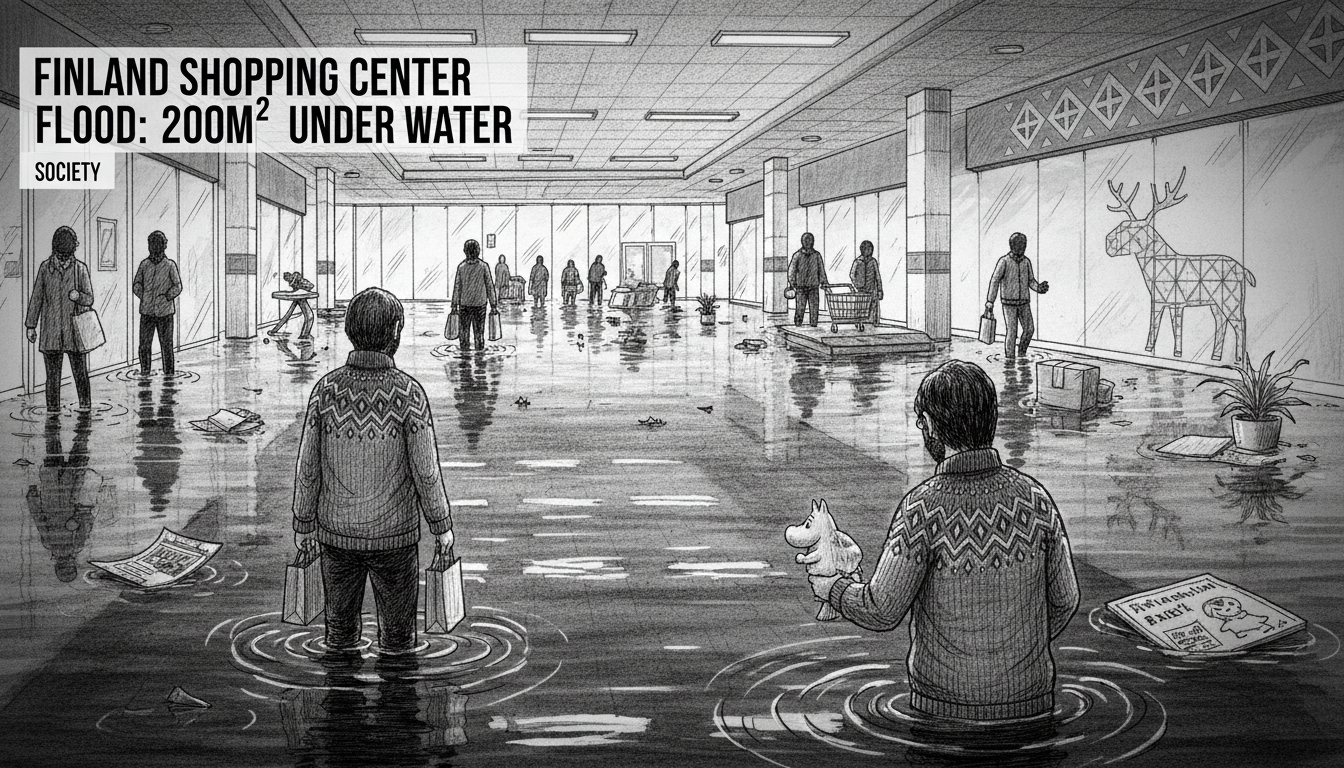
Finland's Ainoa shopping center in Espoo faced significant disruption after a major water leak flooded approximately 200 square meters of the retail complex. The Espoo Rescue Department responded to a medium-sized damage control alert, deploying multiple units to the scene where an initial one-centimeter layer of water covered the affected area. Crews worked alongside the center's maintenance staff to pump out the water and begin the cleanup process, highlighting the vulnerability of modern commercial infrastructure to sudden technical failures.
This incident at one of Espoo's key retail hubs underscores a recurring challenge for property managers across the Nordic region. Large, multi-use complexes like Ainoa, which integrate shops, restaurants, and services, rely on extensive networks of plumbing, heating, and drainage systems. A single pipe failure can trigger cascading effects, forcing store closures, disrupting customer traffic, and generating substantial repair costs. For a city like Espoo, which prides itself on modern infrastructure and seamless urban living, such events test the resilience of its built environment.
A Morning of Disruption in Espoo's Retail Heart
The alert came in as a standard damage control call, but the scale quickly became apparent to the arriving Espoo Rescue Department units. Water was spreading across a 200-square-meter section of the shopping center, a size equivalent to several large retail stores or a full-service restaurant floor. The one-centimeter depth, while seemingly minor, poses a serious threat to electrical systems, inventory stored on floors, and the integrity of flooring materials. The immediate priority for rescue services was to stop the flow at its source and begin water removal operations to prevent secondary damage.
Shopping centers like Ainoa serve as critical social and commercial nodes in Finnish urban planning, especially in growing cities within the Helsinki metropolitan area. Their design emphasizes convenience and concentration, bringing diverse services under one roof to cater to suburban populations. This central role means any operational halt creates a ripple effect. Employees cannot work, deliveries are stalled, and planned consumer spending is redirected or lost. The economic impact of a half-day closure for a medium-sized center can reach tens of thousands of euros in lost revenue alone.
The High Stakes of Property Management in Modern Finland
Expert analysis points to the complex risk calculus facing property owners and managers. "In a climate like Finland's, with freeze-thaw cycles and complex indoor climate systems, the risk of pipe failure is a constant management focus," explains a Helsinki-based commercial property risk assessor who requested anonymity due to client relationships. "The response time is everything. Water damage escalates exponentially—within minutes it ruins stock, within hours it compromises structures, and within days mold can become an expensive health hazard."
The financial implications extend beyond simple repair bills. Business interruption insurance claims become a factor, as tenants may seek compensation for lost trade. The reputational damage for the shopping center, potentially seen as unreliable or poorly maintained, can linger long after the floors are dry. For a competitive retail market, where consumers have multiple options, trust in the facility's operational stability is a tangible asset. This incident will likely trigger a thorough review of Ainoa's preventive maintenance schedules and emergency response coordination with local fire and rescue services.
Infrastructure Resilience in the Nordic Urban Model
Espoo represents the forefront of Finland's modern urban development. As a city that has grown rapidly alongside its tech industry, its infrastructure is relatively new. This event, however, is a reminder that no system is immune to failure. The Nordic model of centralized, multi-functional public and commercial spaces demands exceptionally high standards for technical systems and their oversight. A failure in one hidden pipe can disable a building that hundreds, even thousands, of people depend on daily for shopping, services, and social interaction.
Compared to older European cities, Finland's building stock is modern, but this brings specific challenges. Complex HVAC systems, extensive sprinkler networks for fire safety, and underfloor heating all require intricate plumbing. Regular, proactive maintenance is not merely a cost but an essential investment in continuity. The speed and efficiency of the Espoo Rescue Department's response likely prevented much more severe damage, showcasing the importance of well-funded and trained municipal emergency services for urban resilience.
Looking Ahead: Prevention and Preparedness
The cleanup at Ainoa will transition quickly from water extraction to damage assessment and restoration. Specialized drying equipment will be deployed to prevent mold growth within walls and subfloors. For tenants, the coming days will involve inventory checks, insurance assessments, and efforts to reopen as swiftly as possible. The shopping center's management will face questions about the origin of the leak—whether it was a material failure, a construction flaw, or an issue related to recent maintenance work.
This incident serves as a case study for other commercial property operators across the Nordics. It reinforces the necessity of comprehensive emergency plans that are coordinated with local authorities. It also highlights the potential for smart building technologies, such as moisture sensors and automated shut-off valves, to mitigate risks. In an era where extreme weather events put additional stress on infrastructure, managing internal technical risks becomes even more critical. The true test for Ainoa's management will be how transparently they communicate the cause and the steps taken to ensure it does not happen again.
Ultimately, the flood at Ainoa is a story of interrupted normality. It is a glimpse into the hidden vulnerabilities of the seamless, convenient urban environments Finland has expertly constructed. While the water will be mopped up and the stores will reopen, the event leaves a watermark on the community's confidence, prompting a necessary conversation about the invisible systems that sustain daily life and the constant effort required to keep them flowing smoothly.