
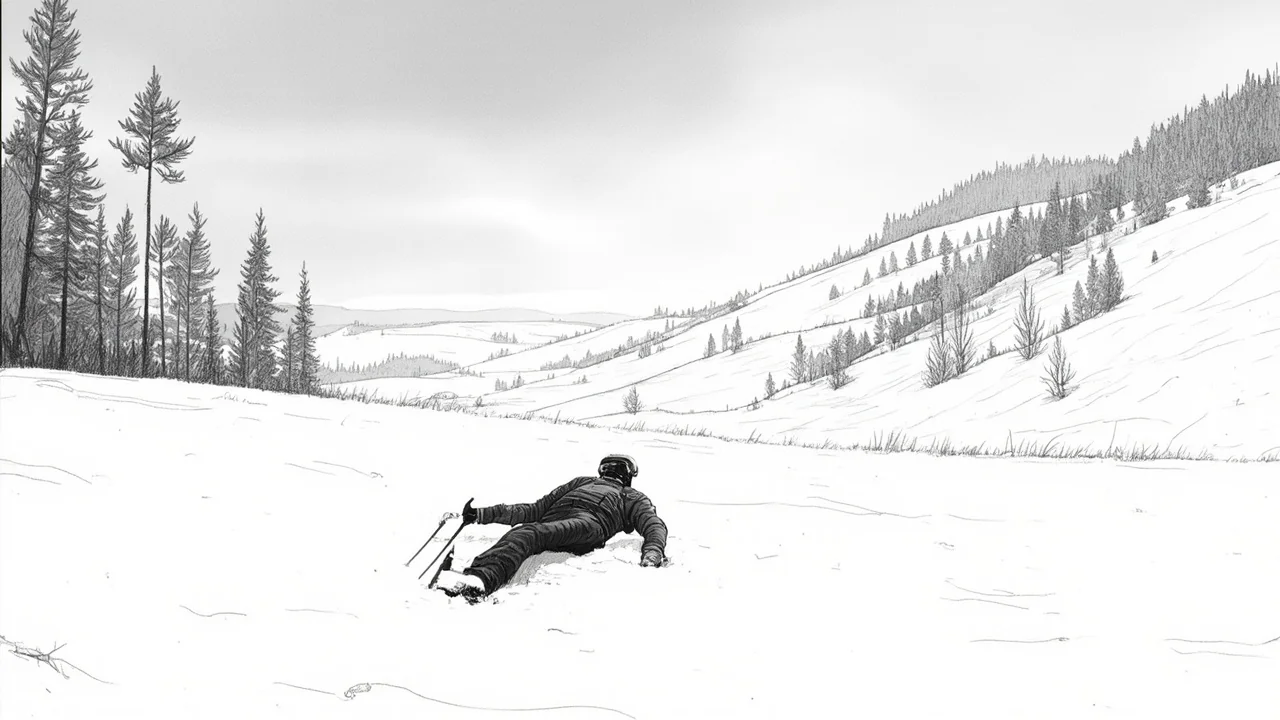
Finland's Riihivuori ski resort in Muurame reported a skiing accident on Sunday, with one person sustaining a hand injury. Resort marketing manager Kalle Jokinen described the incident as a "minor" and "normal slope accident" requiring ambulance attendance. The event highlights the routine risks present at even the most familiar winter sports venues, despite Finland's strong safety culture.
A Routine Day Interrupted
The Sunday skiing conditions at Riihivuori were typical for Central Finland in winter. Families and recreational skiers populated the slopes of this popular local center. Then, the routine was broken by an accident. According to the resort's official account, a single skier was involved in an incident resulting in an injury to their hand. Emergency services were called, and an ambulance arrived at the scene. The response was swift, reflecting standard protocol for such events. Marketing manager Kalle Jokinen was quick to provide reassurance, framing the event within the expected parameters of alpine sports. "Nothing particularly serious, let's put it that way. A normal slope accident, yes," Jokinen stated. His characterization aimed to balance transparency with maintaining public confidence in the resort's safety.
The Anatomy of a "Normal" Slope Accident
What constitutes a "normal" skiing accident in Finland? The term suggests a common, low-impact incident distinct from catastrophic collisions or high-speed falls. Hand and wrist injuries are frequent in skiing and snowboarding, often occurring when individuals instinctively extend an arm to break a fall. Sprains, fractures, or ligament damage to the wrist, known as Skier's Thumb, are typical outcomes. Finnish ski resorts like Riihivuori are generally considered safe, with well-maintained slopes and clear safety signage. The country's approach to winter sports emphasizes personal responsibility and proper preparation. Accidents are an acknowledged part of the activity, with an estimated injury rate of approximately 2-3 per 1000 skier days globally, though Finland-specific public statistics are less commonly aggregated for single-resort incidents. The immediate dispatch of an ambulance indicates the resort staff followed established safety protocols, prioritizing medical assessment even for seemingly minor injuries.
Safety Culture in Finnish Winter Sports
Finland boasts a deeply ingrained culture of outdoor activity and safety. From a young age, Finns are taught to respect nature and prepare for its conditions. This ethos extends to organized sports facilities like Riihivuori. Resort safety measures typically include slope grading, regular piste grooming to minimize hidden hazards, and visible markings for obstacles and difficulty levels. Ski patrollers or first-aid trained staff are usually present. The incident prompts an examination of whether these measures are sufficient. While major trauma is rare, the frequency of minor injuries suggests a continuous need for public education on proper technique and the importance of protective gear, like wrist guards for snowboarders. The Finnish Ski Area Association promotes safety campaigns, but individual awareness remains the critical factor. This accident serves as a micro-reminder that risk cannot be entirely engineered away, even in a controlled environment.
The Local Impact of a Minor Incident
For a community-focused resort like Riihivuori, any accident resonates locally. Such centers are economic and social hubs for towns like Muurame, providing winter employment and leisure. News of an injury, however minor, travels quickly in tight-knit communities. The resort management's communication strategy is therefore crucial. Jokinen's comments were likely crafted to provide factual information without causing undue alarm, a delicate balance for any business reliant on public trust. A perceived lack of safety could deter the casual family visits that form the resort's financial backbone. Conversely, transparent handling of an incident can reinforce a reputation for responsibility. The event tests the relationship between the resort and its patrons, a relationship built on the expectation of managed fun and secure recreation.
The Unseen Economic Ripple
A single ambulance call and a hand injury have implications beyond the immediate medical response. From a societal perspective, even minor sports injuries incur costs. These include the direct expense of emergency medical services, potential follow-up doctor visits, physiotherapy, and any lost work time for the injured individual. While Finland's healthcare system covers most costs, they are ultimately borne by society. For the individual, the inconvenience and pain, though temporary, are a personal burden. The accident underscores that recreational risk has a price, both personal and collective. It raises a subtle question about the allocation of public resources, though one incident is merely a statistical blip in a nation where winter sports are a fundamental part of the cultural fabric.
A Comparative Look at Nordic Slope Safety
Within the Nordic region, approaches to slope safety share similarities but have nuances. Norway and Sweden, with their more extensive alpine terrains, often deal with different scales and types of incidents. Finland's skiing is predominantly on smaller hills, which might lead to different accident profiles—potentially fewer high-speed collisions but similar rates of lower-impact falls. All Nordic countries enforce strict rules regarding ski passes, liability waivers, and on-slope conduct. The Nordic model generally prioritizes individual responsibility within a framework of clearly communicated rules and well-maintained infrastructure. The Riihivuori incident would be classified similarly across the region: an unfortunate but accepted occupational hazard of the activity. No system can prevent every fall, a reality acknowledged by safety experts across the continent.
The Aftermath and Forward Look
In the days following the Sunday accident, operations at Riihivuori will continue as normal. The slope where the incident occurred was likely checked for any unusual hazards, but it was almost certainly a case of simple human error or misfortune. The injured individual will recover, and the resort's logbook will note another managed incident. However, these moments are not entirely forgettable. They serve as periodic calibration points for resort operators and skiers alike. For operators, it's a chance to review protocols and staff responses. Were first-aid kits fully stocked? Was communication with emergency services optimal? For skiers, it's a subconscious reminder to check their speed, be aware of their surroundings, and respect their own skill limits. Finland's winter will continue, and with it, the joy and the inherent minor risks of gliding down a snowy hill. The Riihivuori accident, now closed, leaves behind that universal lesson: in sport, as in life, vigilance is the constant companion of pleasure. Can any recreational pursuit ever be completely safe, and should it even be, if stripping away all risk also strips away the essence of the challenge?