
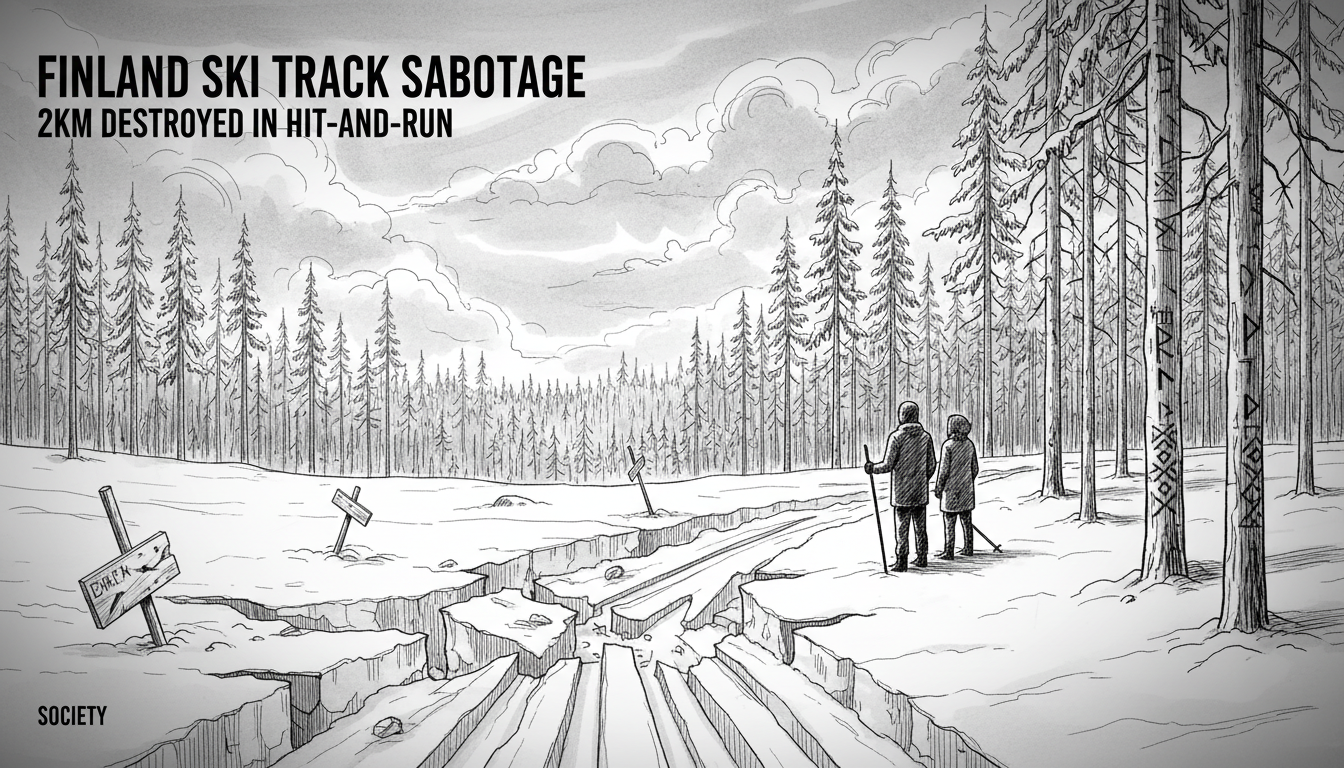
Finland's winter recreation infrastructure was deliberately targeted in a brazen act of vandalism this weekend, with two kilometers of freshly groomed ski track destroyed by a car driver who then fled after hitting the track groomer operator. The incident in Hausjärvi, a municipality 70 kilometers north of Helsinki, represents an escalating pattern of reckless behavior on public recreational land, according to local authorities and outdoor associations.
Police are investigating the serious case of vandalism and aggravated endangerment of traffic safety after the driver of a relatively new BMW drove along the prepared ski trail late Saturday. The snow groomer operator confronted the motorist, who showed no remorse before attempting to leave the scene. In a dangerous maneuver, the car reversed into the groomer operator, causing minor injuries, before speeding away from the rural area in Kanta-Häme.
"The driver did not feel he had done anything wrong, but still tried to leave the spot," the Häme Police Department stated in their official report on the matter. Investigators confirmed they have strong identifying details of both the vehicle and its occupants, thanks to the quick actions of the groomer operator, who provided critical information despite the confrontation.
A Direct Assault on Finnish Winter Culture
The destruction strikes at the heart of a fundamental Finnish winter tradition. Cross-country skiing networks, meticulously maintained by municipalities and volunteer associations, form the backbone of public recreation during the long Nordic winter. Preparing a proper track requires specialized equipment, favorable snow conditions, and significant labor. Two kilometers of destruction represents not just material damage but a violation of a shared social contract.
Matti Nykänen, a communications officer with the Finnish Ski Association, expressed dismay at the increasing frequency of such incidents. "Ski tracks are a common good, funded by taxpayers and maintained for everyone's benefit. This deliberate damage affects thousands of people who rely on these trails for exercise, transportation, and mental wellbeing during the dark winter months," Nykänen said. He noted that repair work diverts limited resources from trail expansion and other improvements.
Environmental experts point to additional consequences beyond recreational loss. Dr. Elina Saarelainen, a specialist in boreal forest ecology at the University of Helsinki, explains that vehicle compression creates an ice layer that persists long after snow melts. "This alters ground temperature, affects water absorption, and can damage underlying vegetation like lichens and dwarf shrubs," Saarelainen noted. "In protected areas, such actions could violate nature conservation laws."
Law Enforcement Challenges in Rural Areas
The Hausjärvi case highlights ongoing challenges for police coverage in Finland's vast rural municipalities. With limited patrol resources spread across large geographical areas, response times can be lengthy, and perpetrators often calculate they can escape before authorities arrive. The hit-and-run aspect elevates the crime from simple vandalism to a violent offense, yet the rural setting complicated immediate apprehension.
Chief Inspector Jari Tolonen of the Häme Police Department acknowledged these difficulties. "We rely heavily on witness accounts and community cooperation in these situations. The groomer operator acted correctly by securing detailed information without further escalating the confrontation," Tolonen stated. He confirmed the investigation is active and that charges of vandalism and aggravated endangerment of traffic safety carry the potential for substantial fines and even imprisonment.
Finland's legal framework treats damage to public property seriously. The penalty for vandalism can reach a year and a half in prison if the act is deemed deliberate and causes significant financial loss or public inconvenience. Aggravated endangerment of traffic safety, applicable due to the reversing maneuver toward a person, carries a maximum penalty of two years' imprisonment. Police are examining whether attempted assault charges could also apply.
A Symptom of Broader Social Friction?
Some community leaders see the Hausjärvi incident as part of a troubling trend where respect for shared public spaces is eroding. Anssi Rantanen, chairman of the Hausjärvi Municipal Sports Federation, connects it to wider tensions. "We've seen increased littering, gate damage at recreational areas, and now this. There's a segment that views these spaces as their personal playground without regard for others," Rantanen observed. He advocates for better signage, public education campaigns, and stricter enforcement of existing rules prohibiting motorized vehicles on ski trails.
The financial cost is not insignificant. A single snow groomer can cost over 100,000 euros, and operating it consumes fuel and labor. Destroying a prepared track wastes those resources and requires re-grooming, which may not be possible if weather conditions change. For smaller municipalities like Hausjärvi, with a population just over 8,000, such losses strain limited recreational budgets.
Local skiers have reacted with anger and disappointment. Social media forums are filled with condemnation, with many sharing their own experiences of encountering tire tracks or debris on trails. This communal outrage may become a catalyst for change. Several prominent Finnish outdoor organizations are now calling for a national discussion on strengthening protections for recreational infrastructure.
The Path Forward: Prevention and Penalties
Preventing future incidents requires a multi-faceted approach. Technical solutions, like removable bollards or camera surveillance at popular trailheads, are being considered but face hurdles regarding cost, aesthetics, and access for maintenance vehicles. Legislative changes could increase minimum penalties for damaging recreational infrastructure, creating a stronger deterrent.
Education remains a critical component. Many young drivers may not fully understand the damage caused by driving on compacted snow trails or the cultural importance of these spaces. Incorporating this knowledge into driver's education programs has been suggested by the Ministry of the Environment in past reports on outdoor access.
The Hausjärvi case is likely to proceed through the Finnish judicial system in the coming months. Whether the identified suspect is swiftly apprehended will test the efficiency of rural policing. The outcome will send a message about how seriously Finland treats the defense of its cherished winter landscape. As daylight slowly returns to the Nordic region, the repaired ski track in Hausjärvi will stand as a testament to communal resilience—and a reminder of the fragility of shared social goods in the face of individual disregard.
Will this act of vandalism prompt a meaningful reevaluation of how Finland protects its universal right to winter mobility, or will it become just another statistic in a growing list of recreational infrastructure damage? The response from lawmakers, communities, and the courts in the weeks ahead will provide the answer.