
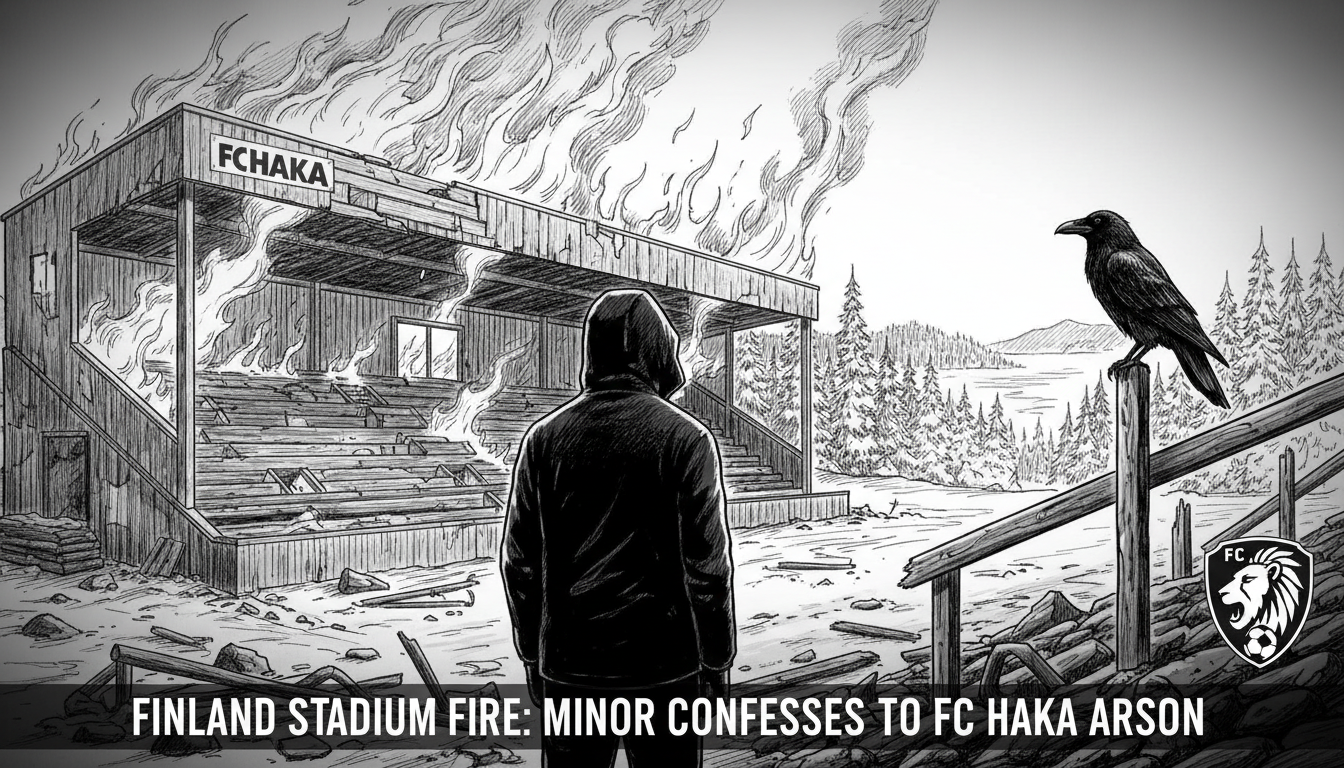
Finland's historic Tehtaan kenttä stadium in Valkeakoski has suffered significant damage after a fire was deliberately set by a minor under the age of 15. Police confirmed one of three questioned youths confessed to starting the blaze at the home ground of the nine-time Finnish football champion, FC Haka. The incident has sparked intense local debate and raises complex questions about youth accountability and community loss.
A Confession and a Community in Shock
Rikoskomisario Maijastiina Tammisto stated the fire caused substantial property damage and ignited strong emotions among residents. "The incident has also sparked lively discussion on social media as well as strong feelings among townspeople," Tammisto said in a police bulletin. Authorities thanked the public for tips while urging discussions to remain factual, warning that inappropriate and personal targeting in communications could itself lead to a criminal investigation. The immediate aftermath leaves a club and its supporters grappling with the physical and symbolic damage to a local institution.
The Weight of History in the Ashes
Tehtaan kenttä is not just any football pitch. It has been the heart of FC Haka since the club's founding in 1934, witnessing the team's rise to become one of Finland's most decorated clubs. The stadium has seen nine Veikkausliiga championship celebrations and twelve Finnish Cup victories. Its stands have echoed with the cheers of generations of fans from the industrial city of Valkeakoski. This context makes the vandalism not merely a case of property damage but a blow to local identity and sporting heritage. The charred sections of the stadium represent a rupture in the community's shared history.
Navigating the Legal Landscape of Juvenile Responsibility
Finnish law is clear on the matter of criminal liability for minors. An individual under 15 years old cannot be held criminally responsible for their actions. This principle is a cornerstone of the Finnish justice system, which emphasizes rehabilitation over punishment for young offenders. However, as police noted, this does not mean automatic freedom from compensation liability. The financial burden for the damages could fall to the parents or guardians of the child who confessed. This creates a potential civil case separate from any criminal proceedings, focusing on financial restitution for the club and stadium owners.
Expert Perspective: Beyond the Flames
Legal and social experts point to this case as a potential entry point for discussing broader societal issues. "When a child commits an act of this magnitude, it forces us to look at the environment that shaped them," says Dr. Elias Virtanen, a sociologist at the University of Tampere who studies youth behavior. "The legal system has its boundaries, but the community's response and the support systems around the child are what will determine the long-term outcome. The goal must be restoration for the stadium and constructive intervention for the youth."
Sports community leaders also emphasize the loss. "A home stadium is sacred ground for fans. It's where memories are made with family and friends," notes Liisa Järvinen, head of a national football supporters' association. "This damage goes beyond wood and metal. It attacks a place of community gathering and pride. The path to rebuilding trust will be longer than the path to repairing the structure."
The Road to Restoration and Reflection
The immediate next steps involve a detailed assessment of the damage and beginning insurance and repair processes for FC Haka. The club must now manage a practical crisis while serving as the emotional focal point for disappointed and angry supporters. For the families of the youths involved, the process will involve child welfare services and potentially lengthy civil proceedings. The case serves as a stark reminder of the fine balance the justice system must strike between holding individuals accountable for harmful acts and recognizing the limited capacity and different treatment required for children.
Local authorities may also face pressure to review youth engagement programs and security around public facilities. The fire at Tehtaan kenttä forces a community to confront uncomfortable questions about youth alienation, vandalism, and the protection of public cultural assets. How Valkeakoski responds—whether with purely punitive sentiment or with a more nuanced approach addressing root causes—will be telling.
A Test for Community Resilience
Ultimately, the story of the FC Haka stadium fire is still being written. The confession provides a legal starting point, but the broader narrative concerns community resilience. Can a city famous for its paper industry and football club turn a destructive act into a moment of collective reflection and positive action? The restoration of the stadium will be a physical project, measured in euros and construction timelines. The restoration of community spirit and the future of the youths involved will be a more complex, human endeavor. The true measure of this incident's impact will be seen not in the blackened stands, but in how the people of Valkeakoski choose to move forward together.