
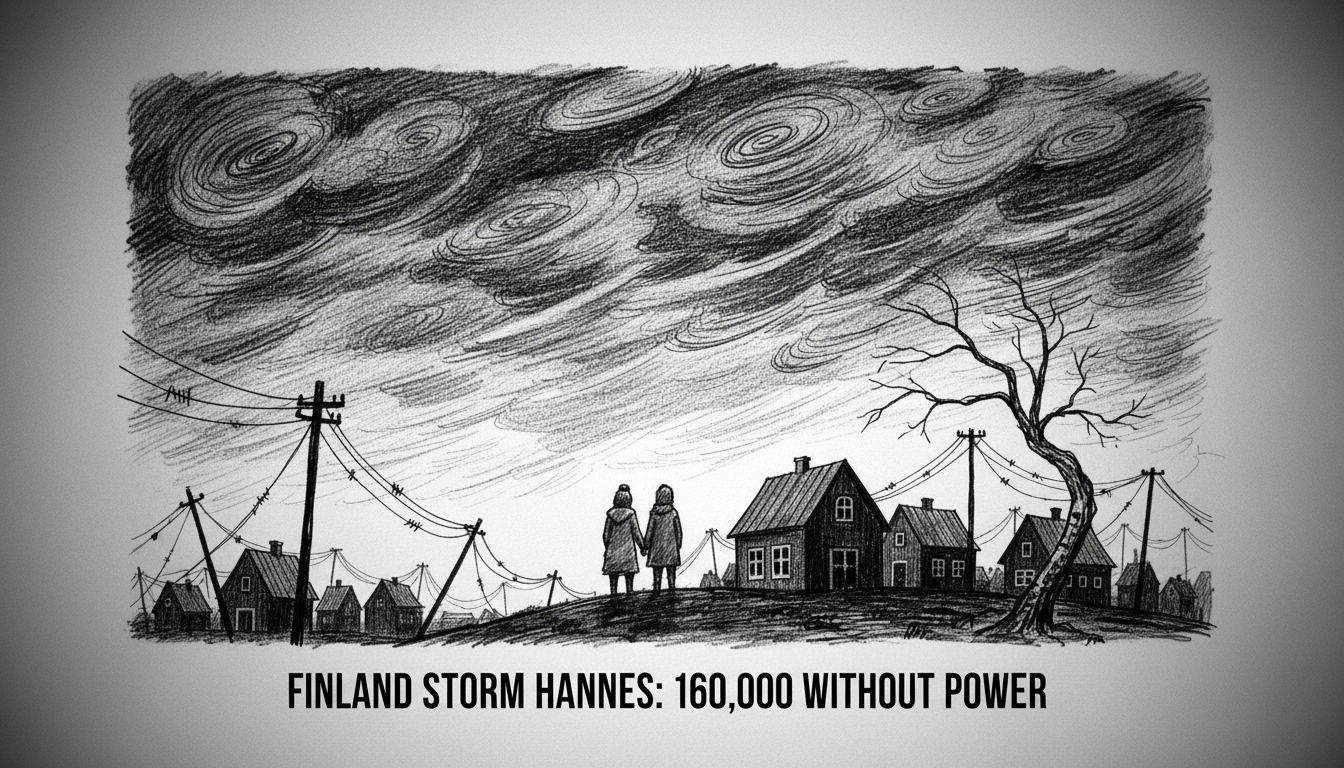
Finland is assessing widespread damage after Storm Hannes swept across the country, leaving nearly 160,000 people without electricity and rescue services responding to hundreds of incidents. The Finnish Meteorological Institute reported the strongest winds are now abating, though a north storm persists at sea and significant inland gusts remain a threat. This major weather event has tested the nation's emergency response and infrastructure resilience, with power companies mobilizing hundreds of crews for restoration work amid challenging conditions.
A Nation Grapples with Widespread Disruption
The immediate impact of Hannes was felt most acutely in the loss of power to tens of thousands of households. The 160,000 figure represents one of the most significant single-storm disruption events in recent years, highlighting the vulnerability of power distribution networks in a heavily forested country. Rescue services across southern and central Finland have been inundated with calls, primarily concerning fallen trees on roads and properties, damaged roofs, and localized flooding. The storm's timing, coinciding with a typical autumn weekend, likely reduced risks to commuters but increased the number of people at home experiencing outages.
“Our teams are working around the clock to secure dangerous sites and clear roads,” said a representative from the Finnish Rescue Services in a statement. “Priority is given to situations threatening life or critical infrastructure.” The statement did not provide specific figures for injuries, though major incidents have not been widely reported in initial assessments. The scale of the tasks, running into the hundreds, indicates a prolonged cleanup operation will be required in the storm's wake.
Infrastructure and Climate Resilience Under Scrutiny
Storms like Hannes force a recurring national conversation about the robustness of Finland's infrastructure. The country's extensive power grid, crucial for heating in the rapidly cooling autumn temperatures, is particularly susceptible to damage from falling trees. While power companies have invested in grid hardening and tree-trimming programs, the sheer geographical scale makes complete resilience a significant challenge. Experts point to these events as case studies for necessary investment.
“Each major storm provides data on weak points in our systems,” commented Dr. Elina Saarinen, a climate adaptation researcher at the University of Helsinki. “While we excel in emergency response, the increasing frequency and intensity of such events, potentially linked to broader climate patterns, demands a greater focus on preventative adaptation. This means not just repairing lines, but re-evaluating routing, investing in underground cabling where feasible, and strengthening forestry management near critical infrastructure.”
This analysis is echoed within the government. The Ministry of Economic Affairs and Employment, which oversees energy security, has previously launched initiatives to improve grid durability. Events like Hannes will undoubtedly apply pressure to accelerate and fund such programs, especially with winter approaching. The cost of storm damage, both in immediate repairs and economic disruption from power loss, often runs into the tens of millions of euros.
The Emergency Response Machinery in Action
The response to Storm Hannes showcases Finland's well-coordinated emergency management framework. Local rescue departments, the Finnish Red Cross, and power grid operators like Caruna and Elenia activated their contingency plans in tandem. Social media and official channels were used to disseminate safety advice, warning citizens to avoid travel and be cautious of downed power lines. The National Emergency Supply Agency monitors such situations to ensure critical societal functions can be maintained.
For citizens, the practicalities are immediate. Those without electricity face spoiling food, loss of heating, and disruption to communications. Community response often springs up alongside official efforts, with neighbors checking on the elderly and sharing resources. The widespread adoption of backup power solutions, such as generators, in rural areas is a testament to the predictable nature of such disruptions. However, urban and suburban areas, which experienced significant outages in this storm, are often less prepared for prolonged power loss.
Looking Ahead: Recovery and Preparedness
The coming days will focus on restoration. Power companies have given preliminary estimates that most customers will be reconnected within 24-48 hours, though isolated cases in difficult terrain may take longer. The process is methodical: first, main transmission lines are secured and repaired, followed by smaller distribution networks. Forestry teams work alongside electrical crews to clear countless fallen trees.
This storm also serves as a stark reminder for household preparedness. Authorities consistently recommend that Finns maintain a 72-hour emergency kit including water, non-perishable food, a radio, and alternative light and heat sources. For a modern society highly dependent on digital connectivity and constant electricity, a return to these basics is a necessary resilience strategy.
As the winds from Hannes finally settle, the questions it raises will linger. Is the infrastructure keeping pace with a changing climate? Are preparedness levels sufficient for an increasingly unpredictable environment? The efficient response demonstrates national strength, but the scale of the disruption suggests the battle between nature and technology in the Nordic landscape is ongoing. Finland will rebuild and restore, but the lesson from this autumn storm is that investment in resilience is not a cost, but an essential insurance policy for the future.