
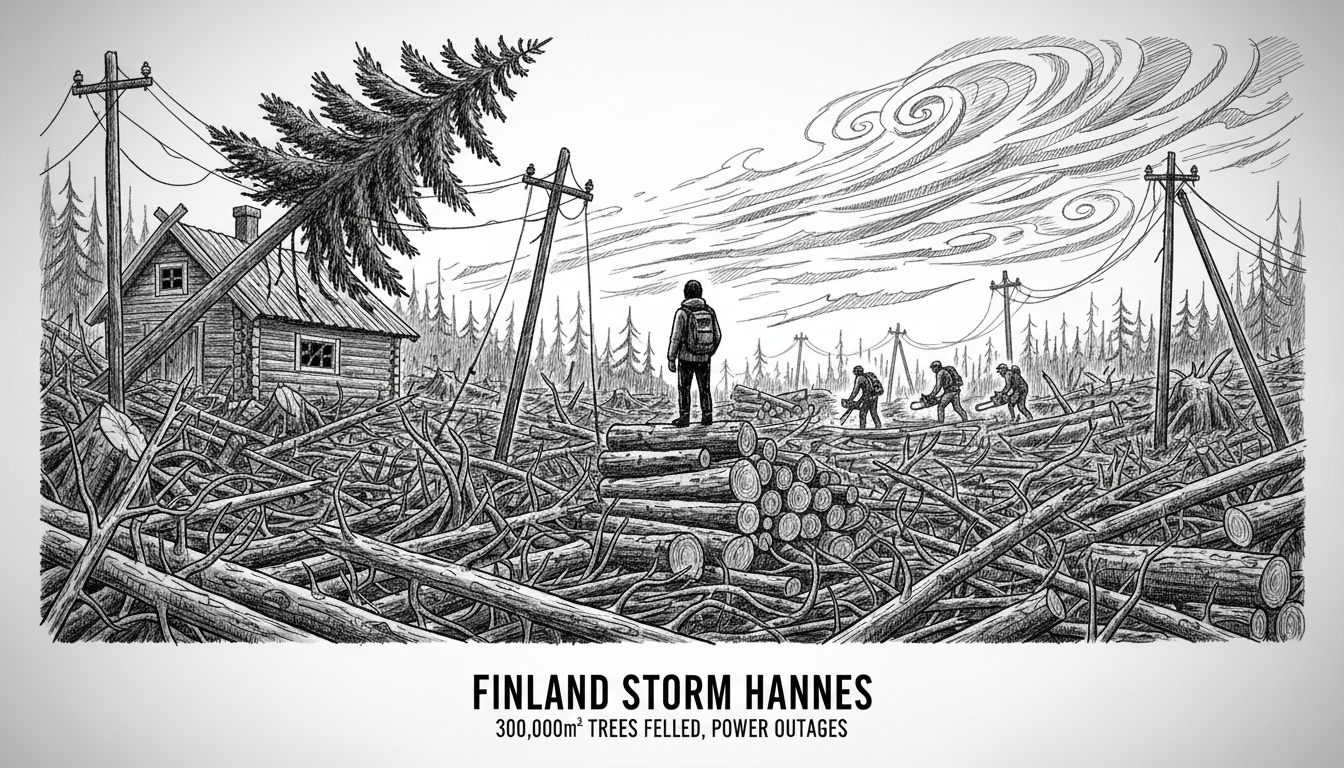
Finland's Hannes storm has left tens of thousands of customers without electricity days after its peak, with the most severe damage concentrated in the country's western and central regions. The powerful storm, which raged over the weekend, felled an estimated 300,000 cubic meters of trees according to preliminary data from the Finnish Forest Centre. This massive volume of timber now lies across roads, railways, and crucially, power lines, creating a monumental cleanup and restoration challenge for utility companies and emergency services. The scale of the disruption highlights the persistent vulnerability of Finland's infrastructure to extreme weather events, a challenge that is becoming more frequent and costly.
A Landscape Transformed by Wind
The aftermath of Storm Hannes presents a scene of widespread disruption across a broad swath of the Finnish countryside. Forestry experts are describing the damage as significant, with the 300,000 cubic meter estimate representing a major blow to forest owners and the timber industry. This is not merely a statistic; it translates to countless uprooted trees blocking vital transport routes and crushing the overhead power lines that are the lifeline for rural communities. Repair crews from companies like Fingrid and local electricity distributors have been working around the clock since the storm passed, but the sheer geographical spread of the damage has slowed progress. Many affected areas are remote, requiring specialized equipment and personnel to navigate damaged forest roads.
The Human Cost of a Powerless Winter
For the customers still waiting for their electricity to be restored, the situation is moving from an inconvenience to a serious hardship. Finland in December is a country of short days and long, cold nights, where temperatures regularly plunge below freezing. A prolonged power outage means no heating, no lighting, and often no running water if the property relies on an electric well pump. Municipalities in the hardest-hit areas have opened emergency shelters and warming centers, providing hot meals and a place to sleep for those whose homes have become too cold. The crisis also strains local businesses, particularly in the service and retail sectors, which cannot operate without power. This storm-induced paralysis comes during a crucial pre-holiday period, compounding economic losses.
Infrastructure Resilience Under Scrutiny
The recurring nature of these storm-related blackouts is forcing a difficult national conversation about infrastructure resilience. Finland's electricity grid, while highly reliable overall, remains dependent on an extensive network of overhead lines, especially in rural and forested areas. These lines are exceptionally vulnerable to falling trees, a fact demonstrated repeatedly by autumn and winter storms. "Events like Hannes show us where our weak points are," said one energy sector analyst familiar with grid management. "The debate always returns to the cost-benefit analysis of burying power lines versus maintaining the overhead network. It's an enormous investment, but the cost of not acting is measured in repeated disruptions and rising repair bills." The government has previously allocated funds for improving grid resilience, but the pace and scale of these investments are now under renewed scrutiny.
Climate Change and the New Normal of Nordic Storms
Meteorologists and climate researchers are increasingly drawing connections between the intensity of storms like Hannes and broader patterns of climate change. While Finland has always experienced severe winter storms, the data suggests a trend toward more frequent and powerful weather events. Warmer seas in the North Atlantic and Baltic can contribute more energy to passing low-pressure systems, potentially increasing wind speeds. This creates a compounding challenge for national infrastructure planning. "Our historical data for what constitutes a 'once-in-a-decade' storm may no longer be accurate," noted a climate scientist from the Finnish Meteorological Institute. "Planning for resilience requires us to look forward with new models, not just backward at old records. The baseline is shifting." This perspective suggests that the solutions must be long-term and adaptive, rather than simply reactive.
The Long Road to Recovery and Prevention
The immediate priority remains restoring power to every household. This work is painstaking and dangerous, involving crews clearing trees and repairing or replacing dozens of kilometers of cable. Once the lights are back on, the focus will shift to the massive task of processing the fallen timber, a process that will take the forestry industry months. Politically, the storm's aftermath is likely to echo in discussions at the Eduskunta, Finland's parliament, concerning national emergency preparedness and infrastructure funding. Some MPs from the most affected regions are already calling for a dedicated parliamentary review. The question for policymakers is whether to treat Hannes as an isolated, if severe, event, or as a clear warning sign demanding a strategic upgrade to the nation's defensive measures against an increasingly volatile climate. The choices made in the coming months will determine Finland's readiness for the next storm, which experts warn is not a matter of 'if,' but 'when.'