
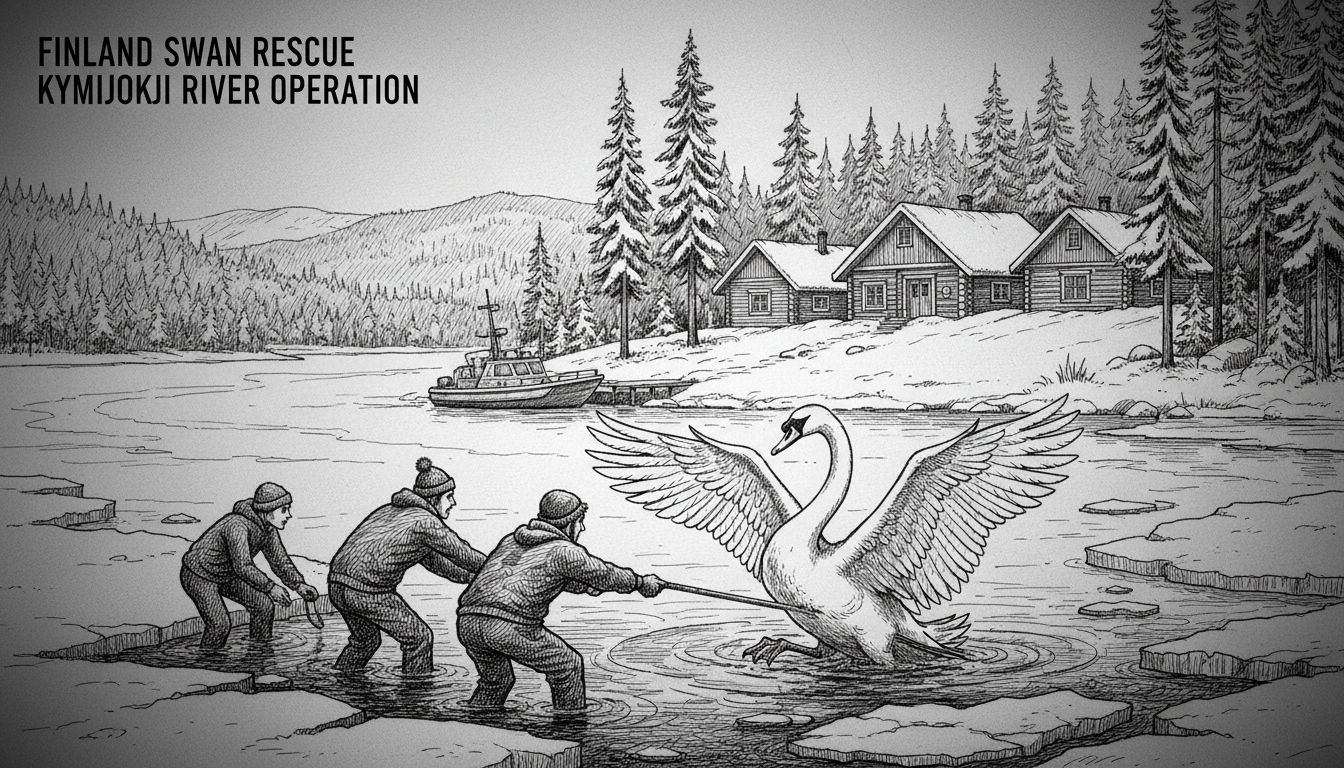
Finland's Kymijoki river rescue teams responded to a 1 PM call Thursday about an injured swan, launching a delicate operation that underscores the nation's dedication to wildlife. The swan, reported with a damaged wing near the Keskikoski bridge in Myllykoski, prompted the Kymenlaakso fire department to mobilize a rubber boat for a riverine rescue. This scene on one of Finland's major waterways highlights the quiet, consistent efforts to protect vulnerable species across the Nordic country.
A Delicate Chase on the Water
By 3 PM Thursday, the rescue mission was still ongoing, with Palomestari Mika Ruokolainen confirming that a rubber boat was being deployed to reach the swan in the river. The objective was clear: capture the injured bird and transport it to a specialized bird rehabilitation center. The Kymijoki's currents and the swan's likely distress added layers of complexity to the operation. Myllykoski, an industrial area within the city of Kouvola, provided a backdrop of human activity contrasting with the natural plight of the swan. Fire and rescue services in Finland often handle such wildlife calls, blending emergency response with environmental stewardship.
The Significance of Swan Protections
Wildlife experts emphasize that swan rescues are not merely about saving individual birds but about maintaining ecological balance and upholding conservation ethics. Swans, particularly whooper swans common in Finland, are protected species and symbolize natural heritage. Their large size and social nature make them conspicuous, but also vulnerable when injured. An injured swan cannot migrate, feed properly, or evade predators, often facing a slow decline without intervention. Bird rehabilitation centers provide critical care, from veterinary treatment for wing injuries to recovery programs for release. This rescue on the Kymijoki is a microcosm of broader efforts across Finland, where public reports trigger coordinated responses from authorities.
Kymijoki's Role in Finnish History and Ecology
The Kymijoki river is no ordinary waterway. Flowing through Kymenlaakso and Päijät-Häme, it has been a lifeline for transportation, industry, and energy production for centuries. Its banks have witnessed log floating, mill operations, and hydroelectric development, shaping the region's economy. Today, the river faces modern challenges like water quality management and habitat conservation. The swan rescue near the Keskikoski bridge occurs in a stretch historically used for industry, now symbolizing a shift toward environmental awareness. Protecting wildlife in such areas reflects a national priority to harmonize human activity with natural ecosystems.
Analysis: The Framework Behind Wildlife Rescues
Finland's approach to wildlife rescue is embedded in its legal and institutional frameworks. The Nature Conservation Act and various EU directives, such as the Birds Directive, mandate protection for species like swans. Local fire and rescue departments, like Kymenlaakso's, often collaborate with environmental authorities and NGOs such as BirdLife Finland. This operation involved the fire department's preparedness for diverse emergencies, showcasing their training beyond traditional firefighting. From an expert perspective, Dr. Liisa Saarinen, a wildlife biologist familiar with Nordic bird populations, notes that such rescues are vital for public education. 'Each successful rescue reinforces community engagement with conservation,' Saarinen said in a statement. 'It reminds people that individual actions, like reporting injured wildlife, contribute to larger biodiversity goals.'
The implications extend beyond this single event. Finland sees hundreds of wildlife rescue incidents annually, with swans among the most frequent due to their visibility and susceptibility to power lines, traffic, and environmental hazards. The Kymijoki operation, while focused on one bird, reflects a systemic commitment to animal welfare. It also underscores the challenges: rescues are resource-intensive, requiring trained personnel, equipment, and follow-up care. As climate change and habitat loss pressure species, these efforts may become more frequent, testing response capacities.
What Comes Next for the Rescued Swan?
If successfully captured, the swan will undergo assessment at a rehabilitation center. Typical procedures include veterinary examination, possible surgery for wing injuries, and a recovery period in a controlled environment. Release back into the wild depends on full recovery, often involving retraining for flight and feeding. The process can take weeks or months, with success rates varying by injury severity. Rehabilitation centers across Finland, often run by volunteers and funded by donations, play an unsung role in conservation. This swan's fate will hinge on the expertise of these centers and the swiftness of the rescue.
Reflections on Human-Wildlife Coexistence
The image of a fire department boat pursuing an injured swan on the Kymijoki river is poignant. It illustrates a society that values its natural heritage enough to deploy emergency services for a single bird. In Finland, where forests and waterways define the landscape, such rescues are part of a cultural ethos that blends practicality with compassion. As urban areas expand and rivers like the Kymijoki face modern pressures, these actions set a precedent for balancing development with stewardship. The operation invites a broader question: How can nations worldwide integrate wildlife protection into daily governance? For Finland, the answer lies in continued public awareness, robust funding for rescue services, and policies that prioritize ecological health. This swan's struggle on a Thursday afternoon may soon be forgotten, but the systems that responded to it will remain essential for Finland's wild spaces.