
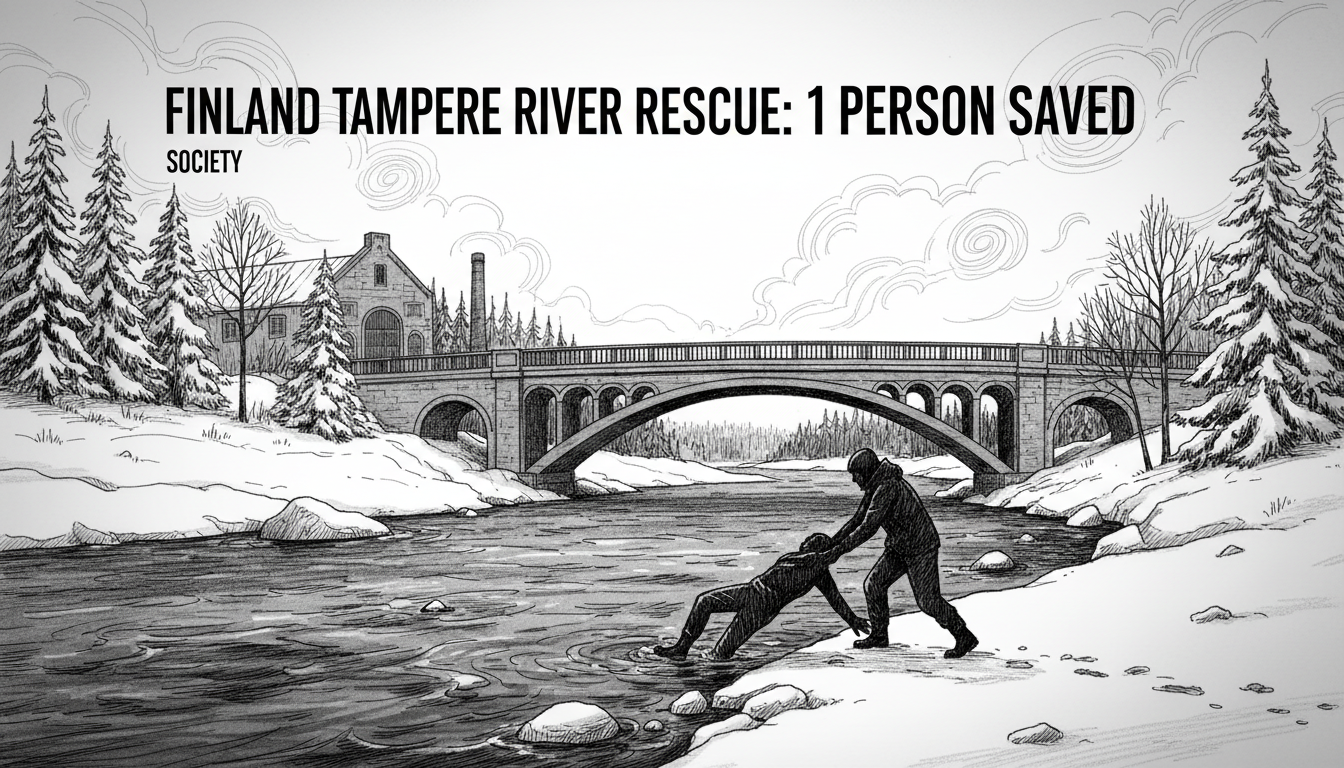
Finland's Tammerkoski rapids in Tampere became the scene of a dramatic rescue operation on Thursday morning. Emergency services pulled a person from the powerful urban waterway near Valssipadonraitti street after receiving a distress call before 10:00 AM. The individual, whose identity and condition have not been disclosed, was transported to a hospital by ambulance. The successful operation highlights both the inherent dangers of the historic rapids and the critical role bystanders can play in emergencies.
Multiple rescue units responded to the scene following the initial alert. Before their arrival, civilians at the location performed a vital first intervention. These bystanders threw a life ring to the person in the water and helped keep them afloat until professional help arrived. This immediate action by members of the public likely provided crucial minutes, stabilizing the situation for the subsequent formal rescue. The fire and rescue service has not released details on how the person entered the water or the circumstances leading to the incident.
The Rapids That Built a City
The Tammerkoski is far more than a scenic water feature; it is the historical and industrial heart of Tampere. These rapids, approximately 940 meters long with an 18-meter drop, provided the hydropower that fueled Tampere's rise as Finland's premier industrial city in the 19th and 20th centuries. Factories for textiles, paper, and metalworks lined its banks, earning Tampere the nickname 'the Manchester of the North'. Today, while the old red-brick factories house museums, restaurants, and offices, the water itself remains a powerful and potentially hazardous natural force flowing through the city center.
This industrial past directly influences the rapids' modern character. The watercourse is channeled and controlled by several weirs and dams, like the one near Valssipadonraitti, which can create complex and unpredictable currents. The water temperature, especially outside the peak summer months, can be dangerously low, posing a severe risk of cold water shock to anyone who falls in. This combination of strong flow, cold water, and urban infrastructure makes rescue operations particularly challenging for emergency services.
The Anatomy of a Water Rescue
Expert analysis of such incidents underscores the complexity of urban waterway rescues. "Operations in a fast-moving current like the Tammerkoski require specific training and equipment," explains a veteran Finnish water rescue instructor, who spoke on the condition of anonymity as they were not directly involved in this case. "The primary dangers are hypothermia from the cold water and the physical force of the current, which can quickly sweep a person into obstacles or make it difficult to reach them."
The actions of the bystanders in this incident align perfectly with official safety guidance. Finnish rescue authorities consistently advise the public not to enter the water themselves in such situations, as this often leads to multiple casualties. Instead, the recommended first response is exactly what occurred: alert emergency services immediately by calling 112, then attempt to reach the person with a long object or throw them a flotation device. The life ring used by the civilians is a standard piece of safety equipment often found along populated waterways in Finland.
"What these bystanders did was textbook-perfect community first response," the instructor added. "They provided flotation and support from a position of safety, buying the time needed for the professionals to arrive with their boats, thermal suits, and technical rigging. That initial intervention can be the difference between a rescue and a recovery."
Safety and Urban Waterways
This event prompts a broader examination of public safety along the Tammerkoski. The rapids are a central recreational and tourist attraction, with walking paths, bridges, and viewing platforms lining their length. The area is generally safe for the public, but accidents, while rare, do happen. Local authorities have implemented various safety measures over the years, including improved lighting, fencing in specific areas, and the placement of lifebuoys at regular intervals.
However, balancing open access to a natural landmark with absolute safety is an ongoing challenge for city planners. The Tammerkoski's beauty is intertwined with its raw power, a duality that defines Tampere itself. The city's official safety campaigns focus on public awareness, educating residents and visitors about respecting the water's power, especially during the spring melt or after heavy rains when currents are strongest. The rescue service also conducts regular training exercises in the rapids to maintain readiness for precisely this type of event.
A Community's Swift Response
The successful outcome of Thursday's incident underscores a key strength of Finnish society: a high degree of civic responsibility and preparedness. The willingness of passersby to stop and assist, coupled with the knowledge of how to help effectively, reflects broader societal values. Finland's comprehensive public safety education, which includes basic rescue principles, contributes to a population that often acts decisively in emergencies before official help arrives.
This collective response system extends beyond the individuals on the bridge. The integrated emergency response network, where a single call to 112 dispatches fire, medical, and police resources as needed, functioned seamlessly. The rapid coordination between the civilian bystanders, the arriving rescue units, and the ambulance service created a chain of survival for the victim. It is a model that relies on both professional excellence and an engaged public.
The Unanswered Questions
As the rescued individual receives medical care, several questions remain unanswered. The police typically investigate the lead-up to such incidents to determine if any crime was involved or if it was a tragic accident. Their findings, if made public, could inform future safety measures. The person's medical prognosis will also determine the long-term outcome of the rescue. The fact that the individual was conscious and able to be assisted by bystanders before the rescue is a positive sign noted by experts.
The incident also serves as a stark, mid-summer reminder of the ever-present forces of nature in urban environments. As climate change leads to more volatile weather patterns, including heavier rainfall events, urban waterways worldwide may see increased flow rates and more frequent flooding. Managing these risks while preserving public access to natural treasures like the Tammerkoski will remain a key task for cities. Tampere's experience, built on centuries of living alongside the rapids, offers valuable lessons in this balance.
Ultimately, the story from Valssipadonraitti is one of danger averted through timely action. It highlights the enduring power of the Tammerkoski, the professionalism of Finland's rescue services, and the simple, courageous decency of strangers who chose to help. In a city built by the rapids, the community's capacity to protect its own from those same waters was powerfully demonstrated on a Thursday morning.