
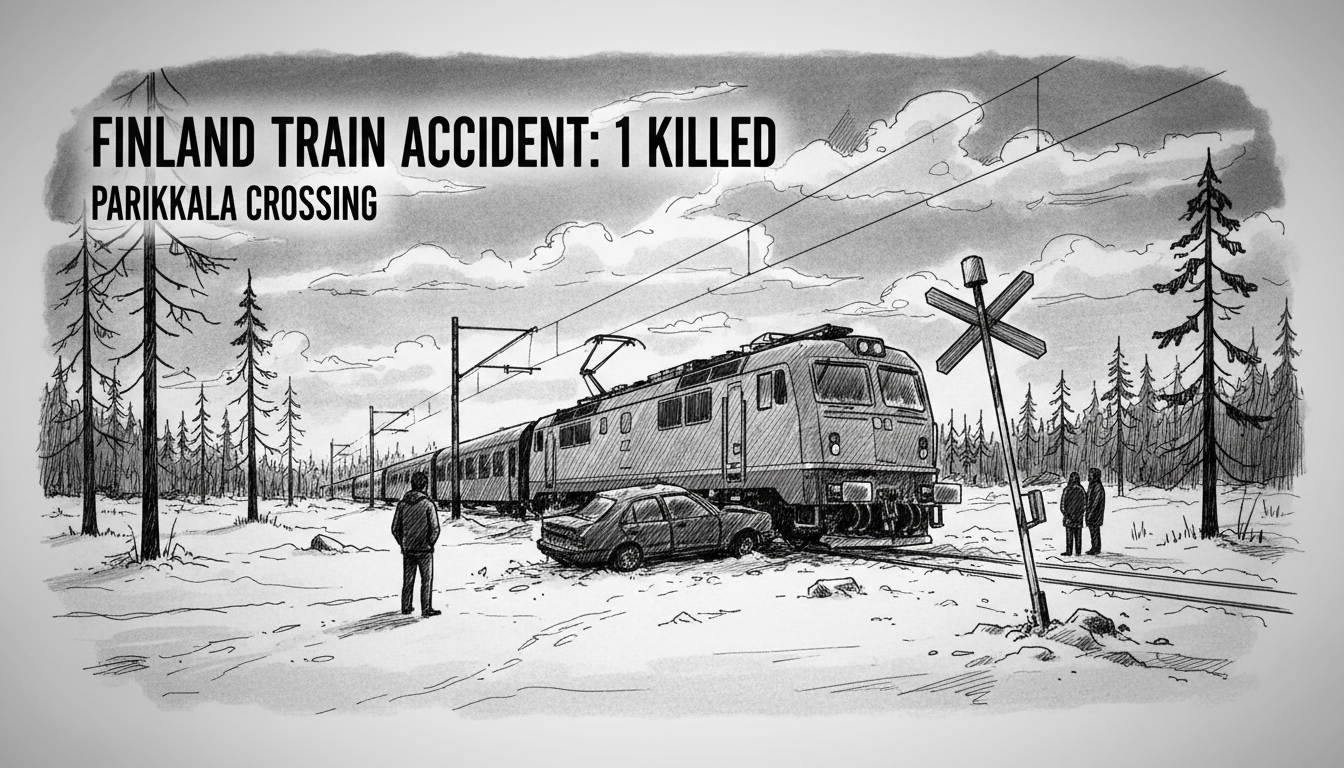
Finland's 23 level crossing accidents in 2022 led to six deaths. A tragedy has now added to that grim statistic. A quiet afternoon in rural southeastern Finland was shattered by the sound of impact at the Savikummunsalo level crossing in Parikkala. Emergency services received the alert at 13:25 local time on Thursday, rushing to a scene described by the South Karelia Rescue Department as a "rail traffic accident" involving a vehicle.
Initial reports confirmed a vehicle had been struck by a train at the unassuming crossing. Rescue operations launched immediately, involving multiple units from the local rescue service, police, and ambulance crews. Authorities swiftly suspended all train traffic on the line, a critical artery in the region, causing significant disruptions. The South Karelia Rescue Department stated it would not provide information on possible casualties until a subsequent update scheduled for 15:00, a tense wait for the local community.
The Scene of the Collision
Parikkala is a municipality in South Karelia, a region bordering Russia, known for its lakes and forests rather than traffic chaos. The Savikummunsalo crossing is a typical Finnish level crossing where a rural road meets the railway line at grade. These crossings rely on automatic warning signs, lights, and sometimes barriers. The Finnish Transport Infrastructure Agency (FTIA) manages approximately 2,700 such crossings across the national network. While safety has improved dramatically over decades, each accident highlights the persistent risk where road and rail intersect.
The rescue operation was comprehensive. Multiple emergency vehicles converged on the remote location. The focus for first responders was securing the scene, providing any urgent medical aid, and beginning the complex task of recovery and investigation. The police's role shifted from initial response to traffic management and launching a formal inquiry into the cause. The silence from the tracks, normally frequented by both passenger and freight trains operated by state-owned VR Group, underscored the severity of the incident.
A Recurring National Safety Challenge
This accident is not an isolated event but part of a recurring national safety challenge. According to the latest official statistics from the Finnish Transport Infrastructure Agency, there were 23 accidents at level crossings in 2022 alone. Those incidents resulted in six fatalities and ten people injured. Each number represents a profound personal tragedy and a community in mourning. The statistics reveal a harsh reality: despite continuous safety campaigns and technological improvements, level crossings remain one of the most dangerous points on the transport infrastructure.
Rail safety experts consistently point to a multi-faceted approach for reducing these accidents. "The ultimate goal is grade separation, building bridges or tunnels to completely remove the conflict point," explained a railway infrastructure analyst familiar with Finnish policy, who spoke on background. "But with thousands of crossings, that is economically and practically impossible for all of them." Therefore, the strategy focuses on a combination of upgrading active warning systems, closing little-used crossings, and relentless public education. The message "Stop, Look, Listen" is drilled into Finnish drivers from the moment they get a learner's permit, yet complacency or misjudgment can have fatal consequences.
The Investigation and Immediate Aftermath
As the rescue phase concluded, the investigative phase began. The Finnish Safety Investigation Authority (Otkes) may launch an inquiry, especially if the accident involves fatalities or raises systemic safety concerns. Their probes are independent and thorough, examining everything from the technical condition of the crossing's signals and the train's data recorder to driver behavior and weather conditions. Police will simultaneously investigate potential traffic law violations.
The human impact extends beyond the immediate victims. Train crews involved in such collisions often experience severe psychological trauma. Passengers on the train, though possibly physically unharmed, face disruption and distress. Local residents who rely on the crossing for daily travel found their routes blocked, a sudden inconvenience that paled in comparison to the tragedy that caused it. The suspension of rail traffic also caused logistical headaches for VR Group, requiring cancellations and bus replacements on the line, affecting both commuter and long-distance travel.
Finland's Railway Safety in a European Context
Finland's railway network is generally considered safe, with a strong safety culture driven by VR Group and the transport authorities. Compared to the European Union average, Finland performs well on many rail safety indicators. However, the persistent issue of level crossing accidents is a common challenge across the continent. The European Union Agency for Railways (ERA) consistently highlights level crossings as a major risk area, accounting for a disproportionate share of railway fatalities.
EU directives push for member states to implement risk-based approaches, targeting the most dangerous crossings for closure or upgrade. Finland's national implementation plans involve systematic risk assessment of its 2,700 crossings, prioritizing investment where traffic volume is high or sight lines are poor. This Parikkala accident will inevitably feed data into those models, potentially changing the risk rating of that specific crossing or others with similar profiles. The FTIA annually invests millions in crossing safety, but budgets are finite, and choices must be made.
Looking Forward: Policy and Prevention
Every accident like the one in Parikkala triggers a painful but necessary review of policy and prevention measures. Members of the Finnish Parliament's Transport and Communications Committee will likely be briefed on the incident. While the government does not directly manage infrastructure day-to-day, it sets the strategic framework and funding for the FTIA. Opposition politicians may call for increased investment in rail safety or faster progress on closing crossings.
The core question remains: what more can be done? Technology offers some answers. More crossings could be equipped with automatic barriers that fully block the road. Intelligent warning systems that can detect a vehicle stalled on the tracks are being developed. However, the human factor remains the most unpredictable element. Public awareness campaigns, often featuring stark real-life stories, are considered essential. Some advocate for stricter penalties for drivers who ignore crossing signals, though enforcement at remote locations is difficult.
As Parikkala grieves, the national conversation about level crossing safety is reignited. The statistics from 2022—23 accidents, 6 dead—are now outdated. The current year's tally has just received a tragic addition. The investigation's findings will be crucial, not for assigning blame, but for learning. The goal, shared by every transport official, lawmaker, and engineer, is to ensure that the next alert at a level crossing is a false alarm, and that the grim annual statistic finally trends decisively toward zero. Can Finland's blend of technology, infrastructure investment, and public education finally eliminate these preventable tragedies? The memory of today's victim demands nothing less.