
Deep green pines stand tall along the highway leading to the Olkiluoto peninsula on Finland's west coast. Golden-leaved oak trees dot the landscape in the low autumn sun, creating an almost painfully beautiful scene. Between the treetops, massive high-voltage power lines appear with increasing frequency.
These cables connect to three of Finland's five nuclear power plants, which produce much of the country's electricity. They also represent nuclear energy's decades-long challenge: what to do with highly radioactive waste that remains dangerous for thousands of years.
The Finns believe they have found the solution deep within their bedrock.
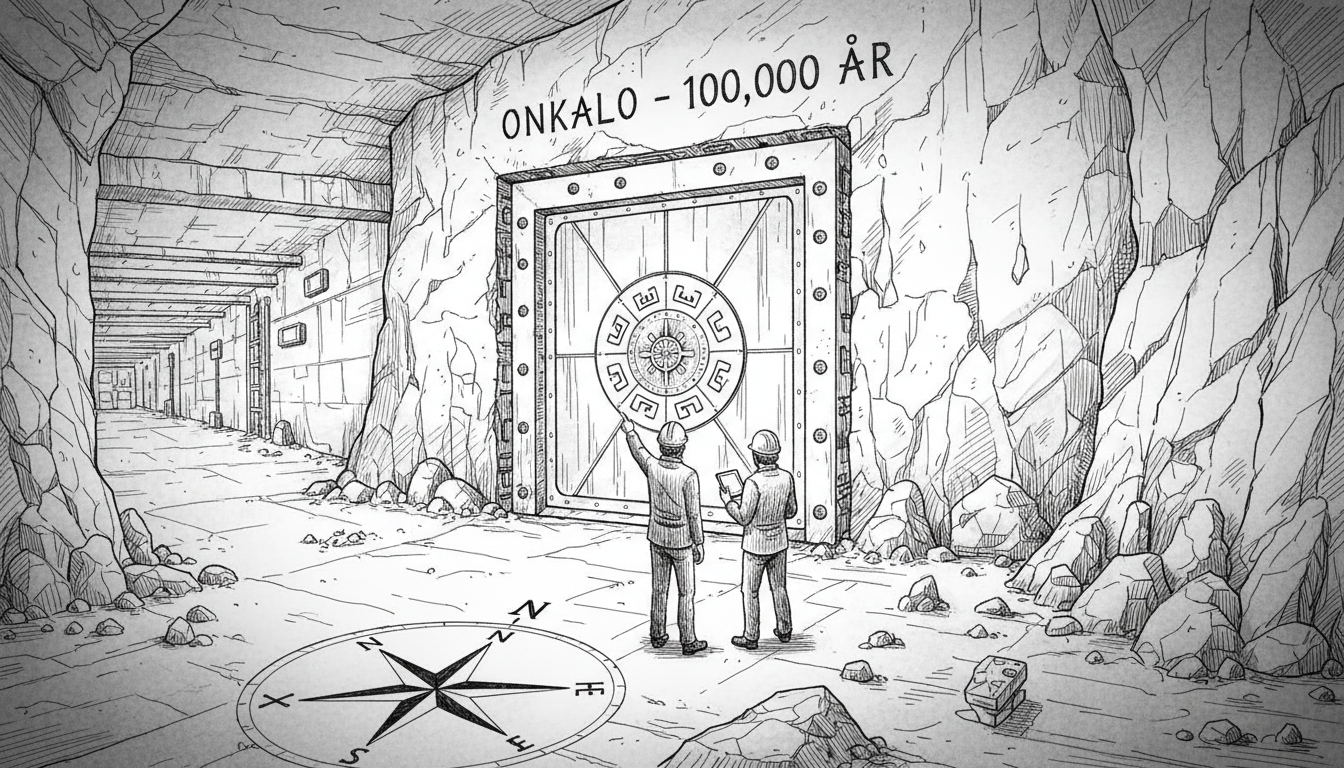
Onkalo, meaning 'cave' or 'hiding place' in Finnish, is the world's first permanent repository for high-level nuclear waste. The facility has been in development since the late 1970s, roughly when Finland's first reactor blocks began operating.
The complex now spans ten kilometers of tunnels, passages, and shafts, reaching 450 meters underground. After years of research and permits, construction began in 2004 using explosives, drills, and powerful tools to overcome the billion-year-old bedrock.
Johanna Hansen, a geologist and senior advisor at Onkalo, has worked on the project for 28 years. She calls the bedrock perfect for the purpose. "It has been there for nearly two billion years," she explained. "The rock was created when there was no oxygen in Earth's atmosphere, which is why we find no fossils here."
The first waste tunnel is scheduled to become operational next year. The 350-meter-long tunnel has a rough rock floor and carefully numbered walls. Any fracture in the rock receives a yellow number. If a fracture appears where radioactive waste is planned to be placed, that hole is discarded.
The goal is to bury over 3,200 cylinders containing highly radioactive waste with a total of 6,500 tons of uranium over the next century. The waste will remain dangerous for approximately 100,000 years before the radioactive materials decay and become harmless.
Workers at Onkalo and the adjacent nuclear reactors see nuclear electricity as carbon-free energy that helps combat climate change. Finland now gets about 40% of its electricity from nuclear power, including from its newest reactor, Olkiluoto 3.
The contrast between the deep, kilometer-long passages and the undisturbed forest floor above is striking. The solution represents both a technical achievement and a philosophical challenge about communicating with future generations.
Pasi Tuohimaa, communications director at Posiva, the company building Onkalo, acknowledges the difficulty of being first. The project has cost approximately 11 billion kroner so far. Including the next 100 years of operation and final sealing, costs are estimated at around 41 billion kroner.
The question of how to ensure no one digs up the radioactive waste within the next 100,000 years remains complex. Options range from warning signs with skulls to digital records or simply letting nature reclaim the surface.
Tuohimaa suggests the solution might be simpler: "If someone can get down 400 meters into the bedrock exactly here, they probably know what's down there."
The Finnish approach represents a practical solution to a problem that has troubled nuclear energy for decades. While other countries continue to debate storage solutions, Finland is moving forward with what could become a global model for permanent nuclear waste disposal.
Denmark also faces nuclear waste challenges, though its waste is primarily low and medium-level radioactive compared to Finland's high-level waste. Danish waste comes from nuclear research facilities at Risø near Roskilde Fjord and from industry and healthcare. Parliament has decided that approximately 4,000 Danish tons must be underground by 2073 unless another solution is found.
The Finnish project demonstrates that technical solutions exist, though they require decades of commitment and substantial investment. As climate change concerns grow, nuclear energy's waste management challenges remain central to the debate about its role in future energy systems.