
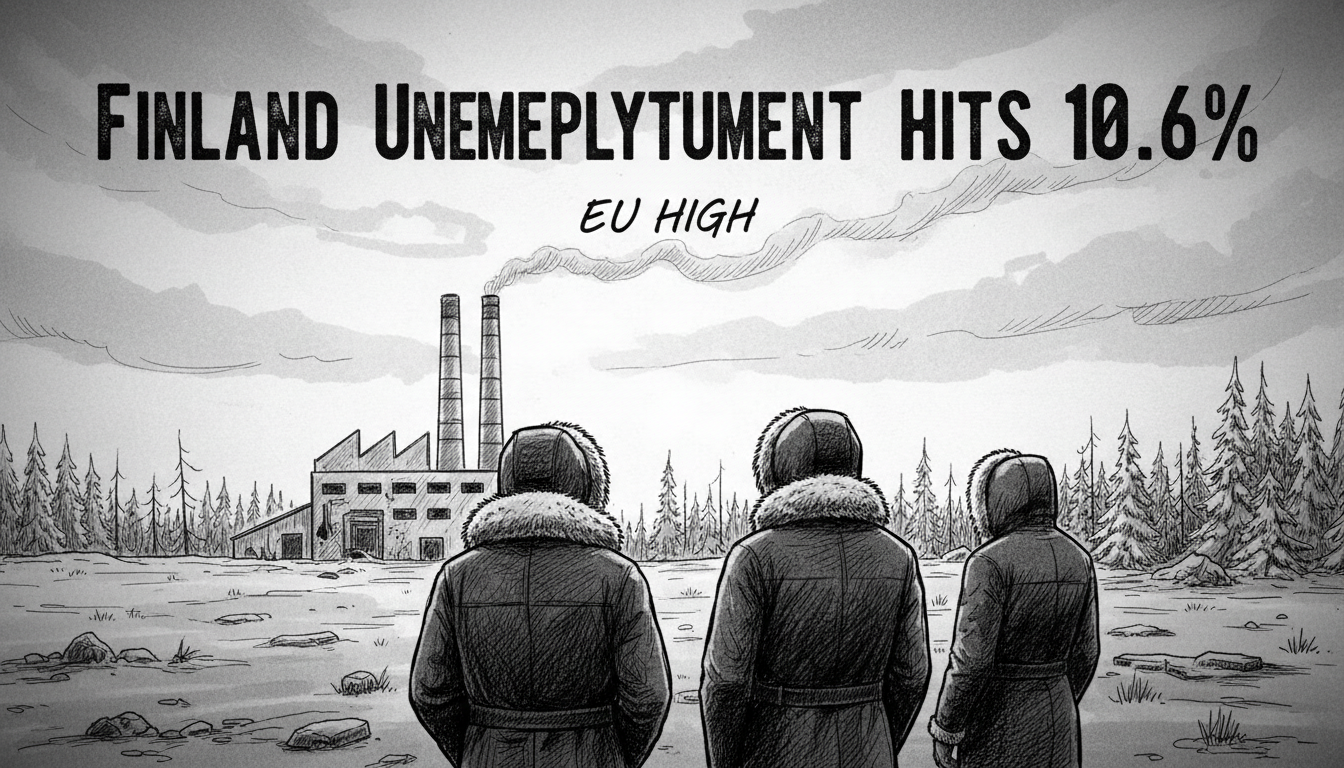
Finland's unemployment rate surged to 10.6% in November, making it the highest in the European Union. This seasonally adjusted figure from Eurostat overtakes Spain's 10.4%, ending its long-held top position. The data underscores a deepening labor market crisis in the Nordic nation, challenging its economic resilience and social welfare model.
The rise places Finland above all 27 EU member states for the first time in recent history. Eurostat uses the International Labour Organization definition, ensuring comparable metrics across borders. This development signals urgent pressures within the Finnish economy, which has struggled with persistent joblessness despite recovery efforts post-pandemic.
From Forest to Services: A Painful Transition
Finland's economic structure has historically relied on forestry, manufacturing, and technology exports. The shift towards a service-based economy has been gradual and fraught with challenges. Global economic slowdowns, particularly in key trade partners like Germany and Sweden, have dampened demand for Finnish goods.
Domestic policy decisions on taxation and business regulation also play a role. The current government coalition, led by Prime Minister Petteri Orpo, has emphasized labor market reforms to boost competitiveness. However, these measures have yet to reverse the unemployment trend, indicating deeper structural issues.
Analysts point to a significant skills mismatch in the labor market. Many available jobs require digital or specialized service skills, while displaced workers from traditional industries lack such training. Regional disparities exacerbate the problem, with higher unemployment in rural areas compared to urban centers like Helsinki.
The Policy Response from Helsinki
Finance Minister Riikka Purra addressed the figures in a statement to Parliament, the Eduskunta. She acknowledged the seriousness of the situation and highlighted government initiatives to stimulate job creation. These include proposed adjustments to unemployment benefits and incentives for small business hiring.
Opposition parties, particularly the Social Democrats, have criticized the government's approach. They argue that cuts to social spending could worsen economic inequality without addressing root causes. The debate in Helsinki's government district reflects broader EU tensions between austerity and investment strategies.
Active labor market policies, a hallmark of the Finnish system, aim to retrain and place job seekers. Yet, funding for these programs has faced constraints amid budget debates. The Ministry of Economic Affairs and Employment is reviewing its strategies, with new proposals expected in the coming months.
EU Context and Competitive Pressures
Finland's position at the top of the EU unemployment ranking carries symbolic weight. It contrasts with the nation's reputation for innovation and high-quality education. The EU's broader average unemployment rate remains around 6%, making Finland's 10.6% a notable outlier.
This development could influence Finland's negotiations in Brussels on EU fiscal rules and recovery funds. The European Commission monitors member states' economic performances closely, and sustained high unemployment may trigger recommendations under the European Semester framework.
Comparisons with Spain are instructive. Spain reduced its unemployment from crisis-era highs through labor reforms and tourism recovery. Finland lacks a comparable tourism sector and faces different demographic pressures, including an aging population that shrinks the workforce.
A Nordic Model Under Stress
Finland's strong social safety net, including generous unemployment benefits, provides a buffer for job seekers. However, the system's sustainability is now in question as expenditures rise. Long-term unemployment poses risks to public finances and social cohesion, key pillars of the Nordic model.
Expert context from economic researchers highlights the impact of global trends. The green transition and digitalization demand new skills that Finland's education system must rapidly supply. Investments in research and development, while substantial, have not yet translated into broad-based job growth in emerging sectors.
Historical context shows that Finland has faced similar crises before, such as after the collapse of the Soviet Union. Recovery then required painful restructuring and eventual success in technology sectors. Today's challenges may necessitate a similar transformative shift, but the path is uncertain.
What Lies Ahead for Finnish Workers?
The immediate outlook depends on both domestic policy and EU-wide economic conditions. The Bank of Finland forecasts modest growth for 2024, but this may not suffice to significantly reduce unemployment. Government coalition partners must reconcile differing views on stimulus versus fiscal discipline.
Upcoming Eduskunta votes on budget allocations will be critical. Funding for adult education and startup incentives could help bridge the skills gap. Additionally, EU directives on digital innovation and green jobs may offer avenues for coordinated action and funding.
Finnish political parties across the spectrum recognize the urgency. The question is whether consensus can be reached on effective measures. As winter deepens in Helsinki, the cold economic reality demands warm cooperation and bold ideas to reignite job creation.
The 10.6% unemployment rate is more than a statistic; it represents thousands of individuals facing uncertainty. Finland's ability to address this challenge will test its famed resilience and determine its place in a competitive European economy. Can the Nordic model adapt to preserve both prosperity and social equity?