
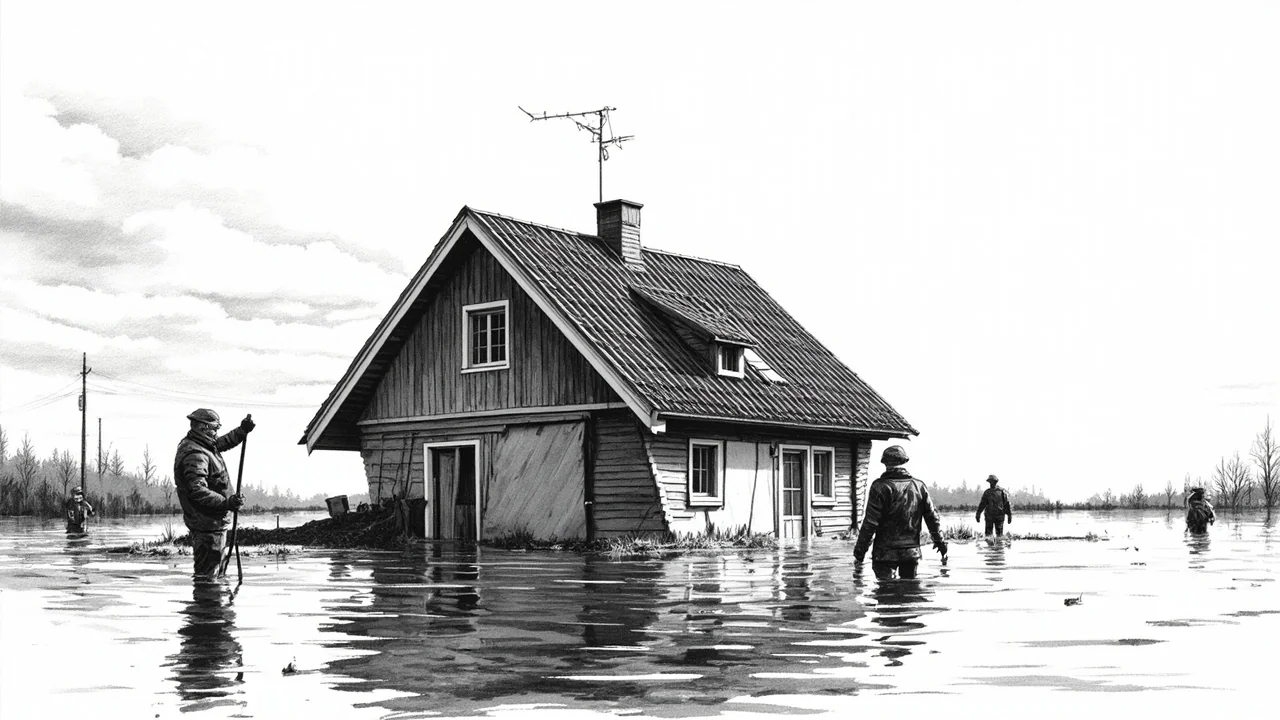
Finland's municipal wastewater systems, serving over 2.6 million households, faced another localized failure when a pipe defect flooded a private residence in Muurame. Sewage water invaded the single-family house on Tuuliniementie street Sunday afternoon following a malfunction in the waste system. The Central Finland Emergency Services received a distress call for damage control at 3:31 PM, but upon arrival, found the contaminated water had already seeped into the building's structures. The homeowners had taken matters into their own hands, privately contracting a vacuum truck to handle the hazardous cleanup before official help could intervene.
This incident exposes a vulnerable point in Finland's otherwise highly-regarded infrastructure network. While large-scale urban systems in Helsinki and Tampere receive continuous investment, the vast network servicing scattered rural and suburban homes presents a persistent maintenance challenge. The silent failure of a single pipe can lead to significant property damage and health hazards for residents, turning a routine Sunday into a crisis.
A Costly Cleanup for Homeowners
The Muurame event highlights the immediate financial and emotional burden placed on citizens when infrastructure fails. Wastewater intrusion into living spaces requires rapid, specialized remediation to prevent structural damage and mold growth. In this case, the residents' proactive decision to hire a private vacuum truck likely saved precious time, though the cost falls entirely on them. The Emergency Services confirmed their water vacuum equipment was not ultimately needed, as the private service had addressed the liquid waste. This shift of responsibility and cost from the public system to the individual homeowner is a growing concern in Finnish municipal policy debates.
“These are precisely the kinds of failures that cause major distress and economic loss for families,” says Dr. Elina Saarelma, a professor of environmental engineering at Aalto University. “The system is designed for efficiency at a macro level, but a single point of failure can be devastating at the micro, household level. It raises questions about maintenance schedules for older networks and the clarity of responsibility for repairs on private property connections.”
Infrastructure Age and Maintenance Challenges
Finland's water and wastewater infrastructure is a mixed picture of cutting-edge technology and aging networks. Many systems in smaller municipalities and rural areas were installed decades ago and face increasing failure rates. The annual need for infrastructure renewal is estimated in the hundreds of millions of euros nationwide, creating budgetary pressures for local governments. A pipe failure like the one in Muurame is often a symptom of broader, systemic underinvestment in routine maintenance and replacement programs.
The problem is compounded by Finland's geography and settlement patterns. Maintaining extensive networks that serve sparsely populated areas is inherently costly. When failures occur, response times can be longer, and the per-household cost of repair is significantly higher than in dense urban centers. This creates a regional inequality in service reliability, where residents in smaller communities like Muurame may face higher risks and slower responses.
Regulatory Gaps and Responsibility
The incident points to a potential grey area in Finnish regulations. Responsibility for wastewater management is typically divided between municipal waste treatment plants and the property owner. The municipality is responsible for the main collection network, while the homeowner is usually responsible for the pipe connecting their property to the main sewer line and all internal plumbing. However, diagnosing where exactly a fault occurred—and thus who is liable for the damage and cleanup—can be a complex and contentious process.
This ambiguity can leave homeowners in difficult situations, forced to pay for immediate emergency cleanup out-of-pocket while liability is determined. Insurance may cover some costs, but policies vary, and deductibles can be substantial. The Finnish government and the Ministry of the Environment have ongoing initiatives to clarify guidelines and improve the resilience of distributed water systems, but progress is often slow, mired in complex funding discussions between state and municipal authorities.
A National Conversation on Resilience
The Muuramine flooding is not an isolated case. Similar reports of wastewater backflows and pipe failures appear in local news across Finland with regular frequency. Each event fuels a larger conversation about the resilience of critical infrastructure in the face of climate change and aging systems. Increased rainfall and freeze-thaw cycles can stress old pipes, leading to more frequent failures.
Investing in modern monitoring technology, such as smart sensors that can detect leaks and blockages before they cause backups into homes, is seen as a key solution. However, the high upfront cost for such systems is a significant barrier for many smaller municipalities. The Finnish Environment Institute (SYKE) continues to advocate for a national strategy that supports local governments in proactive infrastructure management, rather than reactive crisis response.
Looking Beyond the Immediate Spill
The image of a family dealing with sewage in their home is a powerful reminder that infrastructure policy is not an abstract concept. It directly impacts public health, economic stability, and quality of life. As Finland continues to debate national budgets and municipal funding models, stories like the one from Tuuliniementie street serve as a critical touchstone. They ask a fundamental question: how does a society known for its engineering excellence ensure that every citizen, regardless of postcode, is protected from the failure of the essential systems hidden beneath their feet?
The cleanup in Muurame is likely complete, but the larger task of securing Finland's wastewater network continues. The true test will be whether this incident becomes just another brief local news item or a catalyst for more decisive action and investment in the veins of the nation's public health system.