
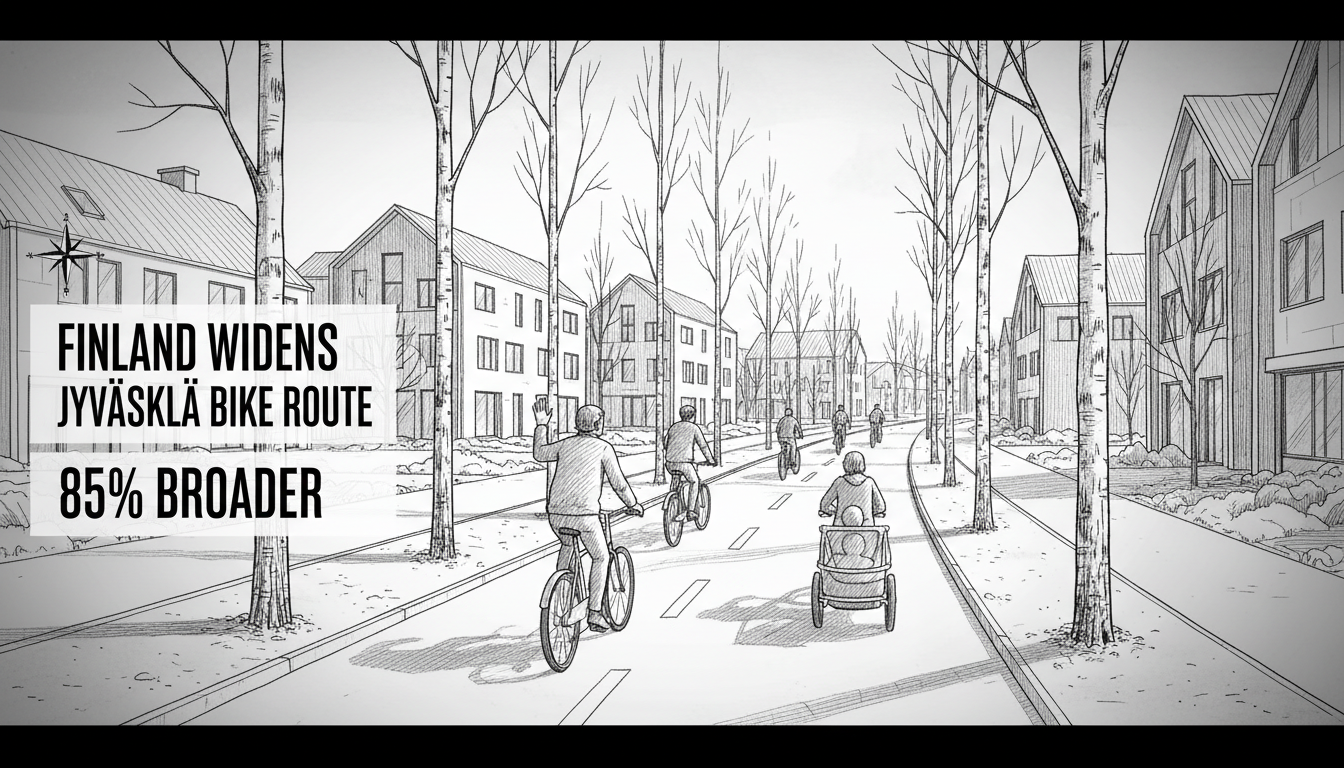
Finland cycling infrastructure takes a major leap in Jyväskylä as a key lakeside route grows by 85% in width. The recently completed section of the Vaajakoski cycling artery, running between Rauhalahti and Kammintie, now spans 6.5 meters, up from its previous 3.5-meter constraint. This substantial expansion of the Jyväskylä Rantaraitti is a clear signal of the city's accelerating commitment to sustainable, active transport, with final road markings scheduled for application next spring.
For daily commuters and recreational cyclists, the change is transformative. The narrow, 3.5-meter path, which previously forced cyclists and pedestrians into close proximity, has long been identified as a bottleneck. The new, generously proportioned lane allows for safe, segregated two-way cycling alongside a dedicated pedestrian walkway. This redesign directly addresses safety concerns and encourages higher usage by making the route more appealing for all users, from families to speedier commuters.
A Strategic Link in a Greener Network
The Rantaraitti, or 'Lakeside Route,' is more than just a scenic path. It functions as a critical piece of urban connective tissue. By widening this segment, the city has strengthened a primary east-west corridor that links residential areas, the Rauhalahti activity and hotel district, and the city center. This project is not an isolated effort but a calculated move within Jyväskylä's broader strategic plan to elevate cycling from a leisure activity to a core component of the city's transport ecosystem.
Urban development experts highlight the multiplier effect of such investments. "High-quality, safe infrastructure is the single most important factor in getting people out of their cars," says a Helsinki-based urban mobility planner familiar with the project. "When you build a route that is not only functional but also pleasant—like one along a lake—you're not just moving people; you're enhancing quality of life and public health. Jyväskylä is building a competitive advantage for attracting residents and businesses." The project aligns perfectly with Finland's national climate and health objectives, which aim to reduce transport emissions and increase physical activity among the population.
Funding and the Finnish Model of Development
Projects of this scale underscore the Finnish model of long-term, consensus-driven municipal planning. The widening of the Vaajakoski route was funded through the city's capital investment budget, reflecting a political commitment that crosses typical party lines. In Finland, support for sustainable urban infrastructure is a relatively stable policy area, often backed by coalitions in city councils like Jyväskylä's. The practical benefits—reduced traffic congestion, lower healthcare costs, and meeting carbon neutrality targets—provide a strong common ground.
The timing of the final road markings, set for next spring, is typical of Nordic infrastructure work. It allows the new asphalt to settle completely over the winter freeze-thaw cycles before applying permanent lane dividers and symbols. This attention to durability ensures the investment lasts, avoiding costly premature repairs. It demonstrates a characteristically Finnish focus on practicality and long-term value over short-term ribbon-cutting opportunities.
National Context and Cycling's Growing Clout
Jyväskylä's move mirrors a national trend. Across Finland, cities from Turku to Oulu are aggressively expanding their cycling networks. The national government's transport system plan explicitly prioritizes walking and cycling, aiming to increase their mode share significantly. In urban areas, cycling already accounts for a notable portion of daily journeys, and investments like the Rantaraitti expansion are designed to push that figure higher. The economic argument is becoming increasingly potent: cycling infrastructure offers a high return on investment through health benefits, reduced infrastructure wear from cars, and increased urban vitality.
Local politicians frame the investment in both pragmatic and visionary terms. "This is about providing a safe, reliable option for our citizens every day," notes a Jyväskylä city board member from the Green League, a party often at the forefront of such policies. "But it's also about building the city of the future—one that is less noisy, less polluted, and more resilient. The Rantaraitti is a spine that we will continue to develop and connect to new neighborhoods." This sentiment is echoed by transport officials who see the widened route as essential groundwork for future network densification.
The Road Ahead for Active Transport
The completion of this segment raises questions about what comes next. Cycling advocates are already pointing to other pinch points in the regional network, advocating for continuous, grade-separated routes that can safely serve school children and elderly cyclists. The success of this project will likely be measured by hard data: automated counters installed along the route will track increased usage, providing evidence to justify subsequent funding rounds. The ultimate goal is a seamless, city-wide network where choosing a bike is the most logical and attractive choice for a wide range of trips.
As Finland continues its determined shift toward sustainable mobility, projects like the Jyväskylä Rantaraitti widening serve as tangible milestones. They represent the concrete outcome of policy papers and political debates. When the final lines are painted next spring, they will demarcate more than just lanes; they will outline a clearer path toward a less carbon-intensive urban future. Can other European cities, struggling with congestion and emissions, learn from Finland's methodical, lake-side approach to getting its citizens moving?