
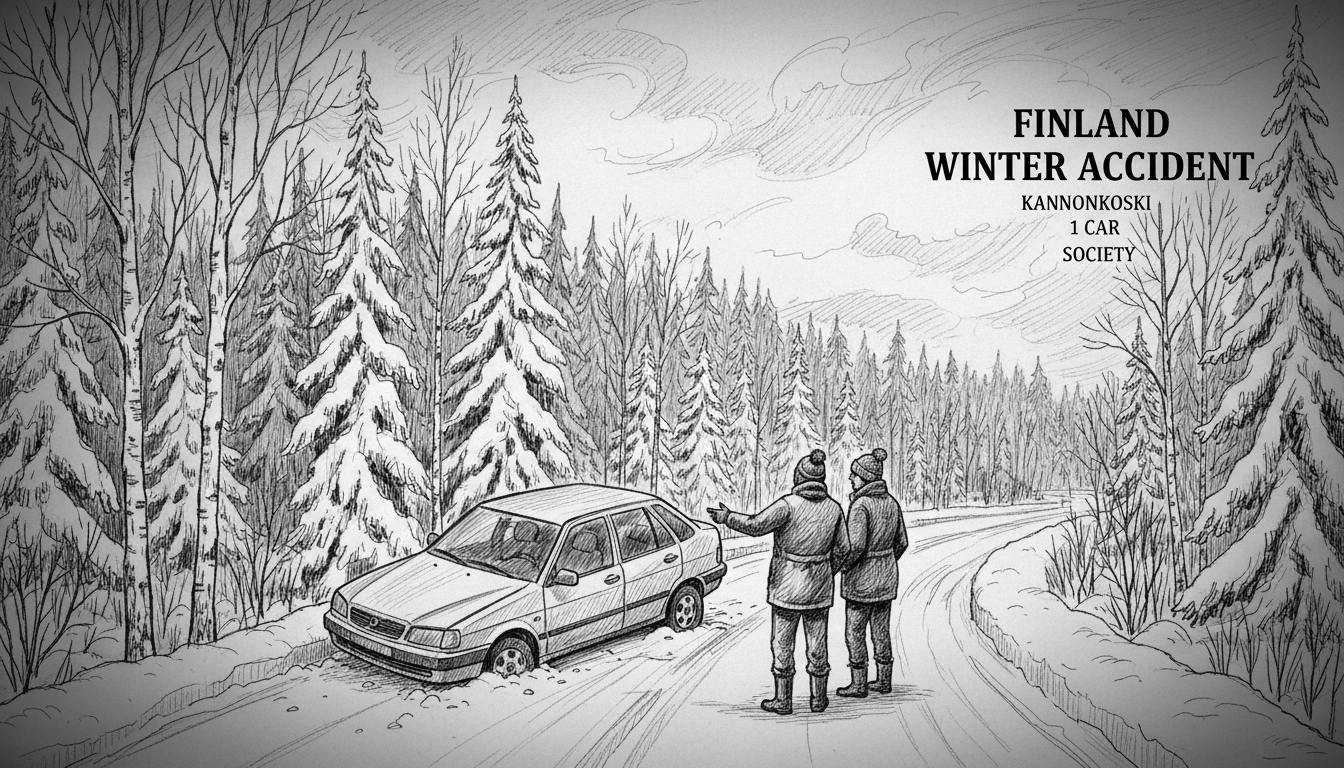
Finland's 225 fatal road accidents in 2023 set a sobering backdrop for a recent incident where a car ran off the road in Kannonkoski, Central Finland. The accident occurred on Sunday evening along Saarijärventie, a regional road connecting Kannonkoski and Saarijärvi. Rescue services received the alert before 8 PM, responding to a single vehicle that had left the roadway. No injuries were reported, but preliminary investigations point to poor weather conditions as the likely cause. This event highlights the persistent challenges of winter mobility in a country where snow and ice dominate the landscape for months each year.
The Kannonkoski Road Incident
Saarijärventie, officially designated as Highway 648, witnessed the accident approximately 10 to 15 kilometers from Kannonkoski heading toward Saarijärvi. Local authorities confirmed that the driver and any passengers avoided physical harm, a fortunate outcome given the potential severity of such events. Finnish police have launched a standard investigation, though they suspect slippery surfaces and reduced visibility played key roles. The incident took place during typical winter darkness, with limited daylight hours compounding the hazardous driving environment. Road maintenance crews in the Central Finland region are tasked with keeping such routes passable, but variable weather can outpace salting and plowing efforts.
Finland's Seasonal Driving Hazards
Winter driving in Finland demands heightened awareness and preparation from November through March. The Finnish Meteorological Institute issues frequent weather warnings for conditions like heavy snowfall, black ice, and strong winds. These elements converge to create treacherous roads, especially in rural areas like Kannonkoski, a municipality with around 1,300 residents. Statistically, road accident rates rise during the winter months across the country. Finland enforces a mandatory winter tire period from December 1 to March 31, requiring tires with a minimum tread depth of 3 millimeters for passenger vehicles. However, legal compliance does not eliminate risk, as driver adaptation to conditions remains critical.
Annual Accident Data and Trends
In 2023, Finland recorded 225 fatal road accidents, a figure that includes collisions from all seasons. While year-round data is essential, traffic safety organizations note a consistent uptick in incidents during winter. Factors such as shorter daylight, freezing temperatures, and sudden weather changes contribute to this pattern. For context, Finland's overall road safety record is strong by European standards, but winter poses a recurring test. The accident in Kannonkoski serves as a microcosm of this national issue, where even a single vehicle leaving the road can prompt broader discussions on prevention. Nearly all such non-fatal incidents go unreported in national media, yet they cumulatively represent a significant safety concern.
Expert Analysis on Driver Behavior
Road safety experts emphasize that weather alone rarely causes accidents. Instead, they point to human factors like inappropriate speed for conditions, insufficient following distances, or overconfidence in vehicle capabilities. "Drivers must adjust their speed based on what they see and feel on the road, not just the posted limits," said a traffic safety consultant familiar with Nordic conditions. "Winter tires are a legal requirement, but they are not a magic solution for ice at high speeds." Experts recommend increasing the following distance to at least four seconds in winter conditions, double the typical dry-road gap. They also advise planning routes around weather forecasts and avoiding non-essential travel during severe warnings issued by the Finnish Meteorological Institute.
Policy Framework and Public Awareness
Finland's government and transport agencies run annual winter safety campaigns, often collaborating with insurance companies and automotive groups. These initiatives stress the importance of vehicle preparedness, including battery checks, proper tire inflation, and carrying emergency kits. The Finnish Transport and Communications Agency, Traficom, oversees road safety regulations and collects accident data to inform policy. While legislation mandates winter tires, there is ongoing debate about extending the mandatory period or introducing stricter controls on tire quality. However, many analysts argue that education and enforcement of existing speed limits in bad weather could yield more immediate benefits.
Practical Steps for Safer Winter Travel
For drivers in Finland and similar climates, practical measures can reduce risks. First, always verify current road conditions through services like Fintraffic's road condition reports before departing. Second, ensure winter tires are mounted early, preferably by mid-November, to avoid last-minute rushes. Third, clean all vehicle windows and lights thoroughly to maximize visibility. Fourth, reduce speed significantly on unfamiliar or poorly lit rural roads like Saarijärventie. Finally, keep a winter emergency kit in the car, including a blanket, flashlight, and shovel, as rescue responses can take longer in remote areas during storms.
Conclusion: A Collective Responsibility
The Kannonkoski accident, while minor in outcome, underscores a yearly reality for Finnish drivers. As climate patterns evolve, with potential for more volatile winter weather, adaptive strategies will be crucial. Road safety is a shared duty between authorities maintaining infrastructure and individuals making smart choices behind the wheel. Will increased technological aids, like advanced stability control systems, significantly lower winter accident rates in the coming years? For now, vigilance and preparation remain the most effective tools for navigating Finland's challenging winter roads.