
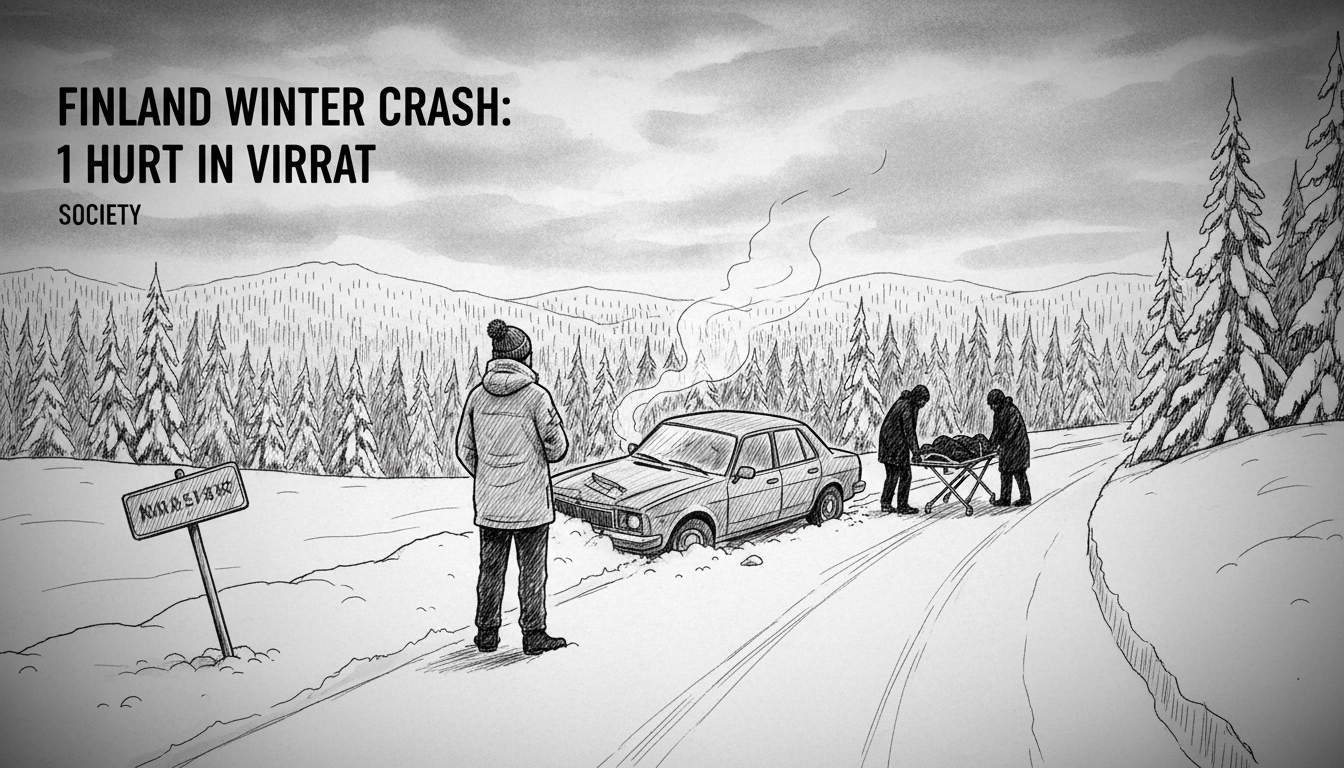
Finland road accidents resulted in 224 fatalities during 2022, a stark backdrop to the minor-injury crash that occurred near Virrat on St. Stephen's Day. The single-vehicle incident on Liedenpohjantie road underscores the perennial hazards of winter driving across the Nordic nation. At approximately 9:40 AM on December 26th, a car drove off the road near the Sulkava intersection, heading north. The driver, the sole occupant, sustained minor injuries and was transported for further care by emergency services. Local rescue crews managed traffic at the scene during their operations. This event is a routine entry in Finland's annual ledger of traffic incidents, yet it opens a window into the broader challenges of maintaining mobility during the harsh Nordic winter.
A Routine Incident with Systemic Roots
While the Virrat case involved only minor physical harm, it represents a common type of accident on Finland's extensive rural road network. The country has one of the highest car ownership rates in Europe, and its vast, often sparsely populated landscapes mean many journeys rely on personal vehicles. The accident occurred on Tapaninpäivä, a public holiday when travel for family visits is common. Factors like driver fatigue, potential impairment from holiday celebrations, or simply the demanding winter conditions could have played a role. The Pelastuslaitos (rescue service) responded promptly, a standard procedure for such calls that ensures minimal disruption and risk.
Finland's transport infrastructure is robust, but winter presents a relentless test. From October to April, snow, ice, and limited daylight dramatically alter driving conditions. Roads like Liedenpohjantie in the Pirkanmaa region require constant maintenance and heightened driver awareness. The Finnish Transport Infrastructure Agency (FTIA) invests heavily in winter upkeep, but unpredictable weather can outpace even the most diligent plowing and salting efforts. This creates an environment where a momentary lapse in concentration or a patch of black ice can lead to an off-road excursion.
The Data Behind the Danger
National statistics provide crucial context for understanding the Virrat incident's place in a larger pattern. In 2022, Finnish roads witnessed 3,341 personal injury accidents. While the 224 deaths marked a decrease from previous decades, each number signifies a profound loss. Minor injury accidents, like the one in Virrat, constitute the majority of these events. They often receive less public attention than fatal crashes but collectively represent a significant burden on healthcare services and cause substantial economic costs through vehicle damage and lost productivity.
Analyzing accident trends reveals consistent risk factors. Winter months typically see a spike in certain types of collisions, particularly single-vehicle accidents where cars slide off the road. Rural areas, with their higher speeds and longer emergency response times, can see outcomes escalate from minor to serious more quickly. The fact that the Virrat driver was alone is also noteworthy; many severe accidents in Finland involve multiple vehicles or passengers, increasing the potential for harm.
Expert Perspectives on Winter Safety
Road safety experts in Finland emphasize a multi-layered approach to preventing off-road accidents. "The cornerstone of winter safety is appropriate equipment and adjusted behavior," explains a traffic safety researcher from VTT Technical Research Centre of Finland, who spoke on general principles. "Studded winter tires are essential, but they are not a magic solution. Drivers must significantly reduce their speed, increase following distances, and plan for longer travel times." He notes that holiday periods introduce additional variables, including possible alcohol use and fatigue from social gatherings.
The Finnish government and organizations like Liikenneturva (The Finnish Road Safety Council) run annual campaigns targeting these behaviors. Legislation mandates the use of winter tires from December to February, and police conduct enforcement campaigns. However, experts argue that technological advancements are becoming increasingly important. Modern safety systems like Electronic Stability Control (ESC) and autonomous emergency braking can prevent many loss-of-control scenarios. The gradual renewal of Finland's car fleet with newer, safer vehicles is a slow but positive trend.
Policy and Infrastructure Responses
Beyond individual responsibility, systemic improvements are continuously evaluated. The Finnish Ministry of Transport and Communications regularly updates its road safety strategy, aiming for a vision of zero fatalities and serious injuries. This involves engineering safer roads, with better signage, improved lighting, and roadside barriers where possible. For rural routes like the one in Virrat, targeted measures might include more frequent gritting or road alignment improvements.
At the EU level, Finland aligns with broader vehicle safety regulations and infrastructure directives. The European Commission's push for safer vehicles and connected mobility systems indirectly supports national goals. Finnish representatives often contribute to these discussions, highlighting the specific challenges posed by Arctic and sub-Arctic conditions. This international cooperation is vital for a small country where automotive technology is largely imported.
The Human Factor in Hazardous Conditions
Ultimately, every statistic like the 2022 toll of 224 deaths represents individual stories. The minor injury in Virrat serves as a low-stakes reminder of a high-stakes reality. For residents in towns like Virrat, driving is not a luxury but a necessity for work, education, and healthcare. This dependency underscores the importance of resilient communities and reliable emergency services. The efficient response by Ensihoito (emergency medical services) and the Pelastuslaitos in this case reflects a well-drilled system designed for exactly these scenarios.
Public awareness campaigns stress preparation. Before long trips, drivers are advised to check weather forecasts, ensure their vehicle is winter-ready, and pack a safety kit with blankets, food, and a shovel. The Finnish mentality of "sisu"—perseverance—is sometimes at odds with the prudent decision to delay travel during severe storms. Balancing determination with caution remains a cultural and practical challenge on snowy roads.
A Look Ahead to Safer Roads
The Virrat incident will not make national headlines for long, but its lessons are enduring. As Finland continues its transition towards greener transport, including electric vehicles, new questions arise about battery performance in cold weather and the weight of EVs affecting handling on ice. Safety research must evolve alongside automotive innovation. The ongoing collection of accident data, including minor events, helps authorities identify risky locations and trends, guiding where to invest in infrastructure upgrades.
Could the next decade see a significant reduction in these common off-road accidents? With concerted efforts in education, enforcement, engineering, and emergency response, the trend can continue downward. The goal is a future where a slide off a road like Liedenpohjantie results in nothing more than a shaken driver and a call to a tow truck, with injuries becoming increasingly rare. Until then, each winter journey in Finland demands respect for the power of nature and the limitations of technology.