
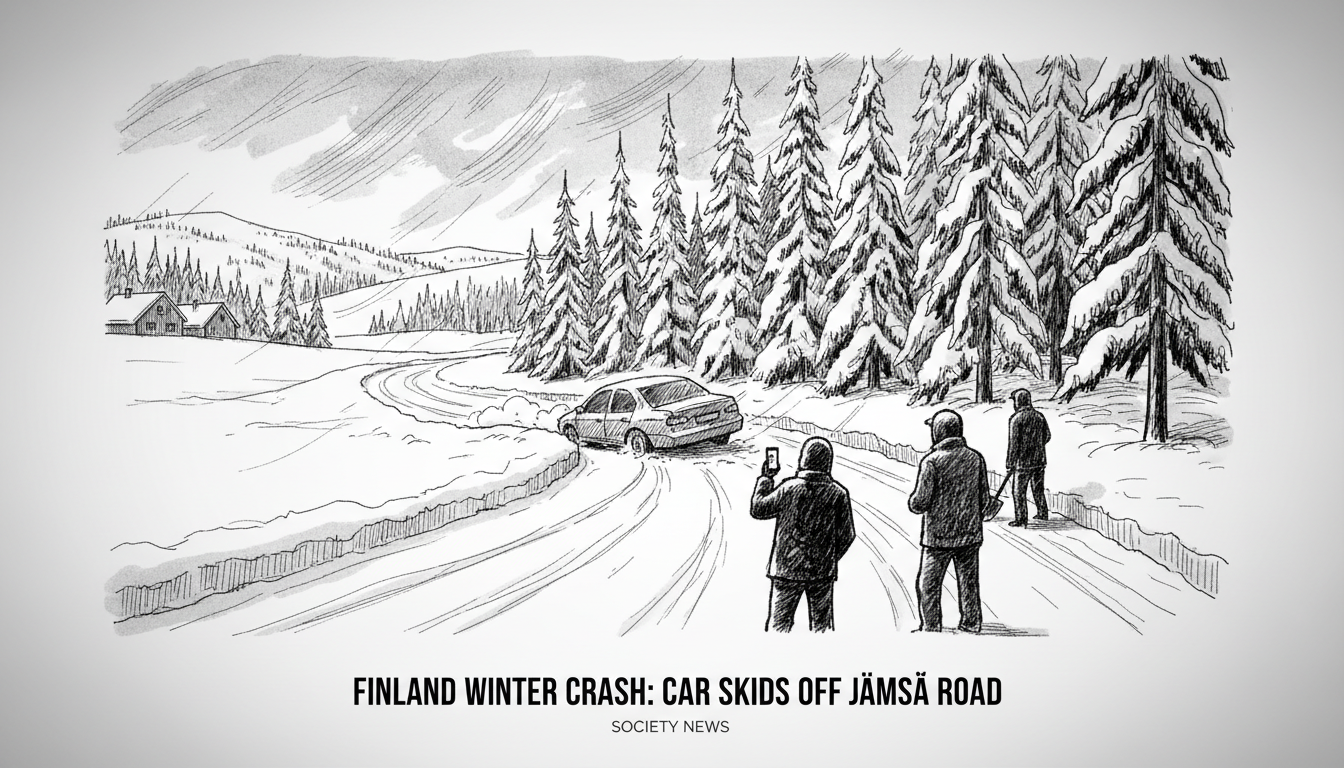
Finland's Kantatie 56 highway witnessed a vehicle leaving the roadway near the town of Jämsä on Tuesday evening. The Central Finland Rescue Department reported the incident occurred at approximately 17:31 in the Vedenpää area, close to the border of Pirkanmaa region. Initial assessments point to slippery road conditions as the likely cause. Remarkably, the driver emerged unscathed and exited the car without assistance. The vehicle itself remained drivable after being recovered by rescue crews, who managed traffic during the operation.
This single, non-injury accident opens a window into the perennial challenge of winter mobility in the Nordic nation. While the outcome was fortunate, it underscores the constant risk presented by Finland's long, dark winters and icy thoroughfares. For residents, such incidents are a familiar seasonal hazard. For authorities, they represent ongoing tests of infrastructure maintenance and public safety campaigns.
The Incident on a Darkening Highway
Emergency services received the call at 17:31, as dusk settled over Central Finland. A personal car had skidded off Kantatie 56 and into a ditch. The Central Finland Rescue Department dispatched units to the scene. Their primary tasks were to ensure the driver's safety, recover the vehicle, and direct passing traffic. Officials confirmed the driver sustained no injuries and was able to climb out independently. The car was pulled back onto the road and was found to be in working condition, allowing the scene to be cleared efficiently.
The location, near the municipal border of Jämsä in the Vedenpää district, is part of a highway known for its winter vulnerabilities. Kantatie 56 stretches 61 kilometers between Mänttä-Vilppula and Jämsä. It traverses forested and sometimes hilly terrain in the Pirkanmaa and Central Finland regions. Rescue departments in these areas routinely respond to similar weather-related incidents from late autumn through early spring.
A Road Known for Winter Challenges
Kantatie 56 is not uniquely dangerous, but it exemplifies the types of roads where winter conditions swiftly elevate risk. Its length and rural character mean that maintenance crews must constantly battle to keep surfaces clear of ice and snow. Local drivers are accustomed to adjusting their speed and technique. However, as this incident shows, even experienced motorists can be caught out by sudden patches of black ice or changing weather.
Accident statistics from the Finnish Transport and Communications Agency Trafi often highlight secondary highways like Kantatie 56 as sites where weather plays a significant contributing factor. The road does not have the same safety infrastructure as Finland's main motorways, such as continuous barrier systems or extensive lighting. This makes driver vigilance and proper vehicle equipment absolutely critical during the winter months.
The Ever-Present Threat of Slippery Surfaces
Finnish meteorologists and road administrators issue frequent warnings about liukkaust, the slippery conditions caused by ice, frost, or wet snow. These conditions can materialize rapidly, especially during twilight hours when temperatures drop. The accident near Jämsä occurred precisely in this evening window. Such timing is common for winter skids, as residual moisture from the day freezes on the asphalt.
Road maintenance in Finland is a decentralized operation, with municipalities and the state-owned company Destia responsible for different road classes. Their fleet of plows and gritters works around the clock, but covering every kilometer of road instantly is impossible. On roads like Kantatie 56, there can be a lag between a weather change and treatment, creating temporary but hazardous driving windows.
Voices from Safety and Rescue Experts
Road safety organizations consistently hammer home the same messages each winter. Matti Järvinen, a senior advisor with the Finnish Road Safety Council Liikenneturva, often stresses the non-negotiable basics. 'The foundational pillars are winter tires with adequate tread depth and a driving speed appropriate for the conditions, which is almost always below the posted limit,' Järvinen said in a recent public statement. He notes that most weather-related run-off-road accidents involve at least one of these factors being neglected.
The Central Finland Rescue Department, which handled this incident, regularly participates in safety campaigns. Their personnel see firsthand the consequences of failed preparedness. While not commenting specifically on this case, their public communications always emphasize the importance of allowing extra travel time, increasing following distances, and ensuring the vehicle is equipped for the season. Their efficient response in Jämsä prevented secondary incidents, highlighting the importance of professional traffic management at accident scenes.
Policy and Preparedness on National and EU Levels
Finland's approach to road safety is woven into both national policy and broader European Union frameworks. The Finnish government's strategic road safety plan aligns with the EU's goal of halving serious injuries and moving toward zero fatalities by 2050. This involves infrastructure investment, enforcement, and education. For winter safety, this translates to funding for road maintenance, mandates for winter tire use during specific months, and nationwide awareness campaigns.
From the EU perspective, Finland often provides case studies on operating transport networks in extreme climates. EU directives on road infrastructure safety management require member states to proactively identify and treat high-risk road sections. While Kantatie 56 may not be a top-tier priority route on a European scale, it falls under this systematic approach to risk reduction. Data from incidents like the one in Jämsä feed into these analyses, helping to justify local safety improvements.
Beyond the Single Skid: A Systemic View
Isolating Tuesday's event as a minor mishap misses the larger picture. It is a data point in Finland's annual struggle with winter road safety. Each season, thousands of similar off-road incidents occur. Most, like this one, result only in property damage and frayed nerves. A tragic minority lead to serious injuries or fatalities. The difference often comes down to chance, the angle of departure, or the presence of obstacles near the roadway.
Analysts point out that Finland's overall road safety record is strong compared to global averages, thanks to a culture of safety and strict regulations. However, the winter months always see a spike in incidents. This persistent pattern suggests that while individual responsibility is paramount, there is also room for systemic enhancement. Could more frequent salting on routes like Kantatie 56 help? Would improved signage for known icy patches make a difference? These are constant questions for traffic planners.
Equipping for the Inevitable Finnish Winter
For motorists, the advice is practical and repeated annually. Fitting four winter tires by the legal deadline in November is the first step. These tires must have a minimum tread depth of 3 millimeters for optimal grip on ice, though the legal minimum is lower. Drivers should also carry emergency gear in their vehicles, such as a reflective vest, warning triangle, blanket, and shovel. Checking weather and road condition reports via services like Fintraffic is essential before any journey in winter.
The condition of the car recovered in Jämsä—still drivable—suggests the driver likely had winter tires fitted, which can mitigate severity. This highlights how proper equipment can turn a potential crisis into a mere inconvenience. The absence of injury is the best possible outcome, but it should not breed complacency. Every such incident serves as a live drill for rescue services and a stark reminder for the driving public.
A Look Ahead as Winter Tightens Its Grip
As the season progresses, the days will shorten further and temperatures will plummet. Roads across central and northern Finland will face sustained periods of ice and snow. The incident on Kantatie 56 is a gentle early-season warning of what is to come. It raises a critical question for all road users: Is my vehicle and my mindset fully prepared for the months ahead?
The Finnish ethos of sisu—perseverance—applies to navigating winter roads. It requires a blend of respect for nature's power, reliance on technology and regulation, and personal accountability. The story from Jämsä ends with a sigh of relief, but the broader narrative of winter road safety in Finland is one of continuous vigilance and adaptation. The next call to the rescue services could come at any moment, on any darkened stretch of road, testing this preparedness once again.