
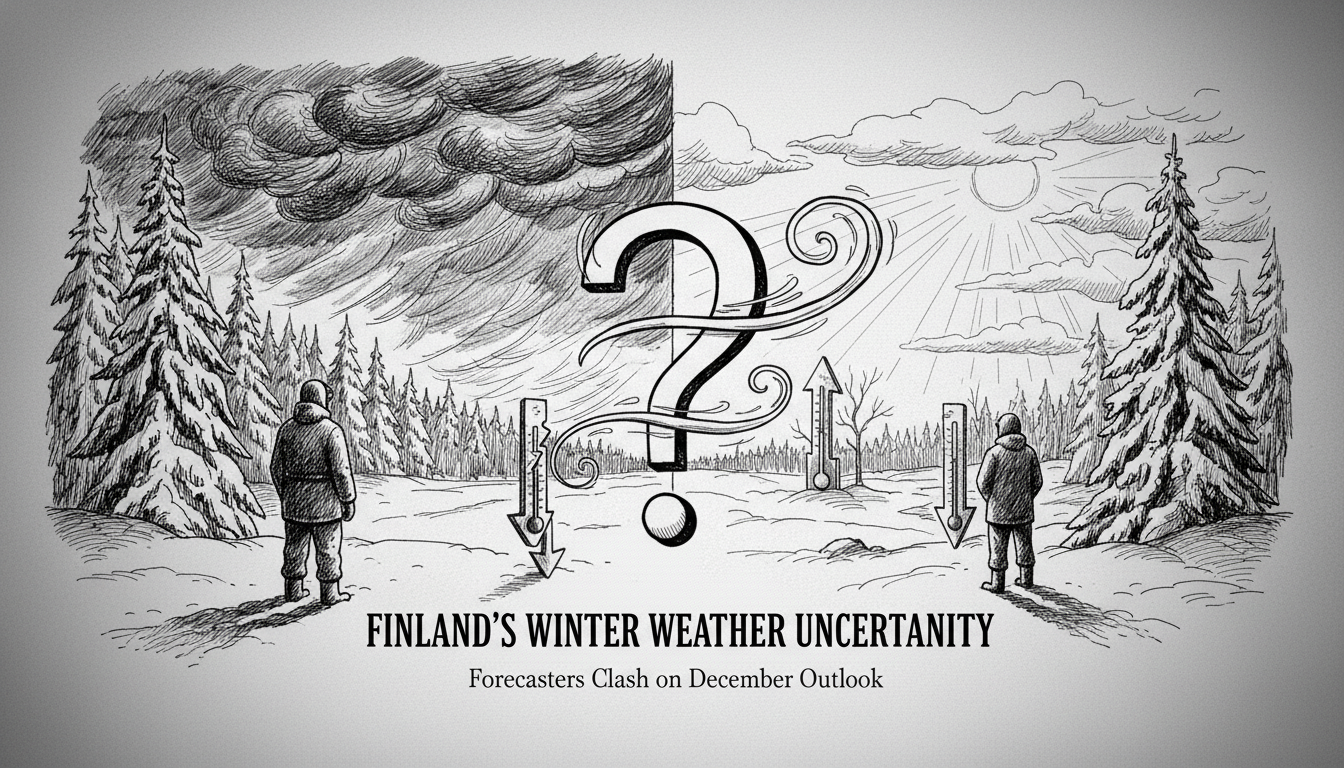
Finnish meteorologists currently disagree about potential dramatic weather shifts in December, with conflicting forecasts creating uncertainty about winter conditions. Foreca meteorologist Markus Mäntykangas identifies a potential high-pressure system that could rapidly cool Finland's climate, while the Finnish Meteorological Institute's Jaakko Savelae maintains cautious skepticism about any immediate temperature drops. This professional disagreement highlights the inherent challenges of long-range weather prediction in Nordic regions where atmospheric conditions can change rapidly.
The current meteorological debate carries significant implications for Finland's energy consumption, transportation infrastructure, and winter tourism industry. Energy companies closely monitor these forecasts to anticipate heating demand during Europe's ongoing energy challenges. Road maintenance authorities require accurate predictions to allocate snow removal resources effectively, while Lapland's tourism sector depends on reliable snowfall predictions for the crucial holiday season.
Historical weather patterns demonstrate that Finland frequently experiences December temperature fluctuations, with recent years showing warmer-than-average conditions becoming more common. Climate researchers have documented a trend toward milder Nordic winters over the past two decades, though sudden cold snaps remain possible due to Finland's geographical position between continental and maritime climate influences.
Current temperature measurements show above-average readings across most of southern and central Finland, with overnight lows particularly elevated for this season. These conditions align with broader warming trends observed throughout the Nordic region in recent decades, though meteorologists emphasize that individual weather events don't necessarily confirm long-term climate patterns.
The forecasting discrepancy centers on whether a high-pressure system will develop sufficiently to override the current mild weather pattern. Mäntykangas notes that while most models suggest continued mild conditions, some computer simulations indicate potential cooling. This uncertainty means Finns must wait several weeks for definitive Christmas weather predictions, creating planning challenges for holiday travel and outdoor traditions.
International readers should understand that Finnish weather significantly impacts daily life differently than in milder climates. Winter conditions affect transportation safety, energy costs, and outdoor activities in profound ways. The country's infrastructure is designed for harsh winters, making accurate forecasts economically important for both public services and private businesses.
Meteorological authorities continue monitoring developing weather patterns across Northern Europe, with particular attention to pressure systems forming over the Atlantic and Arctic regions. These systems ultimately determine whether Finland experiences a traditional snowy Christmas or continues with the milder conditions currently prevailing across Southern Scandinavia.