
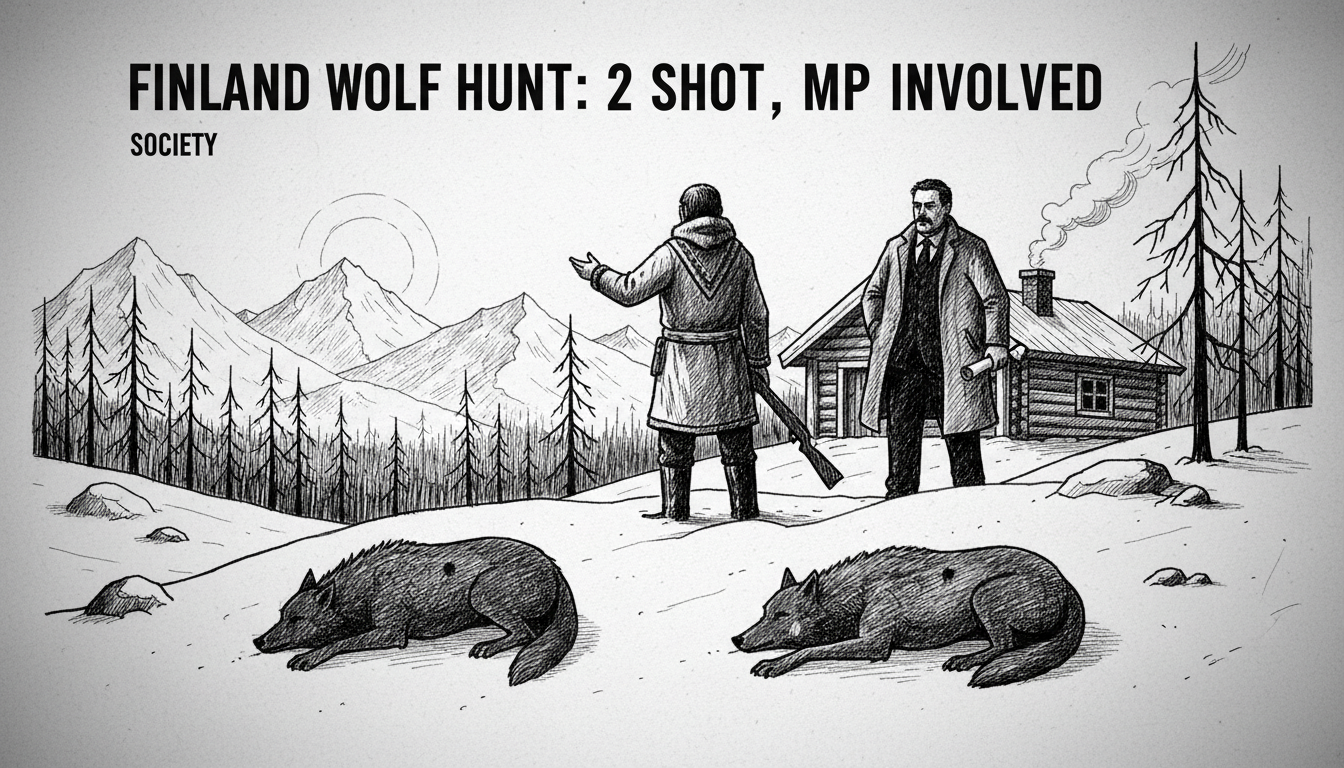
Finland wolf hunting quotas led to the shooting of two wolves in the Eurajoki area today, with parliamentarian Petri Huru participating in the controversial hunt. This event underscores the deep political and environmental divisions over predator management in the Nordic nation. Huru, a member of the Finns Party (Perussuomalaiset) and an avid hunter, confirmed his hunting party shot a female wolf near Pori, while a male was shot in Nakkila.
MP in the Crosshairs: A Political Hunt
Petri Huru's involvement places a political figure directly into the emotionally charged arena of wolf management. The MP stated he did not fire the shot himself but was present when the animal was killed. 'Meni niin sanotusti metsän puolelta,' Huru said, using a Finnish idiom meaning the wolf went 'to the forest side' or escaped his direct line of sight. His participation is symbolic, highlighting how this issue has moved from rural concerns to the heart of Helsinki's government district. The Eduskunta recently amended legislation to establish a defined wolf hunting season, a move championed by parties like the Finns Party.
The Numbers Behind the Conflict
The Eurajoki hunting district has a quota of six wolves for this season; today's kills bring the total to two. Nationally, the Finnish government sets regional quotas based on population estimates from the Natural Resources Institute Finland (Luke). According to Luke's latest data from March 2024, Finland's wolf population is estimated at 343–378 individuals. This represents a slight increase from previous years, fueling arguments from both sides of the debate. Pro-hunting groups point to growth as justification for culls, while conservationists argue the population remains fragile and isolated.
The legislative framework now permits wolf hunting from December 1 to February 10, reversing previous year-round protection. This period was established after intense parliamentary debate, aiming to balance conservation with management of human-wildlife conflict. The government's current approach authorizes limited, quota-based hunts to address livestock depredation and public safety concerns in rural areas. Huru emphasized this point: 'Jokaisesta jahtiin lähdöstä ilmoitetaan ja viranomaiset seuraavat jahtien toteutumista.'
A Clash of Values: EU Law vs. National Policy
The hunt directly contradicts the stance of major conservation organizations. The Finnish Association for Nature Conservation argues that quota-based hunting violates the European Union's Habitats Directive, which requires member states to maintain species at 'favourable conservation status.' 'Nyt menossa oleva sadan suden kiintiömetsästys rikkoo EU:n luontodirektiiviä,' the organization stated, condemning the hunt for potentially jeopardizing the wolf's recovery. This sets up a potential infringement procedure from the European Commission, a risk Finnish policymakers are acutely aware of.
Huru and government allies counter that management is essential. 'Tarkoitus on hoitaa kasvanutta susikantaa, rajoittaa sen kasvua ja estää susien aiheuttamia vahinkoja,' he stated. They frame the policy as a pragmatic tool to foster social acceptance for wolves in the countryside, preventing illegal poaching by allowing regulated hunts. This rationale is rooted in decades of conflict where wolf sightings often lead to panic and calls for removal. The MP insists extinction is not the goal: 'Sutta ei olla tappamassa sukupuuttoon.'
Expert Analysis: Science and Sentiment
Biologists from Luke provide the critical population data that informs quota decisions. Their monitoring involves track surveys, genetic sampling, and observational reports. Experts note that Finland's wolf population is part of a larger Scandinavian-Russian meta-population, but dispersal is limited. Hunting quotas, they caution, must be meticulously calculated to avoid negative genetic impacts or population fragmentation. Meanwhile, sociologists point to the deep cultural rift; for many urban Finns, the wolf is a symbol of wilderness to be protected, while for rural residents, it represents a tangible threat to livelihoods.
The political dimension is inescapable. Huru's participation was a calculated move, affirming his party's commitment to its rural base. 'Ymmärrän heidän huolen, mutta prosessin aikana on selvitetty suotuisan suojelun taso,' he said, addressing conservation worries. He referenced the legal process that established 'favourable conservation status' as a benchmark, suggesting quotas can be adjusted if the population nears that level. This legalistic argument is central to the government's defense against EU scrutiny.
The Path Forward: Monitoring and Modification
The coming months will see close monitoring of hunt outcomes and population trends. The Finnish Wildlife Agency tracks all quota fulfillment and reports to the Ministry of Agriculture and Forestry. Huru expressed satisfaction with today's result: 'Olen tyytyväinen, että täällä Eurajoen alueellakin saatiin tulos.' However, the ultimate test will be whether managed hunting reduces conflict or further polarizes society. Conservation groups are preparing legal challenges, potentially bringing the issue before Finnish courts and the European Court of Justice.
Finland's wolf debate is a microcosm of larger European struggles to reconcile biodiversity goals with human interests. The nation's policy experiment—using regulated hunting to build tolerance—is being watched across the EU. As Huru appealed for 'malttia ja jäitä hattuun' (patience and cool heads), the lines remain firmly drawn. The echo of today's gunshots in the forests of Satakunta will resonate far longer in the halls of the Eduskunta and Brussels, where the future of Finland's predators is ultimately decided.