
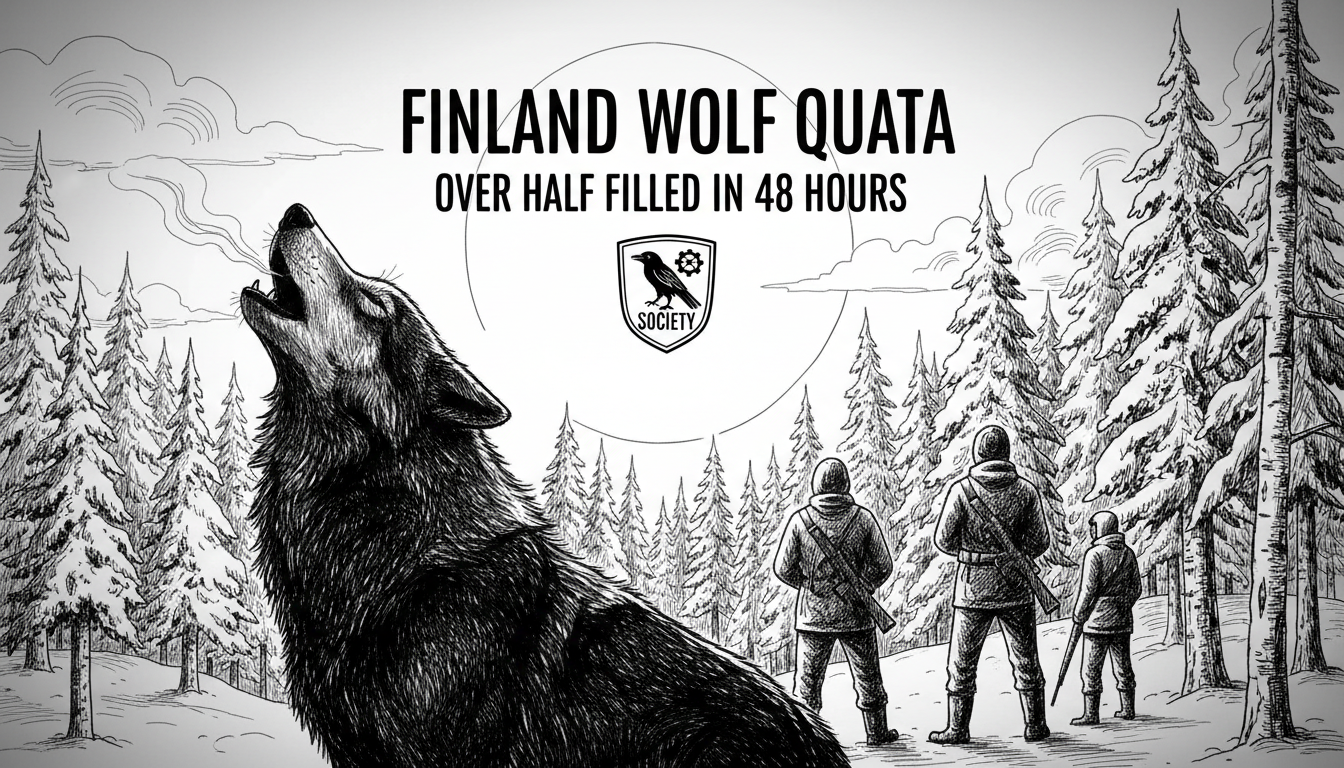
Finland's controversial annual wolf hunting quota was more than half fulfilled within the first two days of the season, data from the Finnish Wildlife Agency shows. The rapid pace of culling has reignited a decades-old national debate, pitting rural communities against conservation advocates and testing the government's management policies for the protected predator.
A Rapid Start Sparks Renewed Debate
The 2026 hunting season for wolves opened on Saturday, January 3rd. By Sunday evening, hunters had already reported culling over 50 percent of the government-authorized total. Specific quota areas in Varsinais-Suomi and Pohjois-Pohjanmaa reported their local limits were filled by Saturday night. This swift fulfillment is not an isolated event but part of a recurring pattern that highlights the intense pressure to reduce wolf numbers in certain regions. The Finnish Wildlife Agency, which administers the permits and tracks the cull, confirmed the figures through its online service. The speed of the hunt suggests meticulous pre-season planning by local hunting associations and underscores the high level of pent-up demand for permits in areas where wolf-livestock conflicts are most acute.
The Delicate Balance of Population Management
The Finnish government, based on proposals from the Ministry of Agriculture and Forestry, sets a nationwide quota each year. This policy attempts a fragile balancing act. Its goals are to maintain a favorable conservation status for the wolf as required by the EU's Habitats Directive, prevent significant damage to livestock and reindeer herds, and address legitimate public safety concerns in rural municipalities. The quota is geographically distributed based on population density and conflict history. "The system is designed for controlled management, but such rapid uptake shows the underlying social tension," said a senior official from the Wildlife Agency, speaking on background. Critics within the European Commission have previously questioned whether Finland's cull levels are compatible with the species' protected status, arguing that population sustainability must be the paramount concern.
A Historical Conflict in Finland's Forests
The wolf holds a deeply conflicted place in the Finnish psyche and landscape. After being nearly eradicated in the early 20th century, the population began recovering in the 1990s with migration from Russia. Periodic population increases have consistently led to political clashes. Rural and hunting constituencies, represented strongly in parties like the Centre Party and the Finns Party, advocate for stricter population control. They cite tangible losses: dozens of pet dogs and hundreds of livestock, mainly sheep and reindeer, are killed by wolves annually. Urban-based Green Party and Left Alliance politicians, alongside major environmental NGOs, argue for non-lethal mitigation and point to scientific studies on the wolf's key role in ecosystems. The debate often transcends policy, touching on cultural identities and the rights of people living in wolf territories.
Stakeholders Voice Contrasting Views
Reactions to the early-season cull data were predictably divided. "This efficient start is a relief for our members," said Mikael Ahrn, a representative from a Pohjanmaa hunting association. "For years, we have dealt with the constant threat to our animals and the psychological strain on families. The quota is still too small to meaningfully reduce the problem, but filling it quickly sends a message that we are using the tools we have." Conservation biologists expressed concern. Dr. Ella Järvinen, a large carnivore researcher, noted, "Such rapid, focused hunting can destabilize pack structures. It often leads to increased dispersal of younger wolves and potentially more unpredictable behavior, not less. It can also increase depredation on livestock in the short term, which is the opposite of the intended effect."
The EU Context and Future Pressures
Finland's wolf policy operates under the watchful eye of the European Commission. The EU's strict protection regime allows derogations for population management, but these must be justified, proportionate, and not harm the overall conservation objective. Finland has faced infringement pressures before. The current government coalition, led by Prime Minister Petteri Orpo, has pledged to address rural concerns, and the wolf file sits prominently on that agenda. Future policy may see a push for greater regional autonomy in setting quotas, a move that would please rural municipalities but likely trigger immediate legal challenges from conservation groups and scrutiny from Brussels. Climate change and habitat fragmentation add another layer of complexity, potentially altering wolf movements and human conflict zones in coming decades.
A Path Forward or a Deepening Divide?
The annual ritual of setting a quota and watching it be swiftly filled appears to satisfy no one completely. Hunters and farmers feel the limit is too restrictive, while conservationists see the rapid cull as evidence of an unsustainable, politically-driven system. Some experts advocate for a significant shift in resources toward promoting and subsidizing non-lethal protection measures—such as higher fences, guard animals, and modern deterrents—as a more sustainable long-term solution. However, these require investment and labor that many small-scale operators say they cannot afford. The wolf debate in Finland is a microcosm of a larger global challenge: reconciling the return of large predators to human-dominated landscapes. As the 2026 quota continues to be filled, the fundamental question remains whether the current model of conflict management is mitigating a crisis or perpetuating a cycle of controversy.