
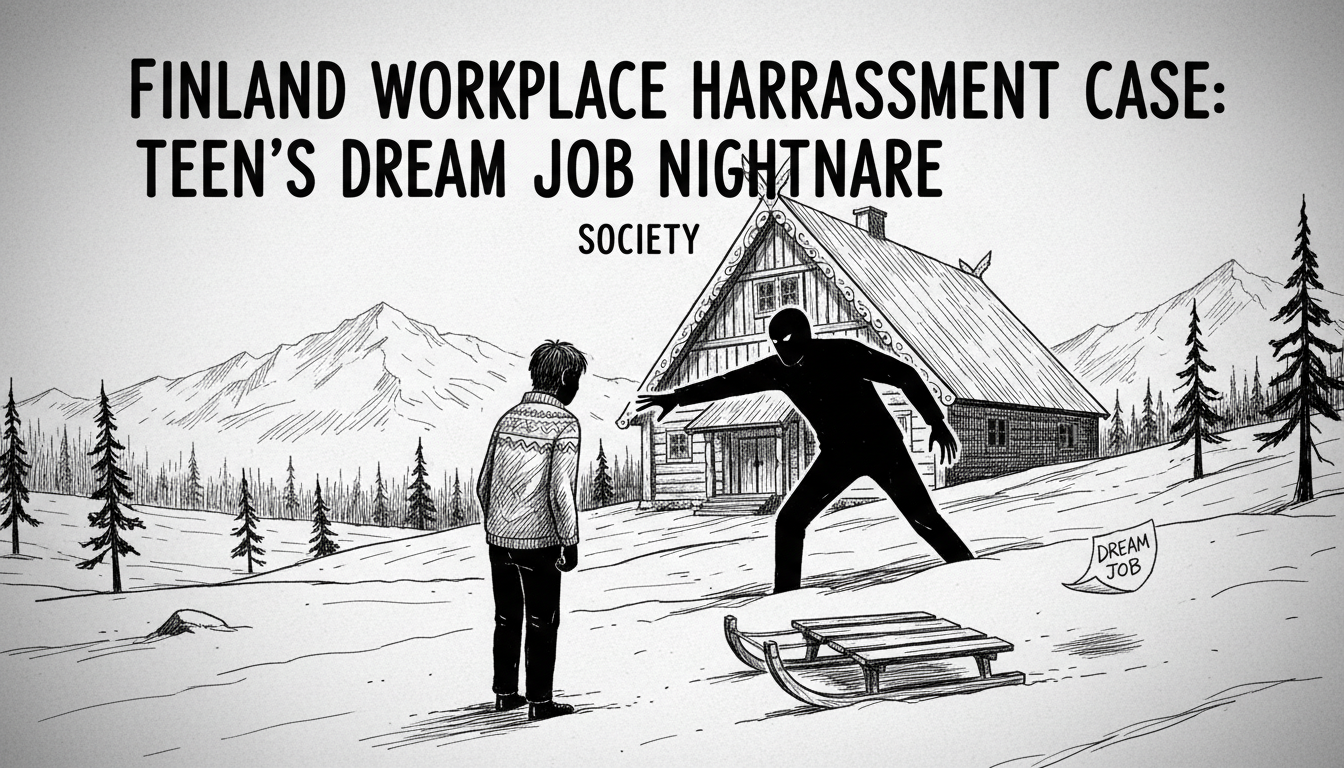
Finland workplace harassment laws face a critical test in a case involving a 16-year-old vocational trainee. Anni, whose name has been changed to protect her identity, dreamed of working with dogs. She secured a highly-rated work placement at a kennel in the Pirkanmaa region, only to quit in terror after five days, requiring professional psychological support after her supervisor's alleged conduct. The case exposes potential gaps between Finland's robust legal framework and on-the-ground realities for young, vulnerable workers.
Anni's story began with enthusiasm. Online reviews for the kennel were glowing, praising the owner's care and expertise with even difficult animals. For a teenager passionate about animal welfare, it seemed an ideal vocational training opportunity. The reality behind the positive facade, however, proved starkly different. According to Anni's account, the workplace environment quickly became intolerable due to the behavior of her supervisor.
The supervisor, Anni alleges, explained his actions as being driven by what he termed "a terrible rut" or intense sexual urge. This explicit and intimidating behavior created an atmosphere of fear, forcing the 16-year-old to abandon her placement. She is not alone; reports suggest other young individuals have had similar experiences at the same establishment, indicating a potential pattern rather than an isolated incident.
A Strong Legal Framework Meets a Harsh Reality
Finnish law provides clear protections. The Non-Discrimination Act and the Occupational Safety and Health Act explicitly prohibit sexual harassment, defining it as unwanted verbal, non-verbal, or physical conduct of a sexual nature that violates a person's dignity. Employers bear a primary legal duty to ensure a safe working environment, which includes proactive measures to prevent harassment and effective procedures to address complaints. Victims can report to their employer, a trade union, the Occupational Safety and Health Authority, or directly to the police.
"The law in Finland is very clear and quite strong on paper," explains labor law expert Professor Laura Huhtanen from the University of Helsinki. "The obligation is on the employer to act, not on the victim to prove a pattern or withstand repeated abuse. In a case involving a minor in a training position, the educational institution and the host company share this duty of care. A failure to intervene is a failure of that legal obligation."
Despite this, a 2020 study by the Finnish Institute of Occupational Health found that about 7% of Finnish workers reported experiencing sexual harassment during their careers. The risk is disproportionately higher for young workers and women, a demographic that includes many vocational trainees in fields like animal care. This statistic suggests that legal frameworks alone are insufficient to eradicate the problem.
The Vulnerable Position of Vocational Trainees
Anni's case highlights the specific vulnerability of students in mandatory work placements. Their position is often precarious; they are not formal employees but are dependent on the placement for their educational credits. They may fear that complaining will result in a failed grade, a poor reference, or damage to their future career prospects in a small industry. This power imbalance can silence victims.
"The trainee is in a uniquely dependent situation," says Kirsi Ylijoki, a senior advisor at the Finnish Confederation of Professionals (STTK). "They are navigating a new professional environment, often eager to impress, and may not know their rights or the proper channels for reporting. The educational institution has a responsibility to vet placement providers thoroughly and to provide students with unambiguous instructions on what to do if they experience harassment. This preparation is as crucial as the placement itself."
In Anni's case, the dissonance between the business's public reputation and the alleged private misconduct is particularly jarring. It raises questions about the reliability of online reviews and the ease with which a harmful environment can be hidden from customers and the broader community. For parents and schools arranging such placements, it presents a daunting challenge.
Enforcement and Awareness as Persistent Challenges
Experts point to enforcement and awareness as the twin pillars where the system often falters. While authorities like the Occupational Safety and Health Authority can investigate and impose obligations or fines on employers, resources are limited. Many cases rely on the victim's willingness and ability to initiate a formal complaint—a significant hurdle, especially for a traumatized teenager.
Awareness campaigns have traditionally focused on permanent workplaces. The specific context of vocational training, internships, and part-time youth employment may require targeted information. Young people need to know that their right to a safe environment is absolute and not contingent on their employment status.
"We must normalize speaking up," argues Marko Tuomiko, an occupational safety representative. "It's about cultural change within workplaces. It means having a clear, confidential reporting route that doesn't force the victim to confront the harasser directly. In a small business like a kennel, this might involve having an external contact person from the local educational authority or trade union that the trainee can call directly."
The Path Forward: Closing the Gaps
The aftermath for Anni involves psychological recovery and the daunting task of finding a new placement. For the Finnish system, her experience is a call to action. Several measures could strengthen protections. Educational institutions could implement more rigorous vetting of placement hosts, including interviews with past trainees. Mandatory, age-appropriate training on workers' rights and harassment prevention could be given to all students before they enter the workforce, even in a training capacity.
Furthermore, simplifying and promoting anonymous reporting channels to oversight bodies could empower victims. The role of occupational health and safety representatives, who are legally mandated in most Finnish workplaces, could be emphasized more strongly to trainees as their first point of contact.
Finland's reputation for equality and fair working conditions is well-earned, but it is not automatic. It requires constant vigilance, especially for those entering the workforce for the first time. The legal tools exist. The case of the 16-year-old and the kennel with excellent reviews forces a critical question: are these tools being deployed effectively enough to protect the most vulnerable at the very start of their working lives? The answer will determine whether a dream job for the next young trainee becomes a career launchpad or a lasting nightmare.