
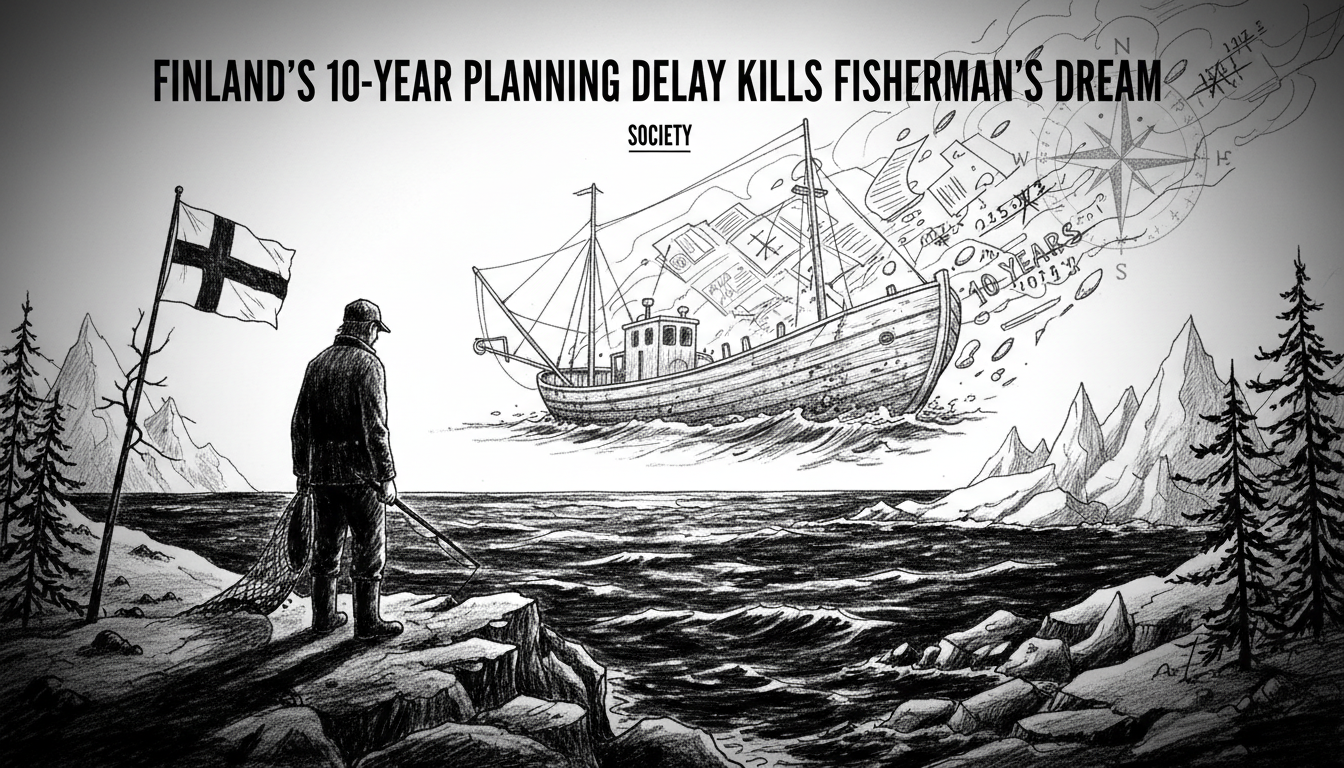
Helsinki bureaucracy delayed a harbor project for so long that the intended fisherman quit his profession before a single plan was approved. The decade-long saga to create a unique 'fisherman's base' in the rapidly developing Jätkäsaari district ended not with a new dock, but with the retirement of Klaus Berglund, the Inkoo fisherman whose idea it was. His proposed combined living and working space on the Saukonokan canal has now been erased from city blueprints, replaced by plans for a standard marina and services. This case exposes the often glacial pace of Finnish urban planning when measured against the lifespan of traditional livelihoods.
Klaus Berglund first approached the City of Helsinki with his vision over ten years ago. He saw potential in the then-industrial Jätkäsaari waterfront, envisioning a small, functional base where he could live, mend his nets, and sell his daily catch directly to the public. The concept aligned with early city visions for the area, which included preserving some maritime character amidst massive residential construction. Officials initially welcomed the idea, drafting it into preliminary plans for the Saukonokan canal area. For Berglund, it represented a sustainable future for his trade within the capital region.
A District Transforms While Plans Stall
As Berglund's proposal navigated the municipal machinery, Jätkäsaari itself underwent a breathtaking metamorphosis. What was once a cargo port has been rebuilt into a dense neighborhood of modern apartments, offices, and cultural spaces. Over 20,000 new residents are expected to eventually live in the district. This breakneck development, a cornerstone of Helsinki's strategy to increase inner-city housing, created a stark contrast with the stalled fisherman's base. The city's planning focus shifted decisively towards maximizing residential square footage and amenities for new populations, not accommodating solitary traditional workers. The context for Berglund's project evaporated from around it.
Urban planning experts note this case is symptomatic of a systemic tension. “Municipal planning processes in Finland are thorough, consultative, and by design, slow,” explains Dr. Elina Kervinen, a professor of urban studies. “They are built to ensure stability and consider all interests, but they can lack the agility needed for small-scale, person-dependent projects. When the core idea relies on a specific individual's participation, time becomes the critical, and often fatal, variable.” The bureaucratic timeline, measured in committee cycles and public commentary periods, simply outpaced a fisherman's working life.
From Functional Base to Luxury Marina
The latest visualizations released by the City of Helsinki for the Saukonokan canal tell the conclusive story. The fisherman's base is absent. In its place, artists' impressions show a sleek marina filled with leisure boats, complemented by service buildings likely to house cafes and yacht clubs. This shift reflects powerful economic realities. Waterfront space in central Helsinki is extraordinarily valuable. The tax revenue and economic activity generated by a marina serving affluent boat owners vastly exceed that of a single-artisan fishing operation. The market logic of modern urban development ultimately overrode the initial quirky, cultural ambition.
“The original plan had a certain romantic, authentic appeal,” admits a city planner familiar with the project, speaking on background. “It was about heritage and adding a layer of genuine working life to the new district. But the practical challenges—zoning for mixed live-work use, environmental regulations for a micro-scale fish handling facility, allocating precious waterfront to a low-revenue use—piled up. Each hurdle required a new review, and with each passing year, the political and economic priority of the project diminished.” The planner emphasizes that no single person or department killed the project; it simply expired through institutional inertia.
The Human Cost of Institutional Delay
The broader cost of this delay is measured in more than just changed blueprints. For Klaus Berglund, it meant the collapse of a personal and professional dream to transition his trade to the capital. For the city, it represents a lost opportunity to incorporate a tangible piece of Finland's maritime heritage into its newest urban fabric. Instead of a living link to the Baltic Sea's fishing culture, Jätkäsaari will gain another leisure-focused marina, a template seen in waterfront developments worldwide. This outcome raises questions about whether fast-growing Nordic cities can preserve space for non-conforming, small-scale economic activities, or if bureaucratic and market forces inevitably homogenize urban space.
The Finnish Ministry of the Environment has recently initiated discussions about streamlining land use planning processes, especially for smaller projects. The Jätkäsaari fisherman's base could serve as a textbook case for reform advocates. It demonstrates how a well-intentioned plan can become a casualty of a system ill-suited for entrepreneurial timing. The case also touches on EU cohesion policy goals of supporting small and medium-sized enterprises (SMEs) and sustainable local economies, highlighting a disconnect between regional support ideals and local municipal implementation.
A Cautionary Tale for Urban Futures
As Helsinki and other Finnish cities continue their aggressive urban expansion, the story of the fisherman's base that never was offers a cautionary lesson. It underscores the need for planning mechanisms that can operate on a human scale and at a human pace. Projects that depend on individual initiative may require fast-track channels or interim agreements to secure their viability during longer planning phases. Without such adaptations, cities risk losing the very diversity and character they often claim to seek in their development goals.
The final irony is etched into the current city plans. The Saukonokan canal area will still feature a connection to the sea, but it will be for recreation, not for harvest. The physical space where Klaus Berglund imagined his future now points toward a different, more predictable and profitable, Helsinki waterfront. The episode leaves a lingering question: in the race to build efficient, modern cities, how many unique, small-scale visions are lost not to opposition, but simply to the relentless, slow-motion grind of the planning process itself?