
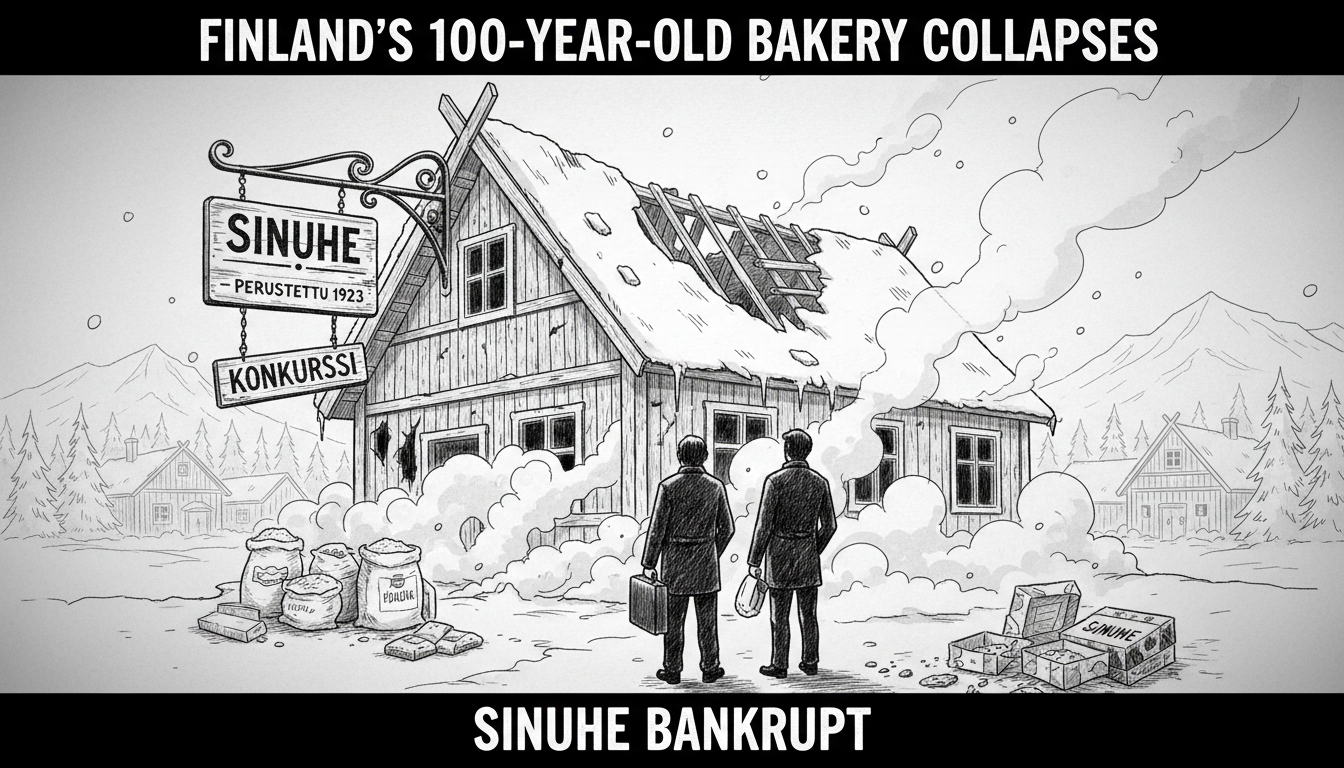
Finland's century-old food industry faced a significant loss as the historic Leipomo Sinuhe bakery ceased operations in the autumn of 2025, its final restructuring attempt unsuccessful. The Lahti-based company, which filed for corporate restructuring in the spring of 2024, could not survive the planned turnaround period that was slated to run until the end of that year. Its related café outlet in Kouvola had already shuttered its doors the previous August, marking the beginning of the end for a business deeply woven into the local community's fabric.
The bankruptcy petition signals the conclusion of a nearly 100-year legacy, a sobering reminder of the intense pressures facing traditional Finnish small and medium-sized enterprises (SMEs). For employees, suppliers, and loyal customers, the closure is more than a business failure; it represents the disappearance of a local institution and the loss of artisanal skills honed over generations. The case highlights the precarious position of bakeries, which, despite their cultural importance, operate on thin margins in a fiercely competitive market.
A Restructuring Plan That Could Not Rise
Leipomo Sinuhe entered into a company restructuring process, known in Finland as yrityssaneeraus, in May 2024. This legal mechanism is designed to give struggling companies breathing room from creditors while they develop and implement a viable recovery plan. The goal is to rehabilitate the business and avoid liquidation. The court-approved plan for Sinuhe was structured to provide a pathway to solvency through the remainder of 2024. However, by the autumn of 2025, it became clear that the rescue effort had failed, leading to the formal bankruptcy filing. This timeline indicates the underlying financial wounds were too deep for the standard restructuring medicine to heal.
“Company restructuring is a powerful tool, but it is not a magic wand,” commented a Helsinki-based insolvency lawyer familiar with the retail food sector, who asked not to be named discussing specific cases. “It requires a fundamentally salvageable core business, often coupled with new financing or a dramatic operational overhaul. For traditional bakeries facing systemic headwinds, sometimes the economic model itself is no longer sustainable.” The process involves strict supervision by a court-appointed administrator, and its failure typically means that creditor claims or operational losses continued to outpace any recovery.
The Crumbling Foundation of Traditional Bakeries
The fall of Leipomo Sinuhe is not an isolated incident but part of a broader, sobering trend within the Finnish food landscape. Traditional independent bakeries are squeezed from multiple directions. Soaring costs for energy, grain, and other raw materials have dramatically increased production expenses. Simultaneously, they face relentless competition from the in-store bakeries of large supermarket chains and massive industrial bakeries that benefit from economies of scale. Consumer habits have also shifted, with less daily foot traffic for neighborhood shops and increasing demand for convenience and pre-packaged goods.
“The sector is undergoing a brutal consolidation,” said Dr. Eeva-Liisa Heikkilä, a researcher specializing in Nordic food systems at the University of Helsinki. “The sentimental value of a百年-old bakery does not pay the electricity bill or the wheat supplier. These businesses are caught between their role as cultural custodians and the harsh realities of a modern, concentrated retail market. Their expertise in quality and tradition is immense, but translating that into a profitable balance sheet is increasingly difficult.” She notes that the COVID-19 pandemic further accelerated these pressures, disrupting supply chains and altering daily routines in ways that hurt small food retailers.
The Ripple Effect Through Local Economies
The bankruptcy of a long-established business like Leipomo Sinuhe sends shockwaves beyond its own balance sheet. Local suppliers, from flour mills to dairy farms, lose a customer. Employees lose their jobs, often in communities where alternative employment may be scarce. The city of Lahti loses a piece of its commercial history and a unique service that contributed to the character of its urban environment. For the Finnish food and beverage industry, which relies on a diverse ecosystem of producers, each closure narrows the market and reduces resilience.
The Finnish government, currently led by Prime Minister Petteri Orpo's coalition, has various support mechanisms for SMEs, including business development grants and advice. However, critics argue that broader economic policies, particularly those affecting energy costs and commercial property taxes, often overlook the specific vulnerabilities of small-scale food production. The situation invites questions about whether national and EU agricultural policies adequately support the middle layer of the food chain—the processors and artisans who add value to raw ingredients.
A Cultural Loss Beyond the Ledger
Ultimately, the story of Leipomo Sinuhe is about more than insolvency statistics. Bakeries in Finland are social hubs and repositories of craft. The smell of fresh rye bread (ruisleipä) or pulla (cardamom bread) is a sensory anchor in Finnish daily life. The closure of a nearly century-old bakery means the erosion of this tangible heritage. While supermarket loaves fill stomachs, they seldom carry the same connection to place or craft.
The bankruptcy prompts a difficult societal question: how much value do we place on preserving these traditional foodways, and who bears the cost of maintaining them? Can new business models, such as hyper-local subscription services, direct online sales, or niche premium branding, provide a lifeline for other artisanal bakeries? The failure of Sinuhe's restructuring suggests that adaptation must be radical and swift to be effective. As Finland's economy continues to navigate global uncertainties, the fate of its foundational food businesses will serve as a critical indicator of broader economic health and cultural sustainability. Will other venerable bakeries learn from Sinuhe's demise, or are they simply waiting for their own final accounting?