
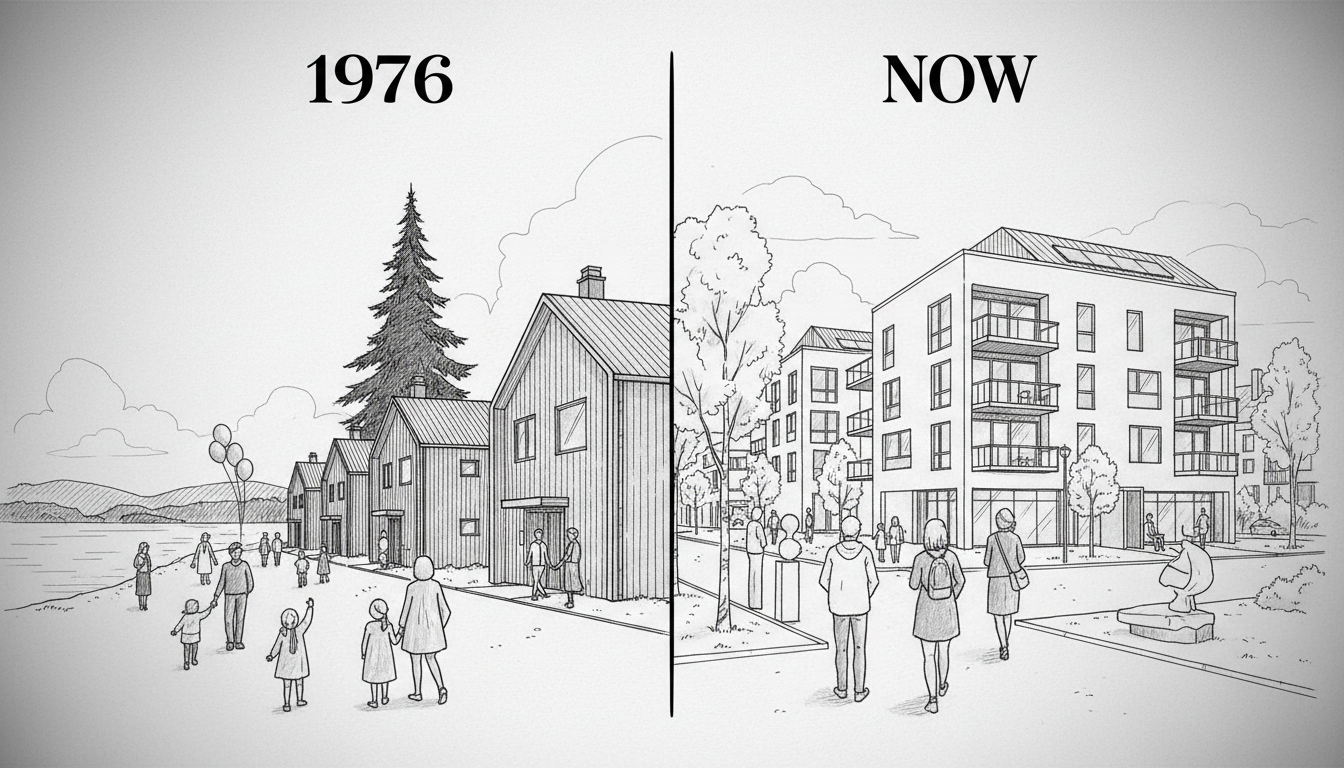
Finland's 1976 Housing Fair in Oulu was designed to elevate national construction standards from a do-it-yourself culture. Journalists at the time described the exhibition area, Niittyaro, as a 'dreary, boggy place' where houses were built 'tightly wall to wall.' Nearly five decades later, a return to these pioneering homes reveals a story of architectural endurance, changing tastes, and the lasting legacy of a national institution. The Finnish Housing Fair, or Asuntomessut, began in 1970 to combat variable build quality and promote modern, efficient housing design.
The Fair's Foundational Mission
The 1976 event in Oulu was only the sixth national Housing Fair ever held. Its core purpose was explicit: to improve the quality of housing design and construction across Finland. In the 1970s, single-family homes were often self-built projects, leading to inconsistent results. The fair served as a living catalogue of best practices, new materials, and contemporary Nordic architectural styles for a growing suburban middle class. It presented a vision of modern living that moved away from ad-hoc construction toward planned, community-oriented neighborhoods. The fairgrounds themselves, however, were not initially seen as prime real estate, with contemporary reports highlighting the challenging, peat-rich soil of the Niittyaro area.
Architectural Time Capsules of the 1970s
The houses showcased in Oulu in 1976 were definitive products of their era. They embodied the Nordic modernist principles of the time: functional layouts, clean lines, and a connection to nature through large windows and wooden facades. The designs prioritized practicality and efficiency, reflecting a society focused on providing solid, affordable homes for a broad population. Exteriors often featured dark-stained timber, a hallmark of 1970s Finnish architecture, while interiors embraced open-plan living areas, a relatively new concept that contrasted with the compartmentalized rooms of older homes. These structures were the trendsetters, introducing Finnish families to new ideas about space, light, and domestic life.
A Return to Niittyaro: Evolution and Adaptation
Visiting these same houses today offers a fascinating study in architectural longevity and change. Many of the original structures stand firm, their core 1970s designs still clearly visible beneath layers of subsequent modification. Some homeowners have preserved the original aesthetic with care, maintaining the dark wood paneling and period-specific features. Others have undertaken significant renovations, updating facades with lighter materials, adding extensions, or modernizing window styles to improve energy efficiency. The once 'dreary, boggy' Niittyaro area has matured into an established, leafy suburb, with gardens grown in and communities solidified. The tight, wall-to-wall construction noted in 1976 now feels like a typical suburban density, the trees and decades of habitation having softened the initial starkness of the development.
The Housing Fair's Enduring Influence on Finnish Life
The 1976 Oulu fair was a single snapshot in a continuing national conversation about housing. The Finnish Housing Fair has become an annual barometer for architectural trends, construction technology, and societal values. It has continuously introduced innovations, from solar panels and smart home technology to sustainable wood construction and communal living concepts. Looking back at the 1976 models through a modern lens shows what elements were timeless and what were mere trends. The emphasis on natural light and functional flow has endured, while some interior color schemes and material choices firmly anchor the homes to the 1970s. The fair's fundamental success lies in how it made quality design a public, aspirational goal, moving the national standard forward one showcase home at a time.
From Critique to Heritage: Reassessing the 1976 Vision
The initial journalistic skepticism toward the Oulu fair's location and layout speaks to the challenging realities of urban development. Planners were tasked with creating a model community on less-than-ideal land, a common scenario in expanding Finnish cities. Today, those same houses are not seen as experimental outliers but as integral parts of Oulu's urban fabric. They represent a specific chapter in post-war Finnish prosperity and the democratization of good design. For architecture historians, they are physical documents of 1970s Nordic modernism. For current residents, they are simply home—structures that have proven adaptable and durable. The journey from a criticized exhibition site to a settled neighborhood underscores how successful urban environments mature over time, with architecture providing the permanent framework for community life.
The Legacy of a National Experiment
The story of the 1976 Oulu Housing Fair homes is ultimately one of quiet success. They were built to demonstrate better methods and to inspire higher standards, and they have provided comfortable, lasting homes for generations. While interior trends have come and gone, the fundamental architectural principles on display—clarity, connection to nature, and sensible planning—remain relevant. The Finnish Housing Fair continues this mission today, now grappling with themes of carbon neutrality and digital living. The Oulu houses stand as a testament to the fair's original, pragmatic goal: to show that good design is not a luxury but a necessary foundation for everyday life. They ask us to consider what the showcase homes of 2024 will look like in 2070, and what values of our own time will be deemed enduring or ephemeral by future generations.