
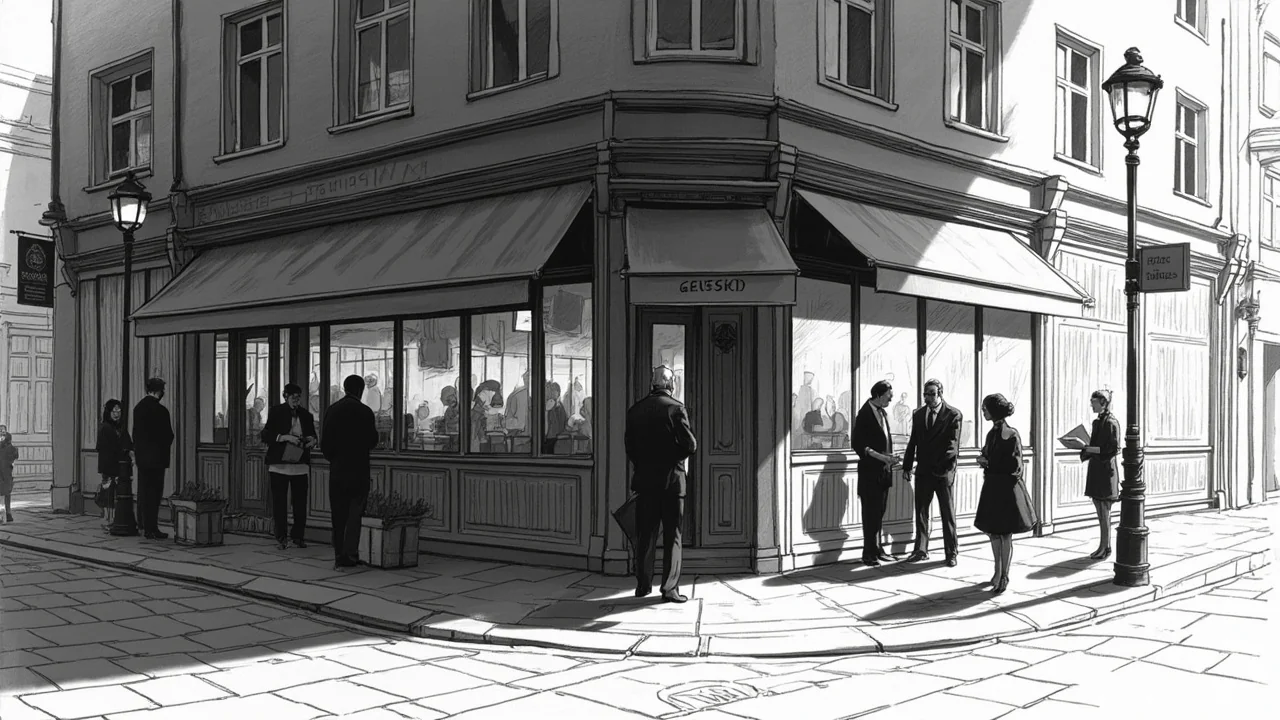
Finland's capital Helsinki has lost a piece of its social fabric with the final closure of the Kolme Kaisaa restaurant in the Kurvi district. The establishment, which had operated for over six decades, served its last customers on January 11th, leaving a community of regulars without their shared living room. The closure resulted from an unsuccessful negotiation to renew the restaurant's fixed-term lease, highlighting the ongoing tension between urban development and cultural preservation in Helsinki's rapidly changing neighborhoods.
Hannu and Annika Vahter sat at their usual table by the window for the final time. For eight years, they had visited Kolme Kaisaa several times each month, with Annika facing the metro station and Hannu sitting opposite her. The rock music played, and other long-time customers found their familiar spots. The scene mirrored countless previous evenings, except for the palpable knowledge that no new ones would follow. "I think probably next Saturday I'll think, I'll go to Kolme Kaisaa," Annika Vahter said, her voice tinged with disbelief. "And then I'll realize it's not here anymore."
The End of an Era in Sörnäinen
The restaurant's manager, Tiina Hintikka, confirmed the doors closed to customers in the early hours of that Sunday, or possibly earlier if the drink supplies ran out. The final Saturday afternoon saw around thirty people in the restaurant, many of them regulars who had frequented the place for decades. For Hannu Vahter, the news of the closure was a major disappointment. Annika Vahter initially refused to believe it was true and still struggles to accept the reality. Their connection to the space was profound; Annika described the restaurant as being like a common living room, while Hannu cherished the ability to watch people and events unfold from the windows.
This closure is not an isolated incident but part of a broader pattern affecting traditional meeting places across Helsinki. As property values rise and lease agreements come under pressure, locally owned restaurants and bars that serve as community hubs face existential threats. The Kolme Kaisaa's situation—a terminated lease without a renewal agreement—is a common narrative in districts undergoing gentrification. The restaurant's fate underscores a critical policy question for Helsinki's city planners: how to balance economic development with the preservation of social infrastructure that fosters community cohesion.
A Repository of Collective Memory
Over the years, the Vahters accumulated a treasure trove of memories within the restaurant's walls. One vivid recollection for Annika was from a few years prior when she participated in a trade union strike with colleagues. They decided to spend their strike day at Kolme Kaisaa, playing music from the jukebox, ordering sparkling wine, and dancing. This anecdote illustrates the restaurant's role beyond mere dining; it was a venue for celebration, solidarity, and informal community gathering. It functioned as a neutral ground where people from different walks of life could intersect, a increasingly rare feature in a city where commercial spaces are often highly curated and segmented.
The loss of such establishments has a tangible impact on social well-being, particularly for older residents. For regulars, these venues provide routine, recognition, and a sense of belonging. The familiar staff, the guaranteed table, and the known environment combat loneliness and provide a stable backdrop to life. When these places vanish, they are not easily replaced. A new boutique cafe or fast-casual chain cannot replicate the decades of shared history and the unspoken rules of a community-oriented pub. The Kolme Kaisaa was a living archive of its neighborhood, its walls holding stories from the 1960s to the 2020s.
The Business Reality Behind the Goodbye
Manager Tiina Hintikka has indicated a potential for return, stating that Kolme Kaisaa might make a comeback if a new suitable location can be found. This hope, however, is tempered by the harsh realities of Helsinki's commercial real estate market. Finding a similarly central location in the Sörnäinen district with affordable, long-term lease conditions presents a significant challenge. The closure process itself, dictated by the end of a fixed-term contract, shows the vulnerability of small businesses in prime urban locations. They often operate without the security of long leases, leaving them exposed to market fluctuations and redevelopment plans.
The situation invites comparison to other Nordic capitals, where similar debates rage. In Copenhagen, community groups have successfully campaigned for the preservation of historic bodegas, while Stockholm has seen iconic music venues shutter due to rising costs. The Finnish response often hinges on municipal zoning and cultural subsidy models, which are currently under review. Some Helsinki city council members have proposed creating a "protected status" for venues deemed critical to local cultural heritage, though such measures face opposition from property developers and concerns about market intervention.
Looking Ahead: The Future of Third Places
The concept of the "third place"—a social setting separate from the two usual environments of home and workplace—is central to understanding what was lost. American sociologist Ray Oldenburg, who coined the term, argued these spaces are essential for civil society, democracy, and community engagement. Kolme Kaisaa perfectly embodied this: an accessible, neutral ground where conversation was the main activity, and a sense of playful camaraderie prevailed. Its absence creates a void in the daily rhythm of its patrons and the character of Kurvi.
The closure forces a reflection on what kind of urban environment Helsinki wants to build. Is it one that prioritizes maximum economic yield from every square meter, or one that values the intangible social capital generated by places like Kolme Kaisaa? The answer has implications for urban planning, business regulation, and cultural policy. It also touches on the identity of Sörnäinen, a district historically known for its working-class roots and artistic flair, now grappling with modernization and displacement.
As the Vahters and other regulars adjust to their new reality, the story of Kolme Kaisaa becomes a cautionary tale. The final gathering was not just a goodbye to a restaurant, but a farewell to a specific way of interacting with one's city and neighbors. The jukebox is silent, the regular tables are empty, and the window to the street life of Kurvi is closed. Whether Kolme Kaisaa finds a new home remains uncertain. What is certain is that the search for a new common living room for its displaced community has just begun, in a city that is learning, one closure at a time, the true cost of progress.